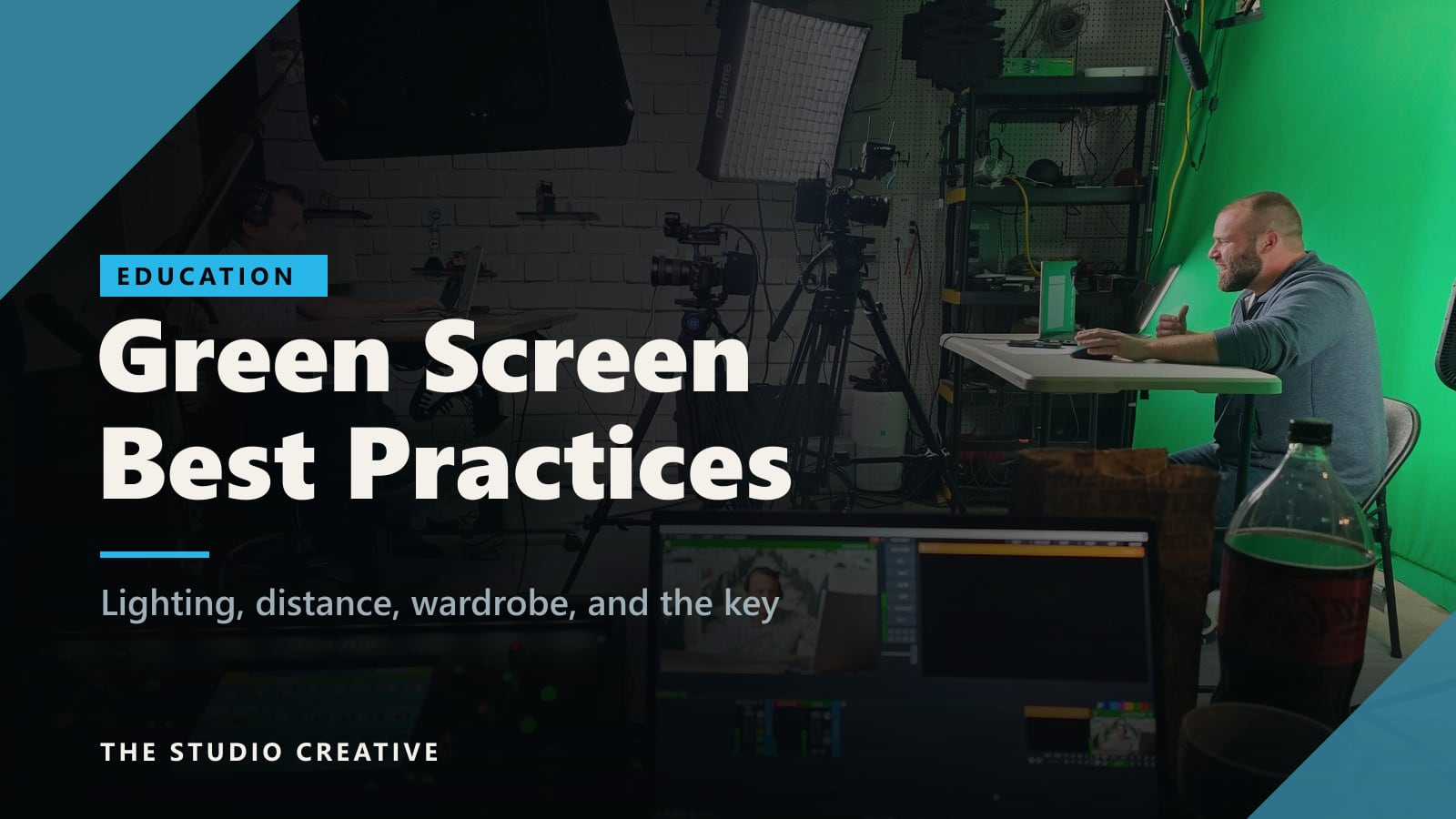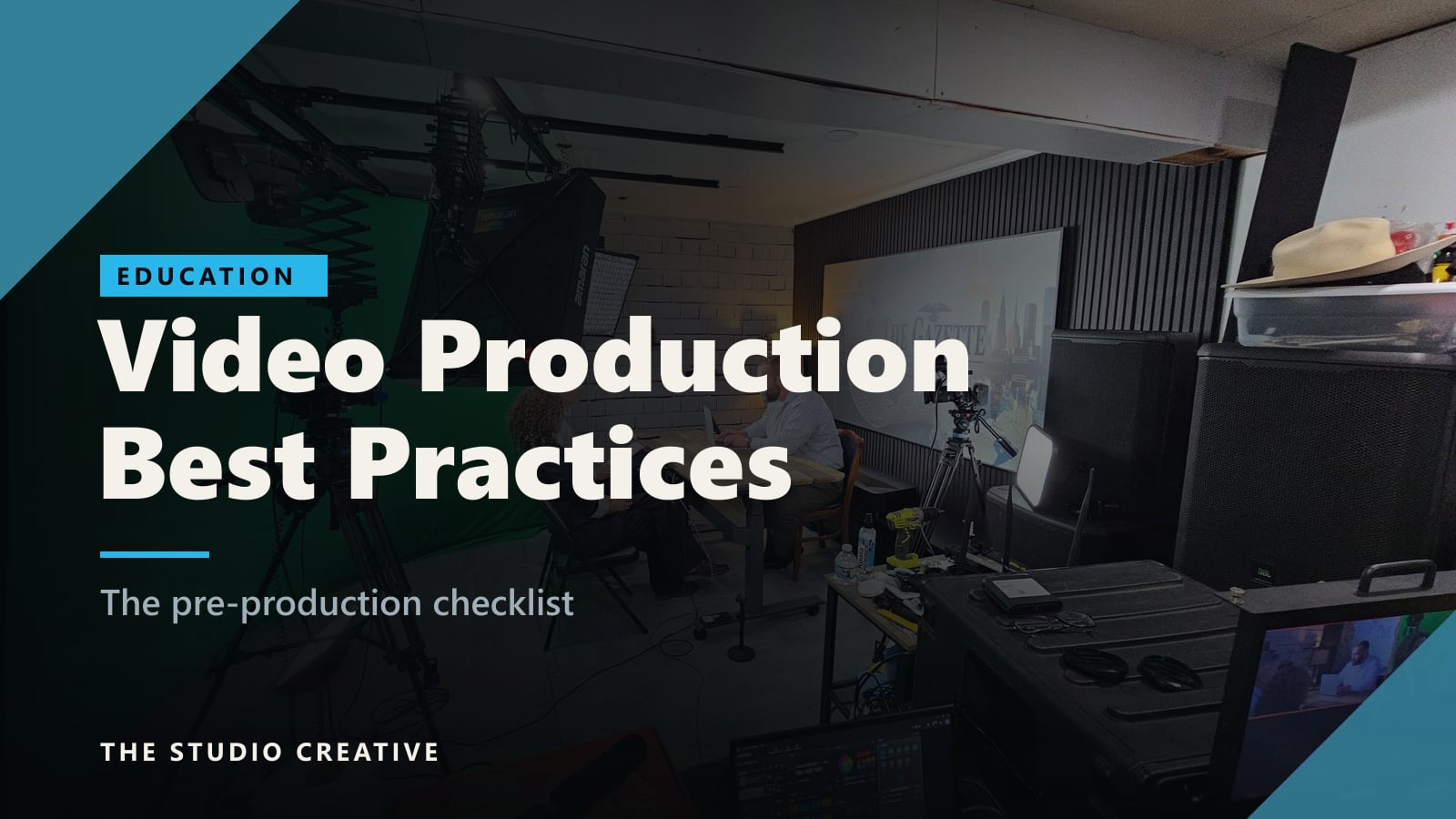
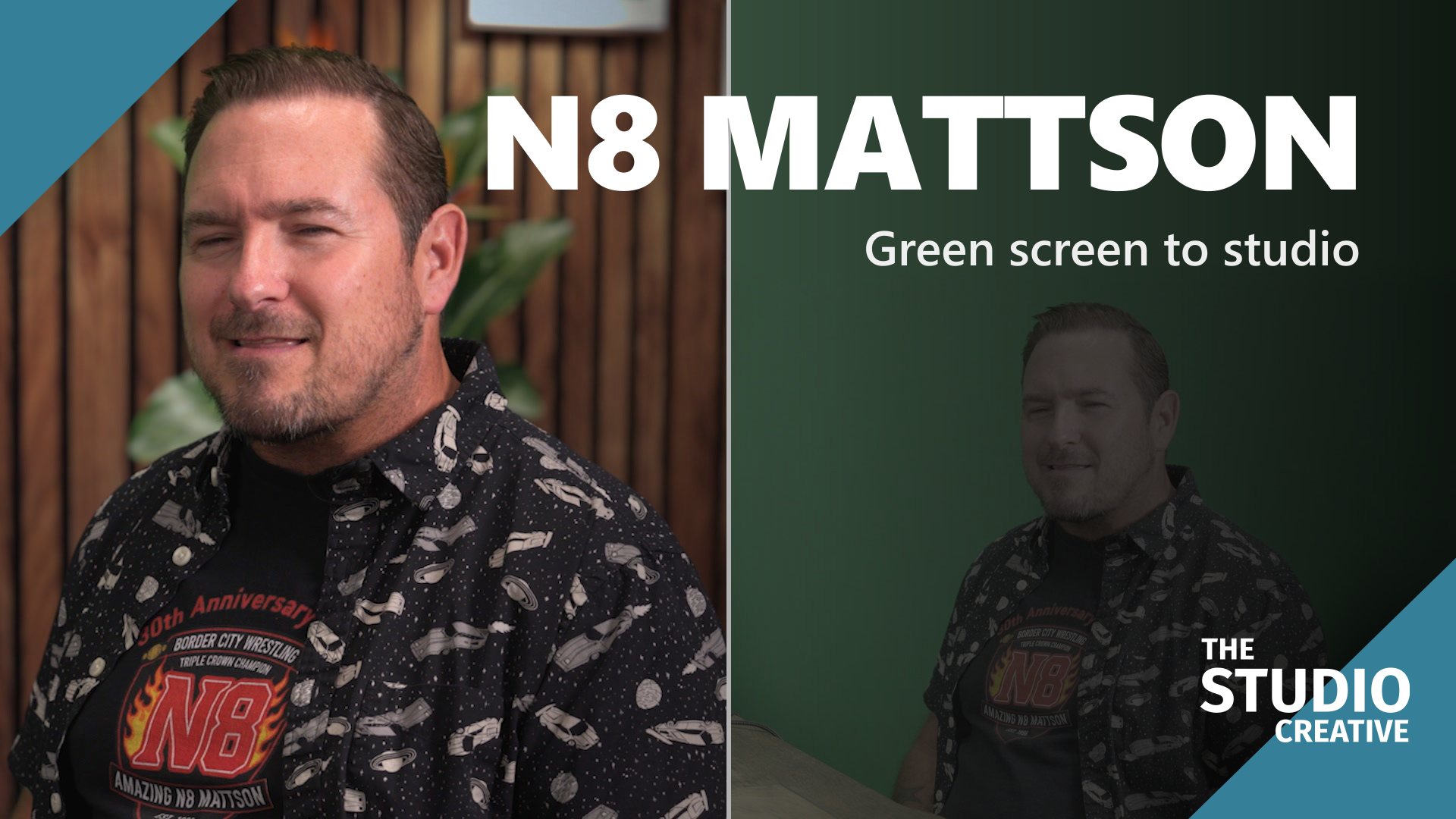
We filmed a five-hour conversation with "Amazing" N8 Mattson, a 30-year professional wrestling veteran from Garden City, Michigan, in front of a plain green screen, and turned it into a five-part podcast series set in a finished studio that was never built. Each episode opens with a branded ring intro, names both speakers on screen and ends with a teaser for the next part. This post covers who N8 is, what the five episodes are about, and how the footage went from green wall to studio.
Green Screen Podcast Production: The N8 Mattson Interview
In this article9 sections
- Who is N8 Mattson?
- What the five episodes cover
- The shoot: three cameras and one green wall
- The set: one room seen from every camera
- The key, the frame and the details
- The edit: five hours, five episodes
- The open and close: a ring intro, name graphics and a teaser
- Shorts from the same set
- Want a podcast that looks like this?
At a glance4 key points
- A guest with 30 years of stories. N8 has wrestled since 1996 and is an independent wrestling legend across Michigan, Ohio, the Midwest and Canada.
- Five episodes, one conversation. Five hours split at natural pauses into five episodes of about an hour, each with its own title.
- A studio that does not exist. One virtual room seen from three real cameras, so every cut lines up.
- Branded from the first second. A ring intro with the episode's part and title, name graphics for both speakers, and a "stay tuned" outro.
Who is N8 Mattson?
N8 Mattson grew up in Garden City, Michigan, a town he describes as "three miles by three miles," as the youngest of three brothers and a huge fan of 1980s wrestling. Macho Man Randy Savage was his all-time favorite. He trained at the Can-Am Wrestling School in Windsor, Ontario, and had his first match in 1996, which is why 2026 is his 30 Year Anniversary Tour.
N8 built his name on the independent circuit. He wrestled week after week across Michigan, Ohio, the Midwest and Canada, which is how he came to know, and be known by, wrestlers all over the world. In the interview he walks through those years: the Detroit and Windsor scene, a long tag team run with Truth Martini, being brought in to wrestle Chris Sabin during his X Division title run, a night at the original ECW Arena, and Border City Wrestling championship gold. He also made occasional appearances for bigger companies, including extra work at a WWE SummerSlam. Along the way he worked with and against a long list of names that later became famous, and he still teaches the craft to young wrestlers.
That is why we wanted to record it. N8 is one of the people who connects the old Michigan territory days to modern wrestling, he tells a story the way a good heel works a match, and very few of these careers get captured on camera in long form. We have filmed wrestling for years (see our pro wrestling video production guide and the Truth Martini video we edited for Ring of Honor), so a sit-down with N8 was a natural fit.
What the five episodes cover
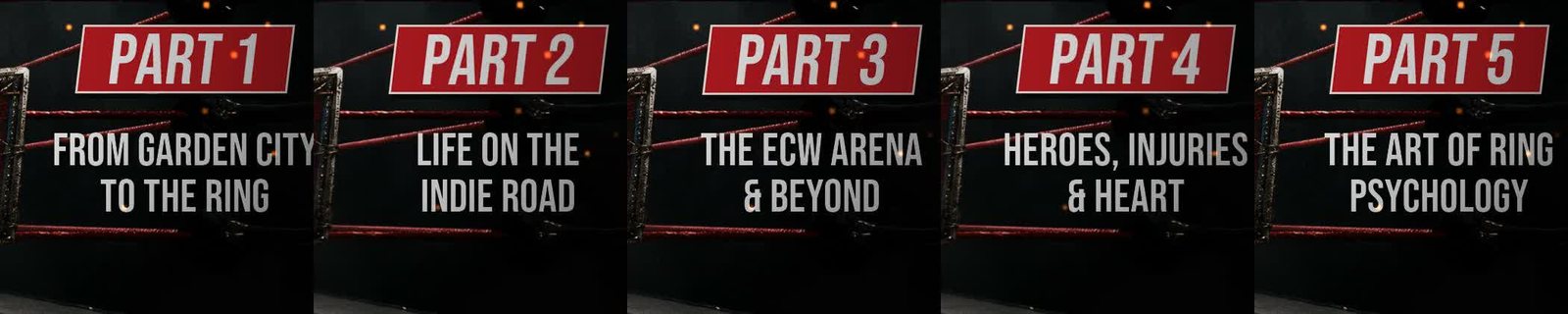
- Part 1: From Garden City to the Ring. Growing up a fan, meeting the stars of the 80s, getting trained, the first matches and the friendships made in the car on the way to shows.
- Part 2: Life on the Indie Road. Tag team years, the X Division, injuries, what a wrestling ring really is, and why the quality of a promotion shows in its lights, music and microphones.
- Part 3: The ECW Arena and Beyond. Championship runs, the call to the ECW Arena, working WWE events as an extra, and why promoters now call him.
- Part 4: Heroes, Injuries and Heart. The wrestlers who made him a fan, living with ADHD, concussions and surgeries, and the lessons he teaches about working as a heel.
- Part 5: The Art of Ring Psychology. Crowd psychology versus in-ring psychology, how a finish gets over, and what 30 years of connections have meant to him.
The shoot: three cameras and one green wall
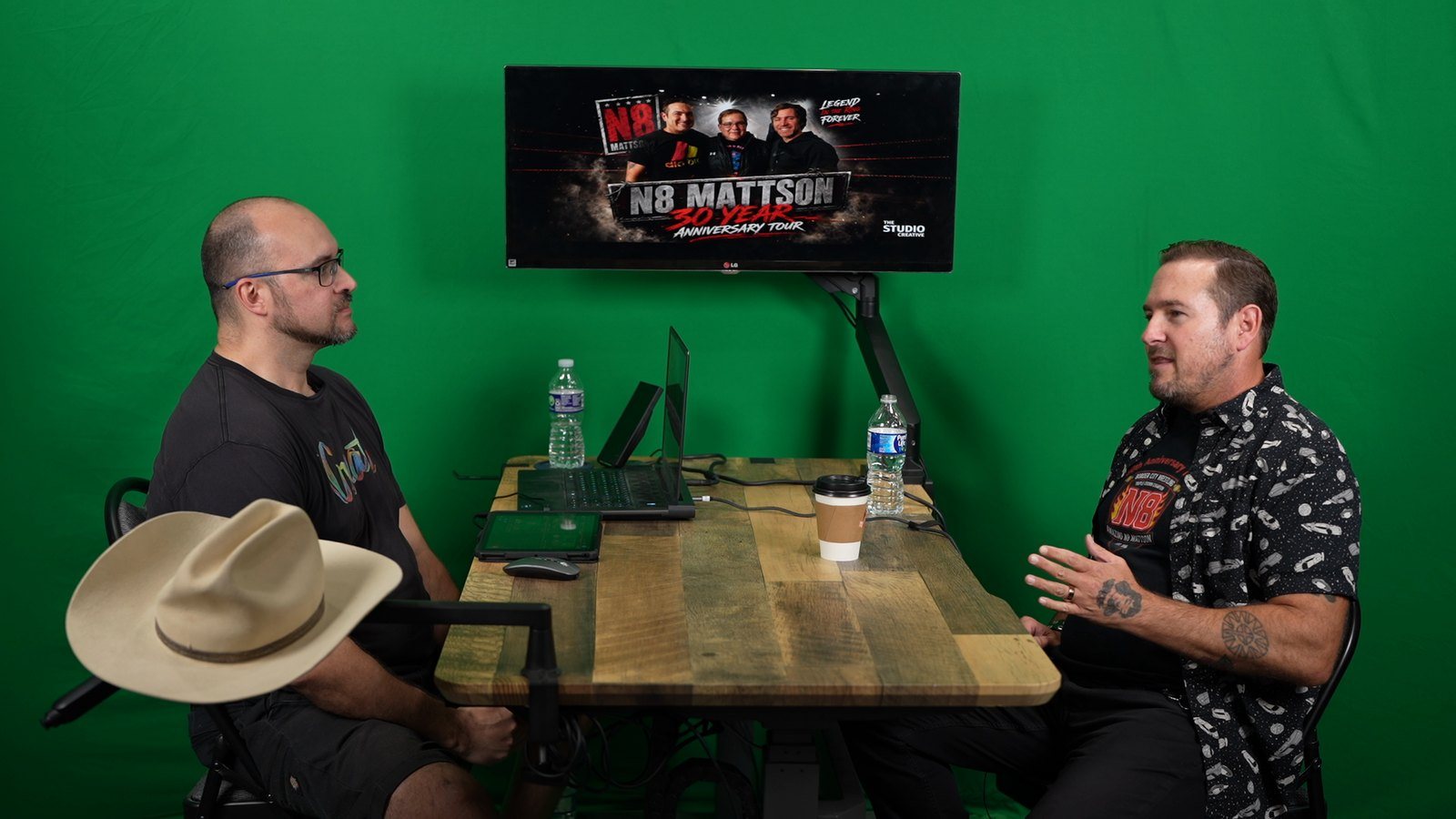
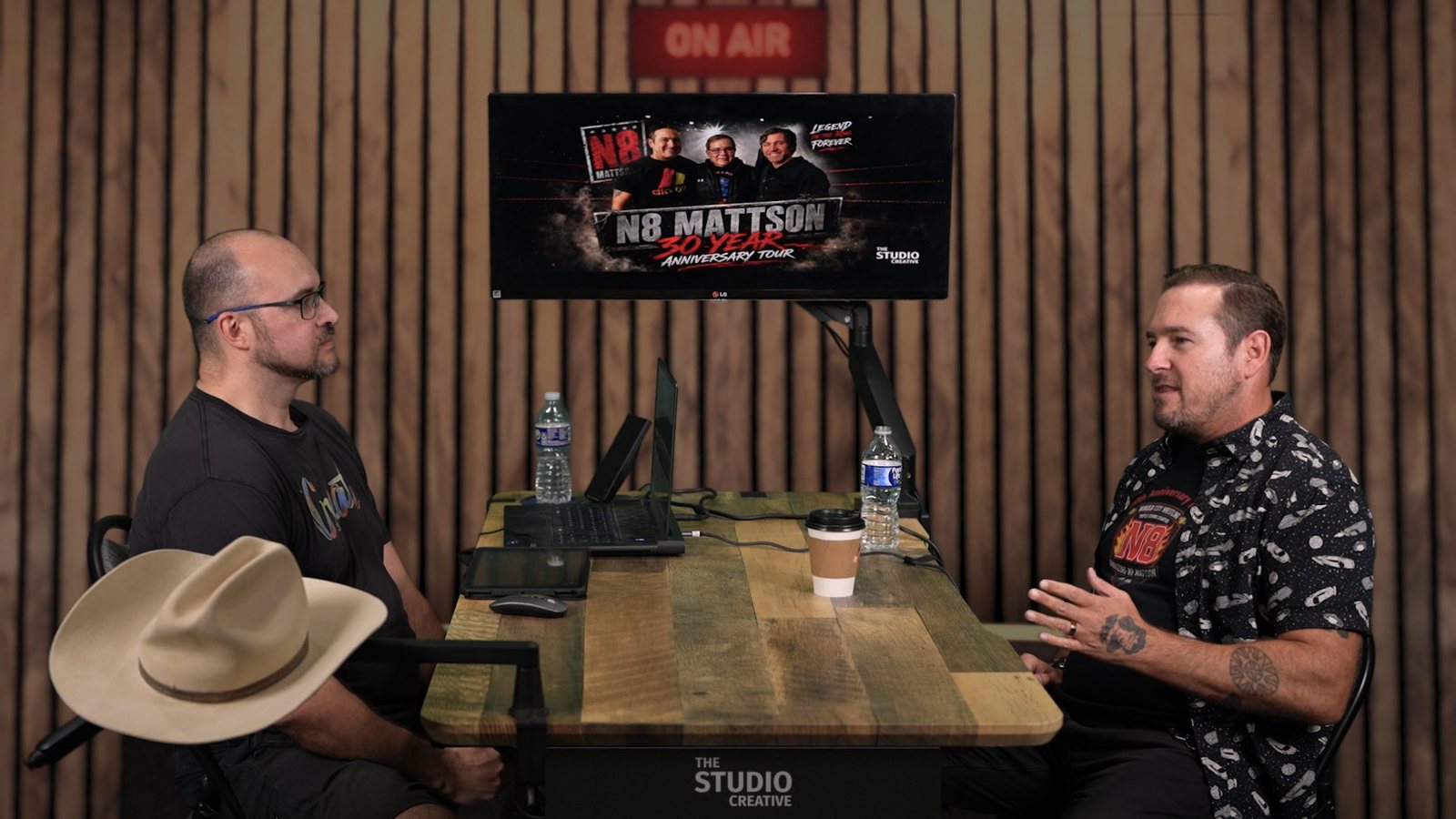
We filmed N8 and Jeff at a reclaimed wood table in front of a green screen with three cameras rolling: one on each person for close-ups and a wide center camera for the two-shot. The close-up cameras record a flat log profile that keeps every bit of highlight and shadow detail, and a camera LUT turns it back into normal-looking video before anything else happens.


The set: one room seen from every camera
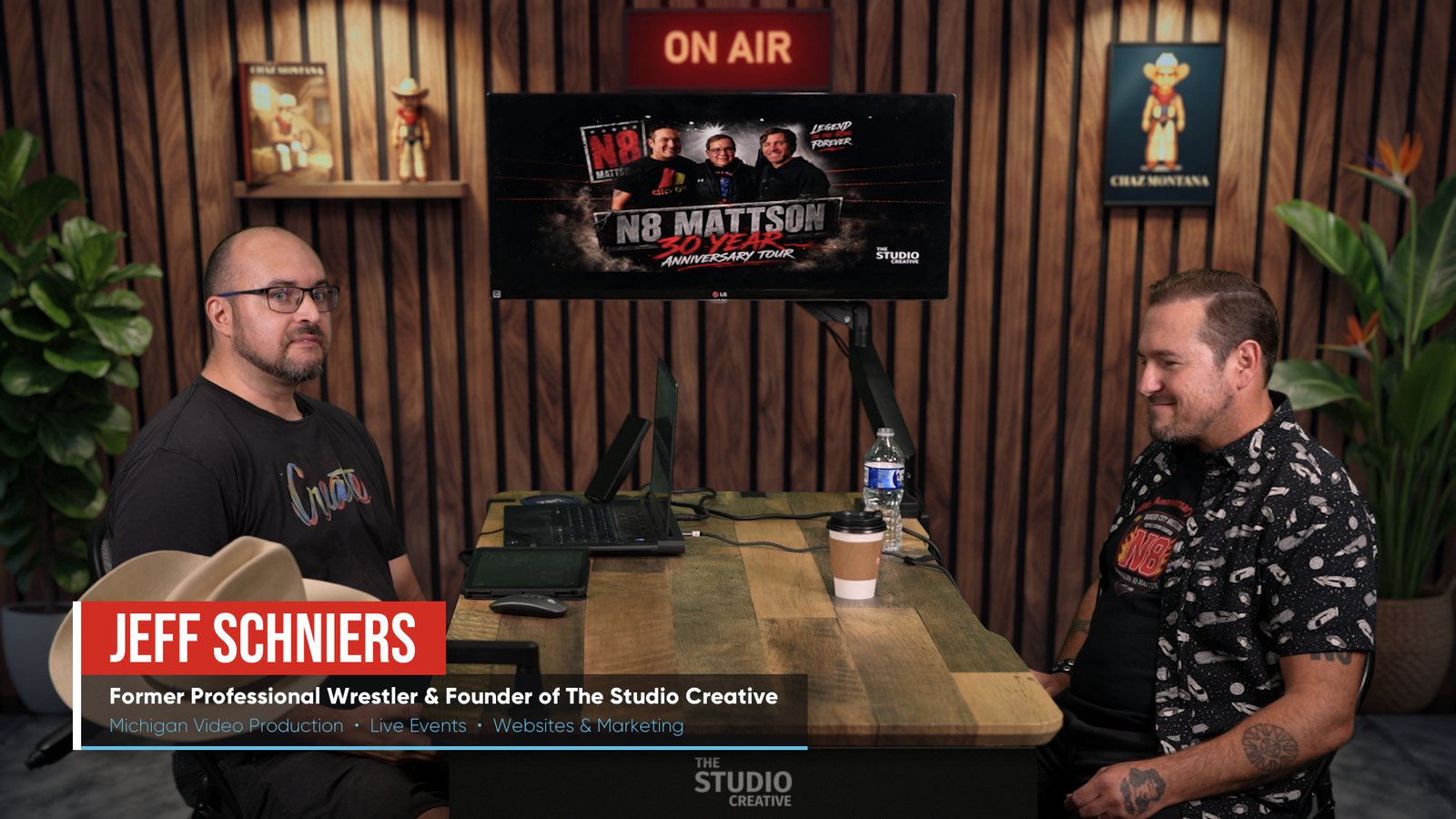
The background is not three separate pictures. It is one room rendered in 3D: a walnut slat wall, an ON AIR light, plants and framed prints, lit with warm practical lights. Every camera looks into that same room from its own angle and lens, so when the edit cuts from the wide to a close-up, the wall and the light line up the way they would in a real studio. We also pushed the back wall one foot further from the table to add depth behind the people.

The key, the frame and the details
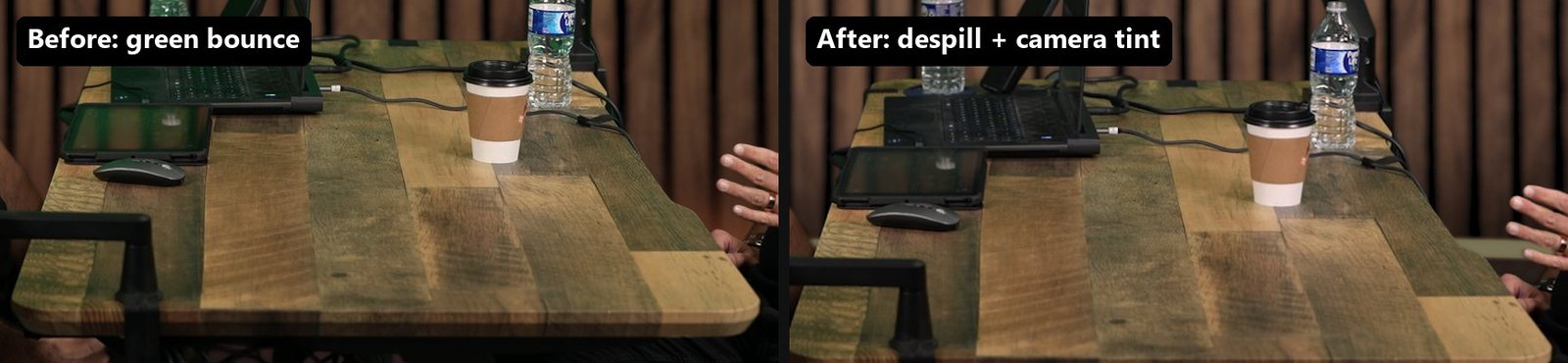
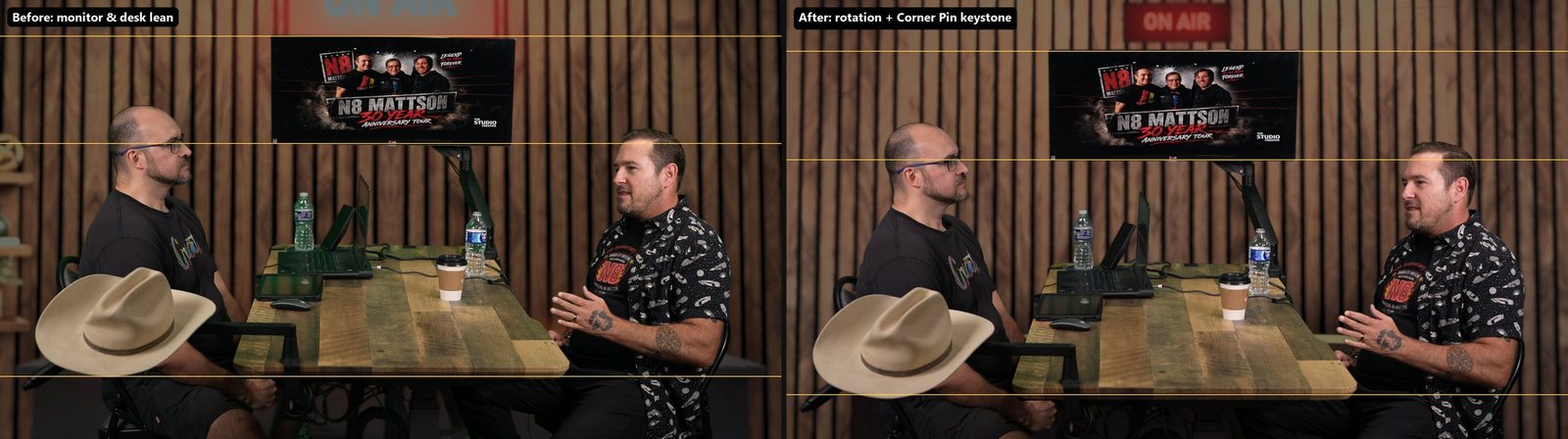
A machine learning keyer pulls the green without losing stubble, glasses or motion blur. Green light bouncing off the screen tinted the desk, the laptop and an iPad, so that spill was removed, and a slight edge softening blends hair and shoulders into the set. The center camera was also a little off square, so its tilt and perspective lean were measured from the monitor and the desk edge and corrected on the camera layer alone. Finally, a branded panel was added to the front of the table, which hides the table legs and cables for all five hours.

The edit: five hours, five episodes
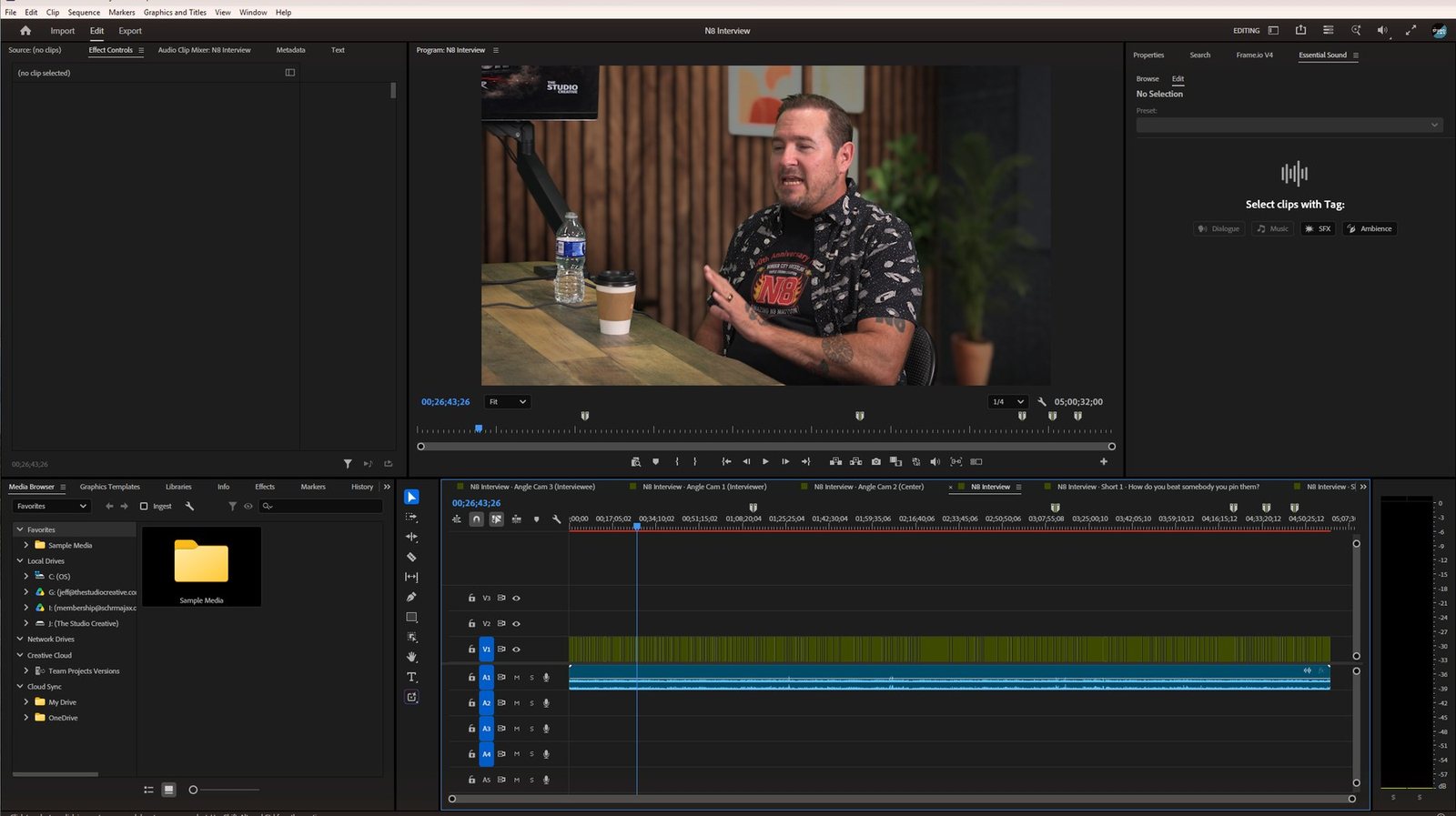
The cut follows whoever is talking, with reaction shots and the wide mixed in: 1,877 camera cuts across the full conversation. Because every camera lives in its own nested sequence, a fix to one camera shows up across the whole series at once. The five hours were then split into five episodes of about an hour, each break placed on a natural pause, and the dialogue was brought up to standard podcast loudness.
The open and close: a ring intro, name graphics and a teaser
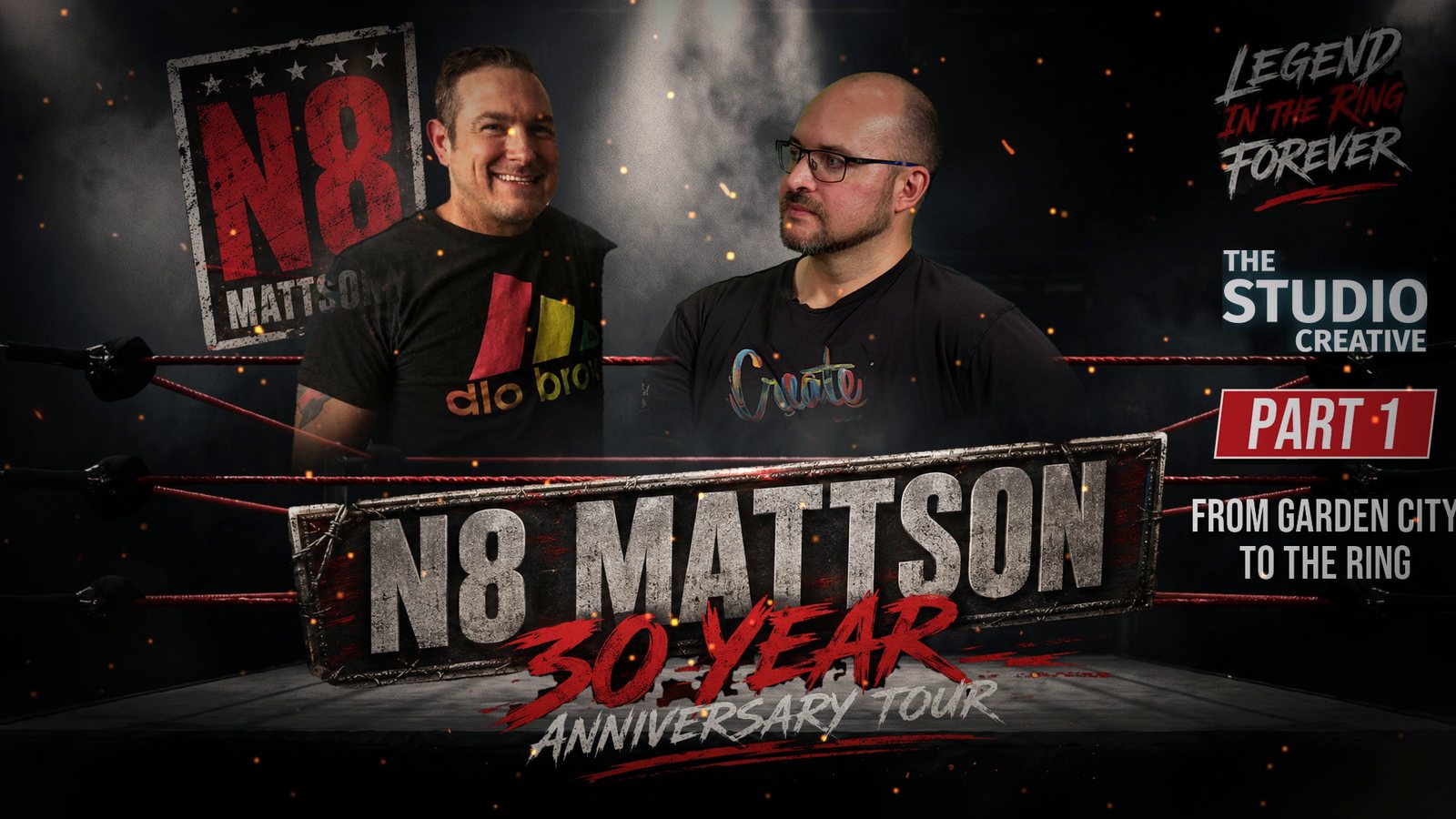
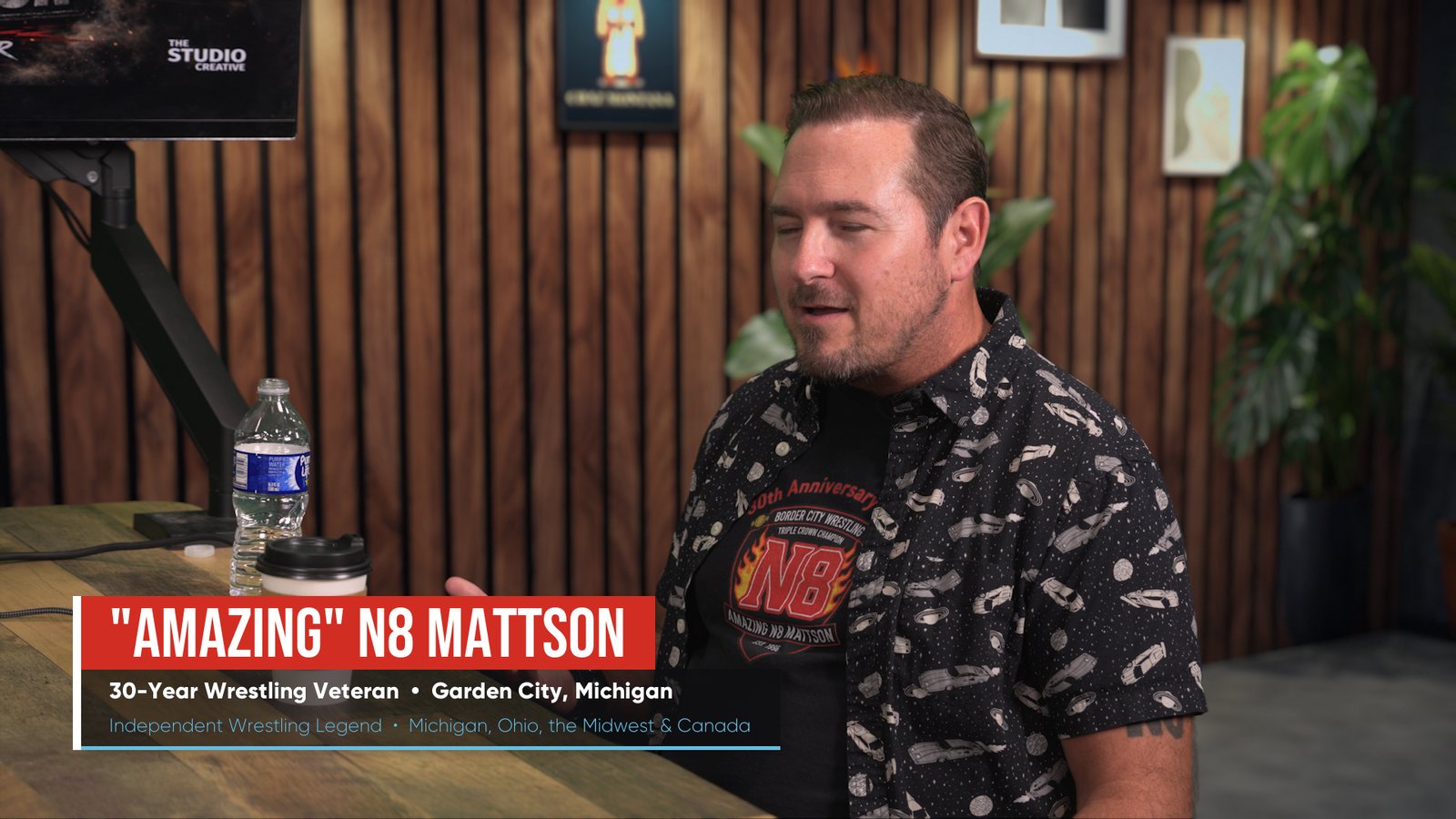
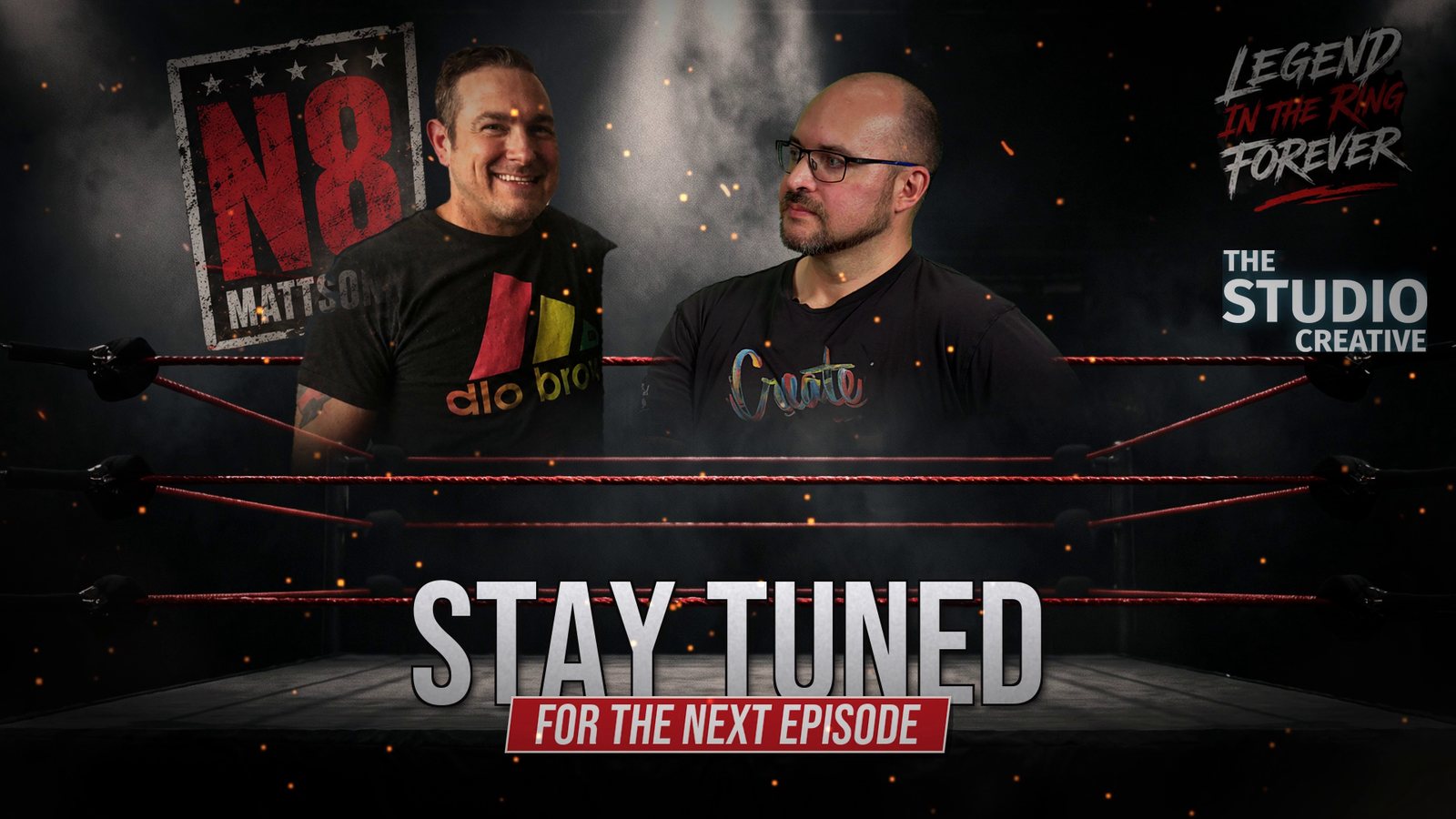
Every episode opens on a seven-second ring intro built from N8's 30 Year Anniversary Tour poster: the arena lights flicker on over a ring with its proper three ropes per side, N8 and Jeff slide in facing each other, the N8 stamp and the tour plate slam down, and the episode's part number and title land last. As soon as each person starts talking, a lower third names them: Jeff Schniers, former professional wrestler and founder of The Studio Creative, and "Amazing" N8 Mattson, 30-year wrestling veteran. Each episode closes on a "stay tuned for the next episode" outro in the same ring.
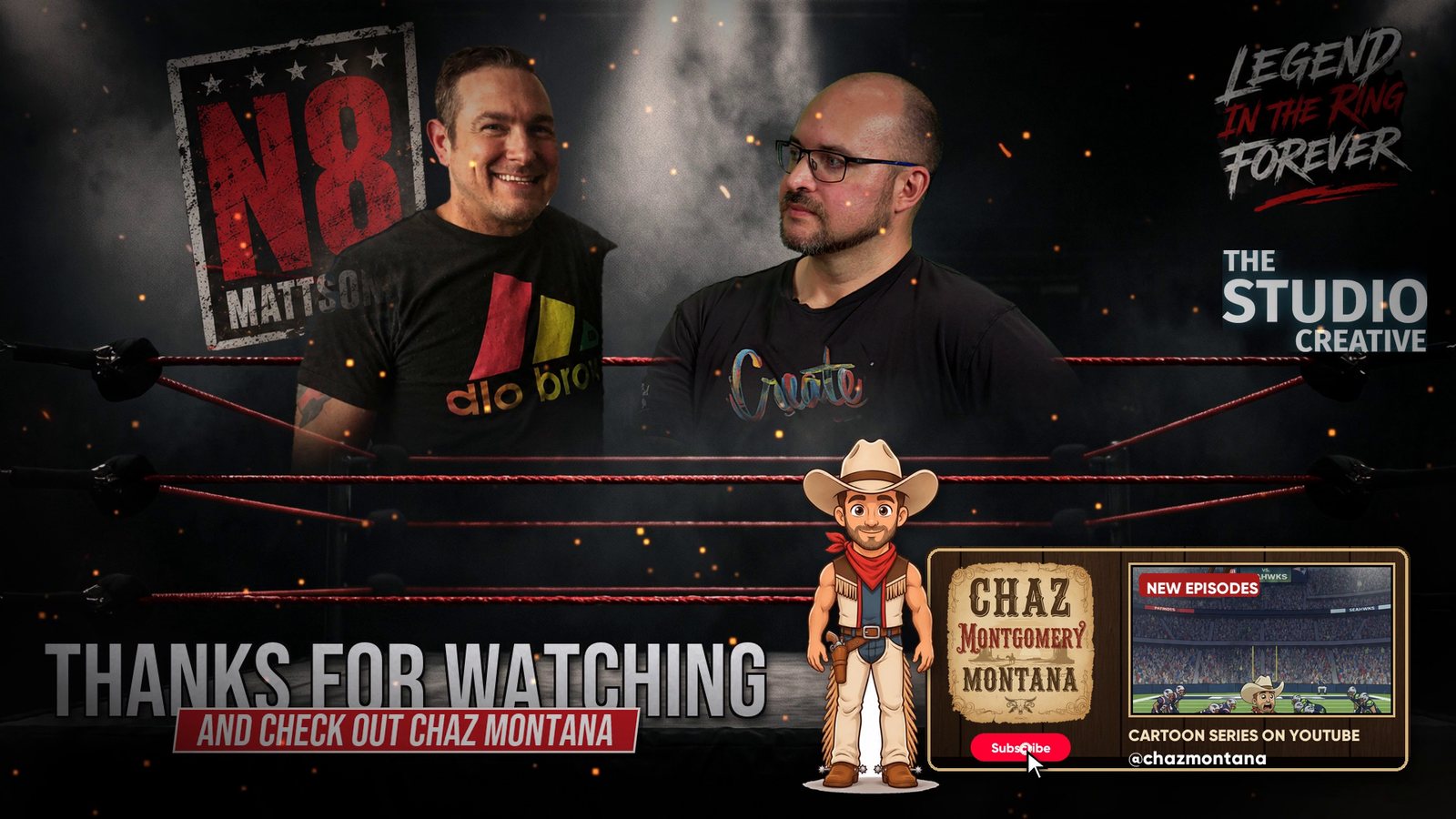
Near the start of every episode, a YouTube bar asks viewers to like and subscribe to The Studio Creative on YouTube. Halfway through, a card promotes Chaz Montana's cartoon series, and the series finale closes on "thanks for watching" with the same card.
Shorts from the same set
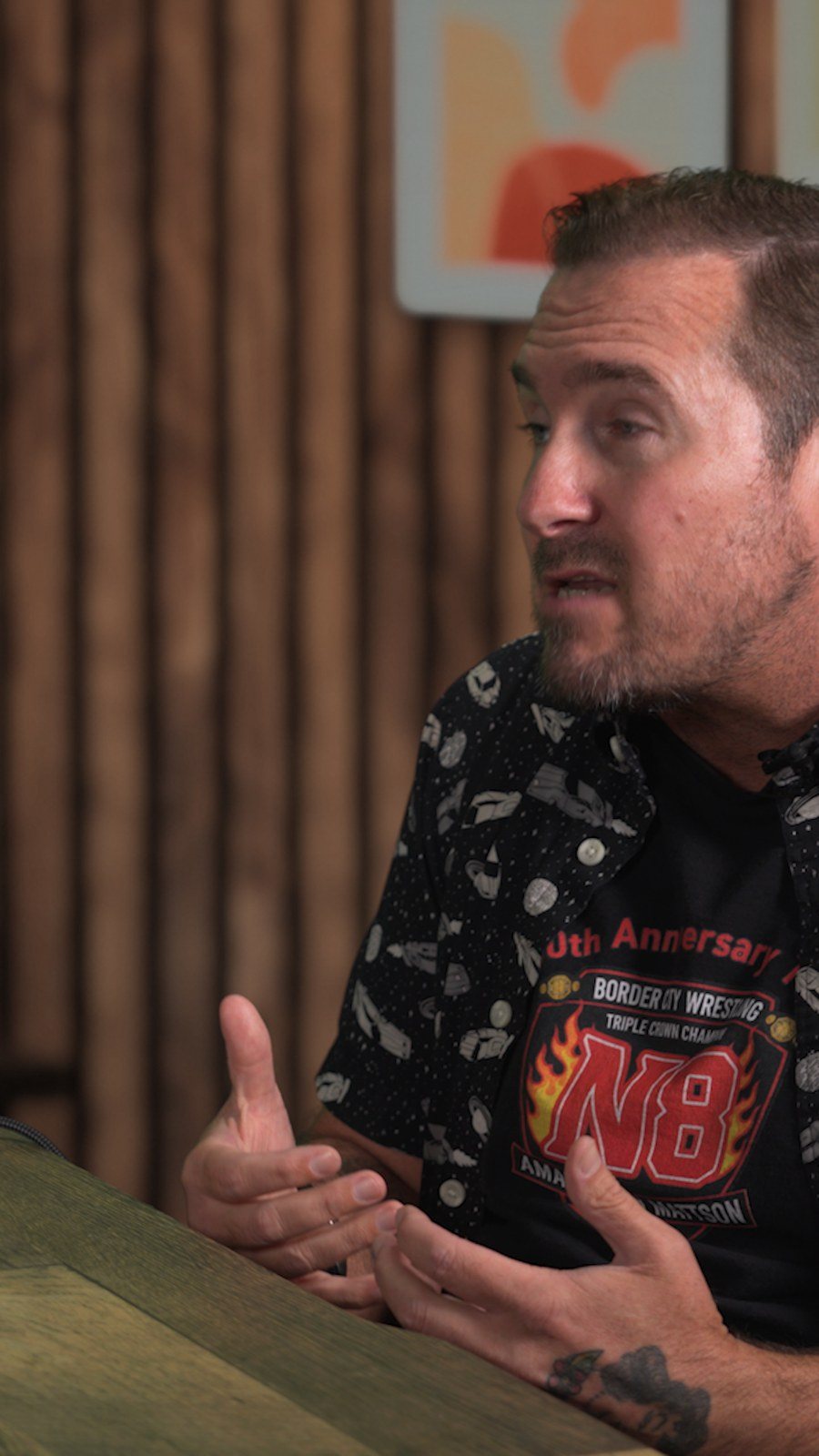
The moments worth clipping became five vertical shorts, each reframed to 9:16 around whoever is talking. They use the same keyed cameras, so they get every set and key fix for free.
Want a podcast that looks like this?
You do not need a built set to get a studio look. A green screen, good cameras and a clear plan for the edit are enough, and every episode comes out branded and ready to post. Read why podcasts matter for local businesses or tell us about your show.
Was this useful?
green screen podcastpodcast production Michiganvirtual studio podcastvideo podcast productionpro wrestling podcastN8 MattsonAmazing N8 Mattsonwrestling interviewPremiere Prolower thirdspodcast intro graphicsThe Studio Creative