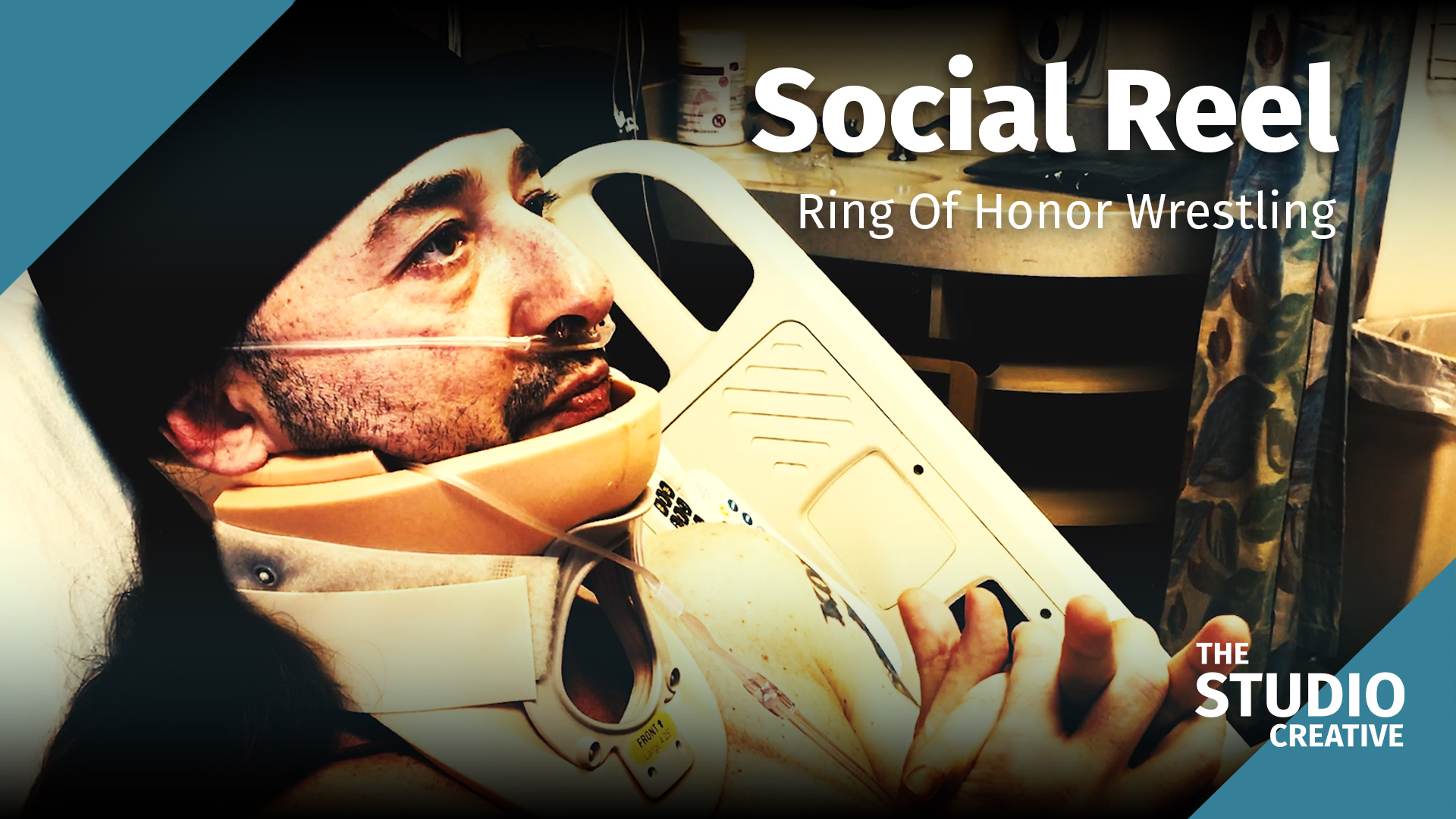
Ring of Honor Wrestling came to us with a problem that has nothing to do with cameras: they had footage, a story to tell, and a pay per view broadcast to fill. ROH asked The Studio Creative to edit the video that would explain Truth Martini's injury to a live pay per view audience. What we received was raw footage. What we delivered was the finished piece that played on the show.
At a glance
- Raw footage in, finished piece out. ROH handed us raw footage and a story, and we delivered the video that aired on pay per view.
- Storyboard before the first cut. Which beat opens it, where the emotional turn sits, and what the last frame leaves the audience with.
- Editing and post direction. Pacing, structure, sound, and the calls about what stays and what goes.
- A broadcast deadline is fixed. The piece has to pass the destination's spec, with no version two after the fact.
Watch the Truth Martini injury video on its own page, then come back for how it was built.
What Ring of Honor handed us
Raw footage and a story. No assembly, no structure, no script telling an editor which moment mattered. That is a normal starting point for this kind of work, and it is the part people outside post production underestimate. The footage does not arrive knowing what it means. Somebody has to decide.
We built the storyboard first
Before a single cut, we laid out the piece: which beat opens it, what the audience learns and when, where the emotional turn sits, and what the last frame leaves them with. A storyboard on a project like this is not a drawing exercise. It is the argument for why the footage lands in a particular order.
For a wrestling audience that matters more than usual. Wrestling fans are fluent in this language. They have watched thousands of hours of it, they know when a piece is stalling, and they can feel a beat that has been held one second too long. The storyboard is where you win or lose them.
Editing and post directing
We did all of the editing and the post direction: pacing, structure, sound, and the calls about what stays and what goes. Post directing is the job of deciding what the piece is, then defending that decision through every pass. It is the difference between a highlight package and a story with a point of view.
On a piece like this the restraint does the work. An injury angle is built on what the audience is allowed to imagine, so the edit holds where it should hold and moves when it should move. Sound does more of the lifting than picture does. Nothing is cut fast for its own sake.
Why a pay per view deadline changes the work
That pressure is familiar to us from live event production, where content ships while the event is still happening, and it is the same discipline: decide early, build the structure, and leave time for the notes that matter.
Cutting footage you did not shoot
Editing someone else's footage is a different job from editing your own. You do not get to fix coverage that was never captured, so the first pass is not creative at all: it is an inventory. Watch everything, log what is usable, and find out what the footage will actually support before you touch a timeline.
That inventory decides the cut. A moment you planned to build the piece around may exist for two seconds from one angle, and the piece has to be built around what is there instead.
The recurring problems are the same on any inherited footage:
- Mixed sources. Cameras that were never matched, so exposure and colour jump at every cut until they are balanced.
- Screen direction. Angles shot from both sides of the action, which will flip a subject from one side of the frame to the other unless the order is chosen carefully.
- Audio. Almost always the real work. Different levels on every source, room tone that changes between shots, and crowd noise that has to be shaped rather than removed.
- Gaps. The shot that would have made the sequence obvious does not exist, and something has to carry that beat instead.
Delivering to a broadcaster's spec
A piece going out on a broadcast or a pay per view is not finished when it looks right in the edit suite. It is finished when it passes the destination's spec, and that spec is not negotiable on the day it airs.
- Frame rate and resolution locked to the destination from the first import, not converted at the end.
- Title safe areas respected, so nothing important sits where a broadcast crop will take it.
- Audio loudness normalised to the platform's target with no clipping, which is the single most common reason a file gets bounced back.
- A clean file: correct container, correct codec, named the way the people receiving it asked for it.
None of that is creative work, and all of it is the difference between a piece that airs and a piece that gets returned.
What an edit needs from you
If you are handing footage to an editor, these four things save days:
- The original files, not a compressed export of a rough cut. An export has already thrown away the latitude a colourist needs.
- Any existing cut, even a rough one, so nobody rebuilds a decision you have already made.
- The beats you need hit, in writing. Not a full script, just what the piece has to say and in what order.
- Brand assets and the deadline: logos, fonts, where it is going and when it has to be there.
The same work, for any brand
Most clients do not hand us wrestling footage, but the situation repeats constantly: a company has hours of material from a shoot, a conference, or a year of events, and no idea what story is inside it. Editing is where that story is found. We are happy to shoot it, and we are just as happy to be handed the footage and build the piece, as we did for ROH.
If you have footage sitting on a drive doing nothing, tell us what it is and we will tell you what we would make from it. You can see more of our editing and production work, including live event coverage cut and delivered on site.