
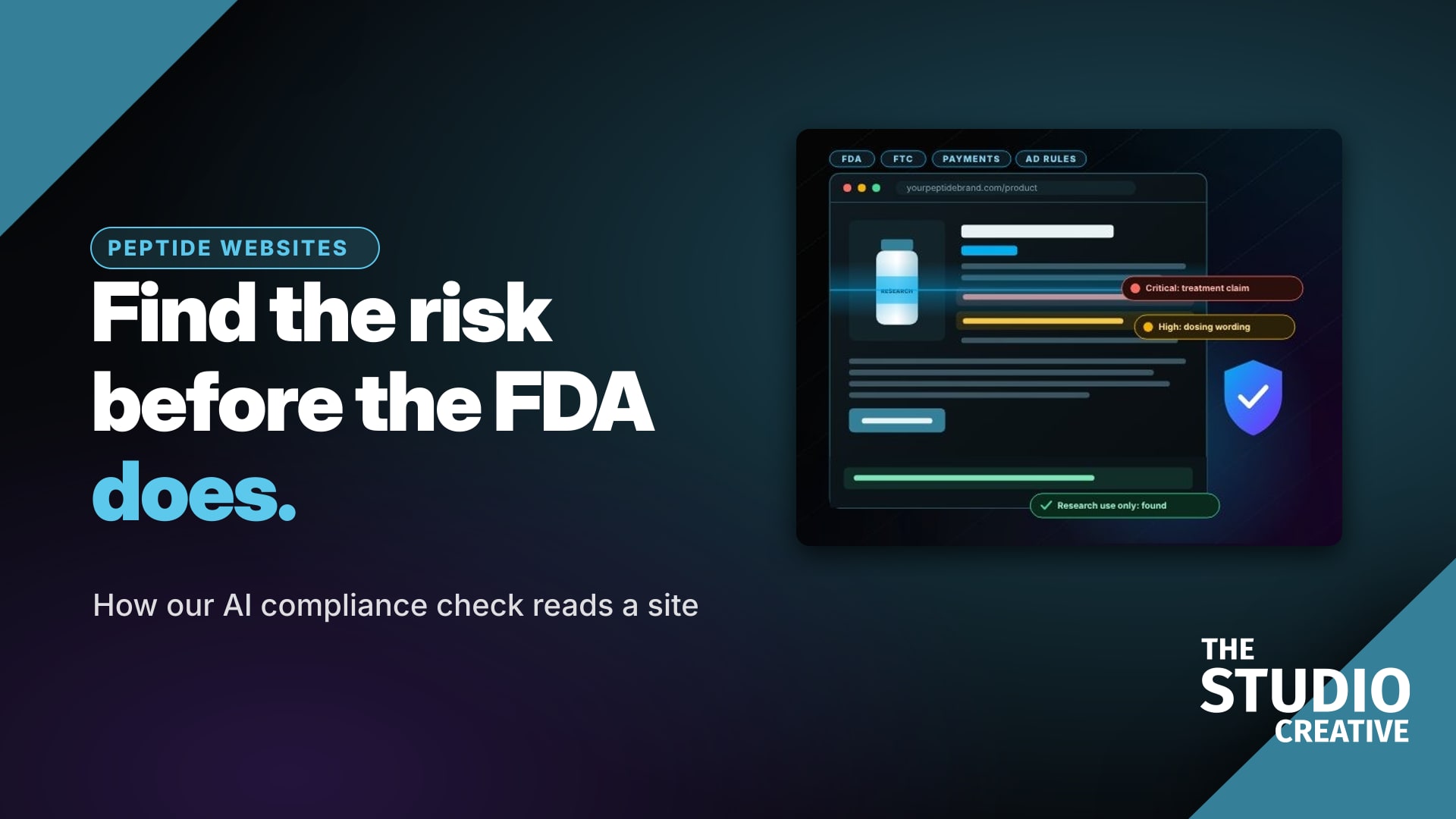
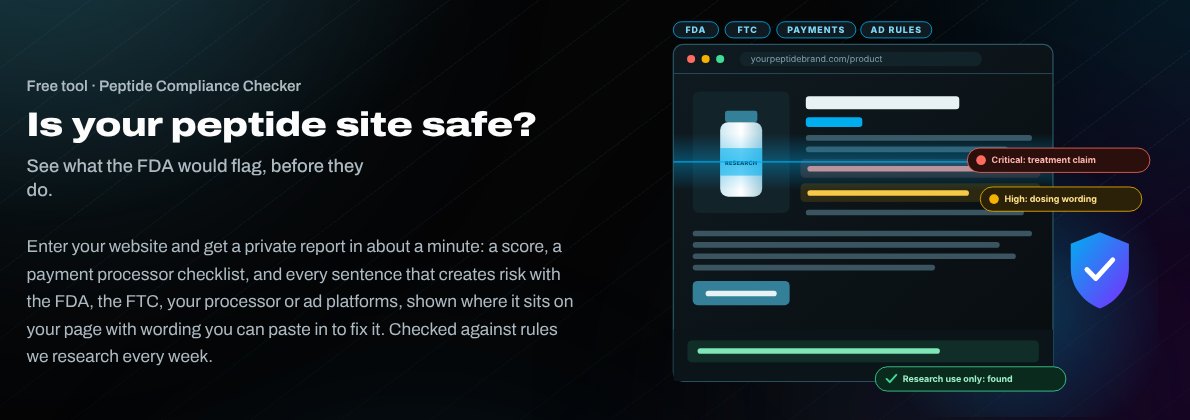
We use AI to read a peptide website the way a reviewer would, against a library of FDA, FTC, payment and ad platform rules that we research every week, and to quote every sentence that creates risk along with safer wording to paste in. The AI never gets the final score: the score is arithmetic on findings, and any finding the checker cannot find again on the actual page is thrown out. Anyone can run it free on our Peptide Compliance Checker, and the report stays private.
How We Use AI to Check Peptide Websites for FDA Risk
In this article7 sections
At a glance4 key points
- Rules researched weekly from the FDA, the FTC, payment processors and ad platforms, each with its source.
- Every finding proven on the page, with where it sits and a link that opens right to it.
- A payment processor checklist run without AI, so it never varies.
- Not legal advice. It is a fast first look, written to show counsel.
Why peptide brands need this
In peptides, the trouble is rarely the product page headline. It is a sentence in a closed "References" tab, a dosing chart, a customer review promising results, or a "research use only" line that the rest of the site contradicts. FDA warning letters to peptide sellers have pointed to exactly those things, including dosing calculators and reconstitution supplies as proof of human use. Payment processors and ad platforms read sites the same way, and a frozen merchant account can hurt as much as a letter.
We build and market sites for peptide and telehealth brands, like Paragon Peptides, so we needed a fast, repeatable way to find those sentences before anyone else did. That became the checker.
How it reads a site
- It picks the pages a reviewer would. The home page, then up to eight more: products, policies, the FAQ, about, the shop and the blog.
- It opens what visitors have to click. Named tabs, click-to-open sections, pop-ups, footers, meta descriptions and image alt text are all read and labelled, because that is where risky copy hides.
- AI reviews the copy against the rules. It is told plainly that research framing does not excuse a benefit claim: "studies suggest it supports healing" is still a healing claim.
- A plain checklist runs beside it. Nine checks without AI: a research-use statement on every page, an age or researcher gate, refund, terms, privacy and shipping links, contact details, injection supplies, dosing wording, GLP-1 names and reviews.
Why it never guesses
An AI that is sure of itself and wrong is worse than no check at all. So the checker is built to distrust its own AI:
- Every quote is found again on the page. If the words are not on the page the AI named, the checker looks for them on the others and moves the finding. If they are nowhere, the finding is dropped.
- Every finding says where it is. For example, "In the References tab (click the tab to see it)," with the words around it highlighted and a link that opens the page scrolled to them.
- The worst findings come with a picture. A screenshot of the page with the tab opened and the words outlined, so nobody has to hunt.
- The score is arithmetic. A capped deduction per finding by severity, never the AI's opinion of the site.
- A failed review is a failure, not a pass. If the AI's answer cannot be read, the page is reported as not reviewed, never as clean.
- Judgment calls are labelled. A concern that is not tied to a rule in the library is marked low and called a judgment call.
What the customer gets
A score, the payment processor checklist, and every risky sentence with where it is, why it is a problem, the rule behind it and wording to use instead. The report is shown on the page and emailed. It is never published, has no share link, and can be saved as a PDF named for the brand with every link still clickable. Run it again after fixing things and it shows how the score moved. A private copy is kept for our staff, and the page says so before anyone starts.
What to check on your own peptide site today
You can catch the most common problems in ten minutes before running any tool:
- A research-use-only statement on every page, including product pages and the footer, and nothing elsewhere that contradicts it.
- No dosing charts, calculators or reconstitution steps, and no injection supplies sold beside the product.
- No benefit words in hidden places: open every tab, pop-up and "References" section, and read the image alt text.
- Refund, terms, privacy and shipping pages linked, with real contact details, which payment processors look for.
- Reviews that do not promise results in a customer's words.
Organized for our clients every week
The same rules run inside Studio Projects for brands we work with every week: the whole site, pages behind a login, and every new post and email before it goes out. When the FDA or a processor changes something, the library changes, and the next check uses it. That turns compliance from a scramble after a letter into a list that is always current.
Questions peptide brands ask
Is this legal advice?
No. It is an automated first look that shows where risk sits and why, so you can fix the obvious things fast and bring a short, specific list to your attorney.
Can it check pages behind a login or age gate?
The free checker reads public pages only, and says so when a site is gated. For clients, Studio Projects checks the logged-in pages too.
Why do two scans sometimes score differently?
AI review varies a little between runs, so a borderline sentence can land as critical one time and high the next. Fixing the flagged sentences moves the score every time.
Can someone help me fix what it finds?
Yes. The report has a button to ask us about it, and our peptide and telehealth marketing packages include compliance-aware copy. Many brands just use the suggested wording and fix it themselves.
Was this useful?
peptide website compliancepeptide compliance checkerFDA peptide warning lettersresearch use only peptidespeptide website designtelehealth website complianceAI compliance checkpayment processor complianceThe Studio Creative