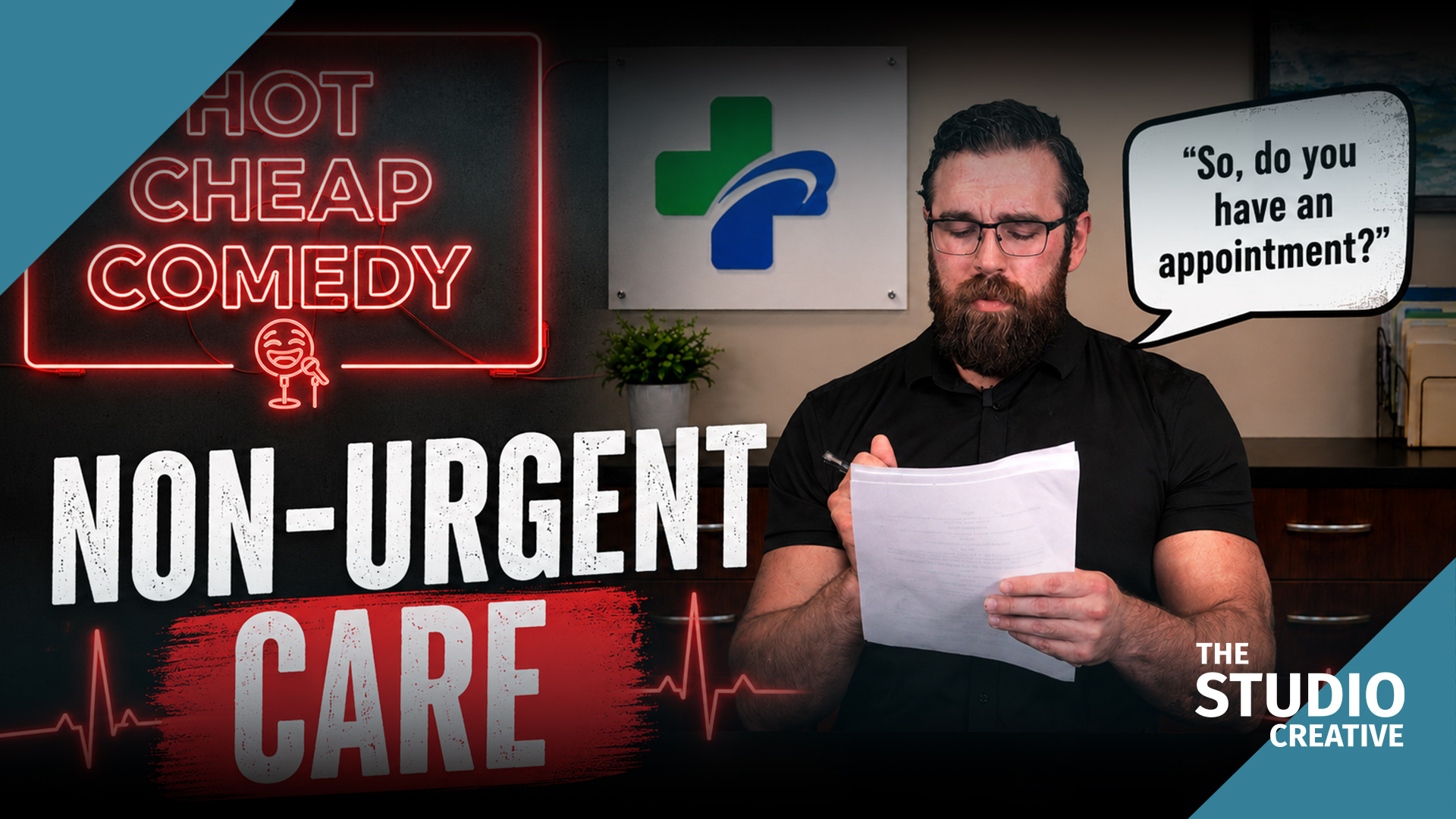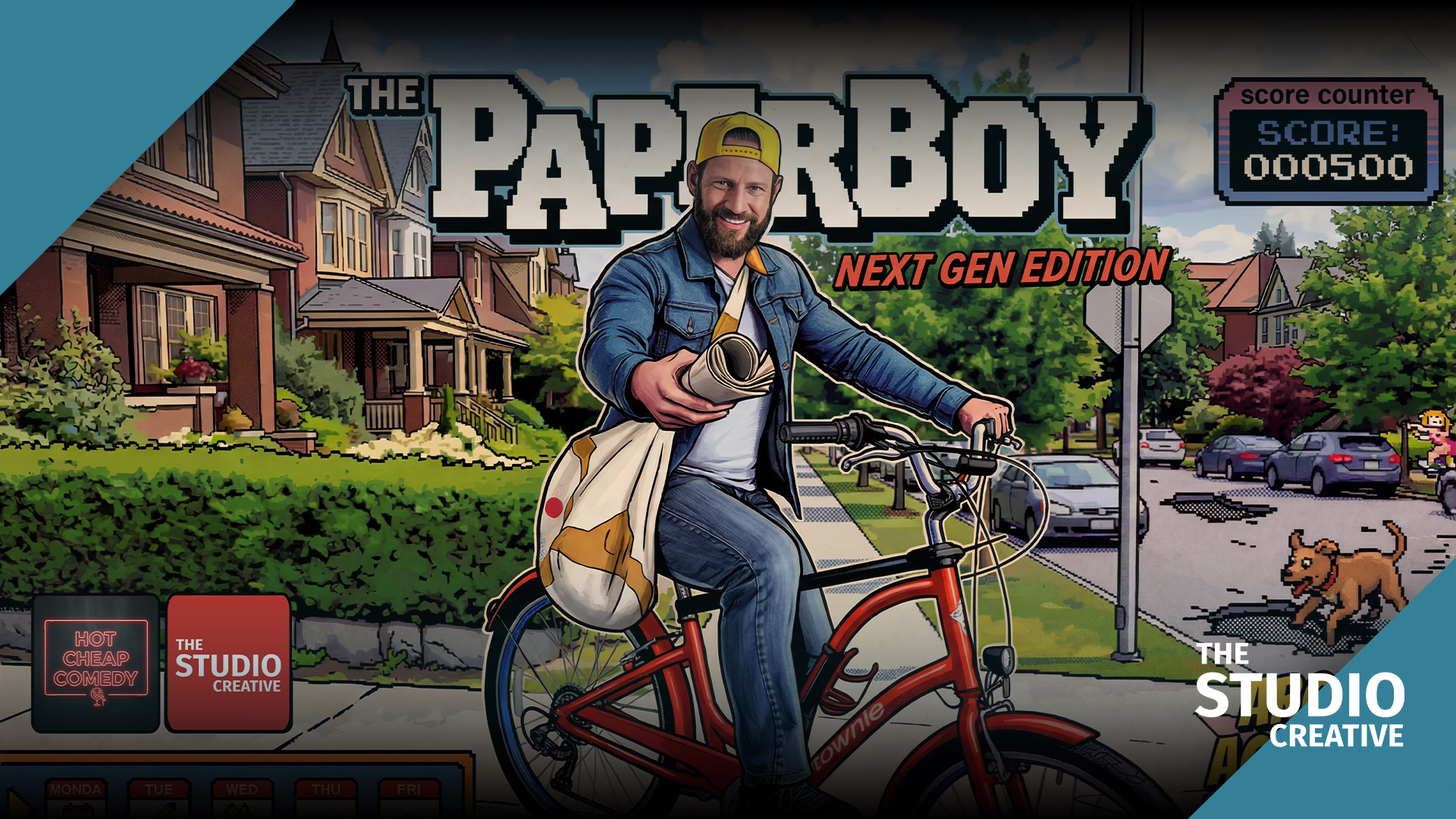
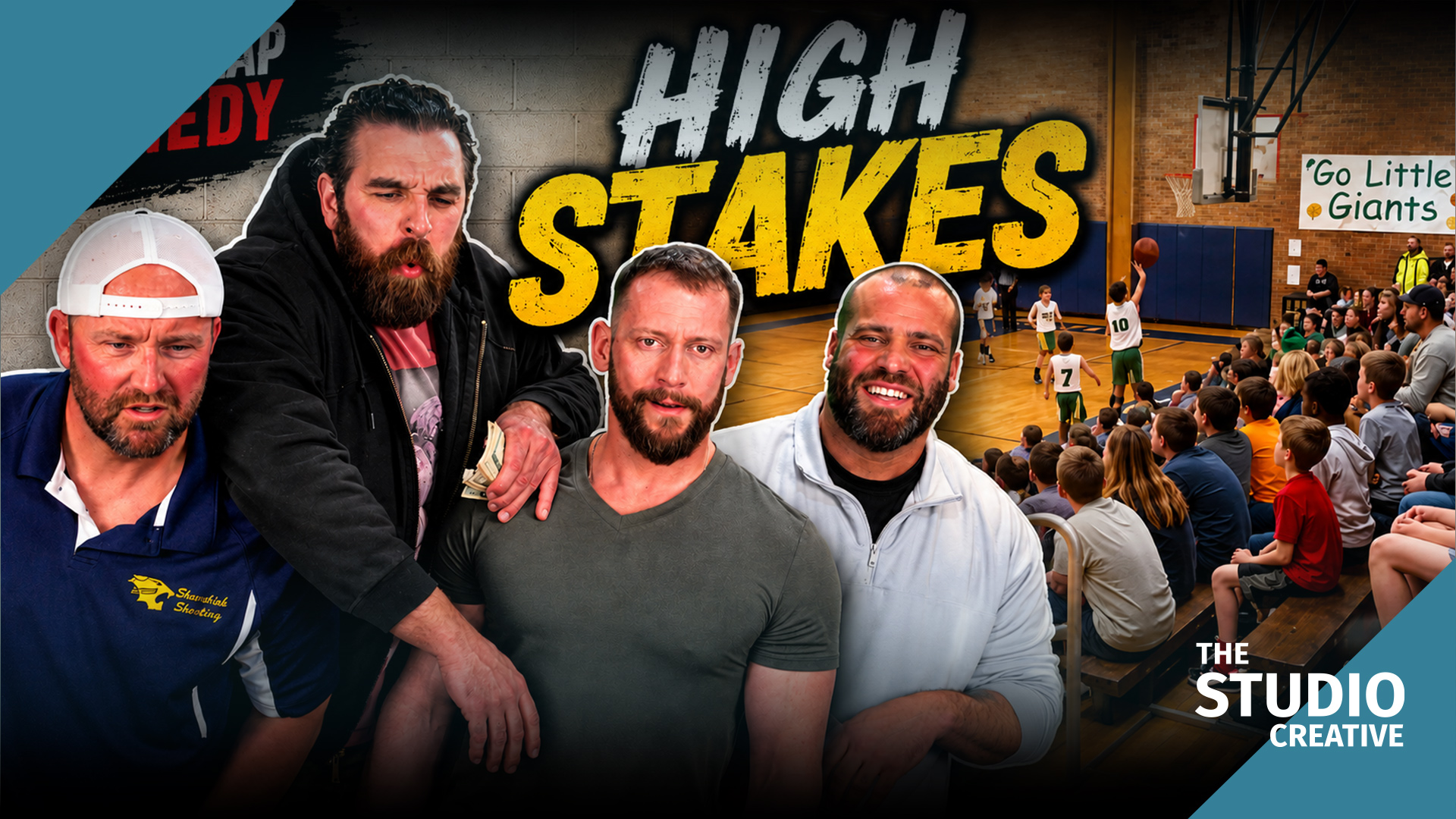
High Stakes takes place in the bleachers of a fifth grade basketball game. There is a gym, a scoreboard, a "Go Little Giants" banner, and a crowd of parents. None of it was in the room. The whole episode was shot in a studio we built ourselves, from the floor joists up, because a series that ships this often needs a room that is always ready. This post is about the sketch, and about the building it was made in.
At a glance
- The sketch. Dads at a fifth grade basketball game slide from one twenty dollar bet to being thrown out by the athletic director.
- Two virtual sets, no gym. The bleacher wall and the full court are background images keyed behind performers on our green screen stage.
- A cast that keeps growing. The Studio Projects shot list per character ordered the shoot around people instead of pages.
- Our own studio. A purpose-built addition in Grand Blanc with a clear span, a glass front wall, an overhead lighting grid and a live switcher.
Watch High Stakes on its own page, then come back for the breakdown.
The sketch: nobody here is watching the game
Drew and Mike meet in the stands and agree that it is pathetic how many dads stayed home to watch the playoffs and sweat their parlays instead of showing up for their kids. Then Mike says the kids will not even score 40 points, Drew asks if he would bet on that, and the rest of the episode is the slide. Twenty dollars becomes fifty. Another dad wants action on which ten-year-old scores the most. The man selling 50/50 raffle tickets abandons them because raffles are for losers. By the time the athletic director arrives to throw everyone out, grown men are threatening a fifth grader about the parking lot, and it turns out one of them does not have a kid in the game at all. He got kicked off his betting app and needed a win.
Two virtual sets, no gym
There are two environments in the episode. Behind the dads is the cinder block wall and wooden bleacher rail of an elementary school gym. Behind the athletic director is the full court: the floor, the scoreboard, the banner, the crowd. Both are background images, keyed in behind performers who were standing on our green screen stage.
A real gym would have been the wrong choice even if one had been offered. A gym is the worst room in any school to record sound in, it is only free when nobody wants it, and a sketch about adults screaming at children is not one you want to stage with actual children on the court. On green screen the "game" exists only in the performers' eyelines and the sound design. Every reaction in the episode is to a play that never happened, which is a specific acting skill, and one this cast of wrestlers and improvisers has spent years practicing in front of live crowds.
- Eyelines: everyone has to follow the same imaginary ball. When several people watch a game that is not there, the eyes are what sell it, so "the court" is a fixed point past the camera that the whole cast plays to.
- Lighting: gym light comes from overhead and from everywhere at once. The stage is lit to sit inside that kind of room, and the backgrounds are matched to the stage, not the other way around.
- Sound: the game exists in the performers' reactions and in the sound design. Fittingly, the buzzer gets the last word in the episode.
Studio Projects: a cast that keeps growing
High Stakes went through Studio Projects, the software we built for this series. Upload a basic script and it breaks the episode down scene by scene with a visual example for each one, describes every character, builds a shot list per character, and generates the background images that replace the green screen. Both gym backgrounds in this episode started there.
The facet that mattered most this time was the per-character shot list. High Stakes starts with two people and keeps adding them: a third dad, the raffle ticket seller, the athletic director. The shot list showed at a glance who was needed for which stretch of the script, so the shoot was ordered around people instead of pages, and nobody spent the afternoon waiting for a scene they were not in.
The building: why we built our own studio
All of that depends on a room that is ready when the cast is. For years the honest bottleneck in small production was not cameras or editing. It was space. Renting a stage means loading in, lighting from scratch, striking everything at the end of the day, and paying for the hours you spent doing it. A weekly comedy series cannot live like that, and neither can a client who wants a video next week rather than next quarter.
So we built one. The Studio Creative's studio in Grand Blanc, Michigan is a purpose-built addition, designed as a production space from the first board.
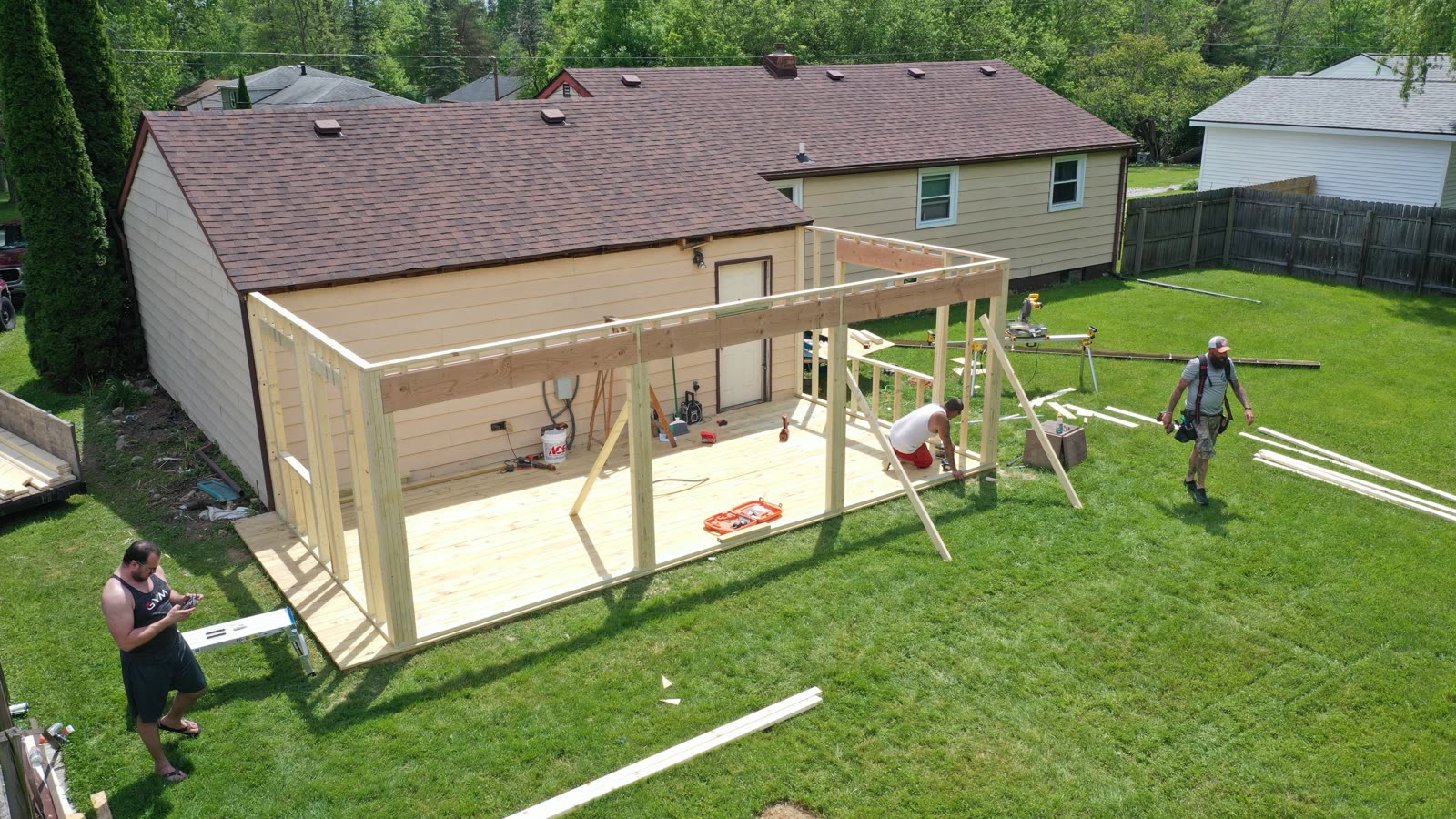
The studio going up. The floor deck is down and the first walls are framed.
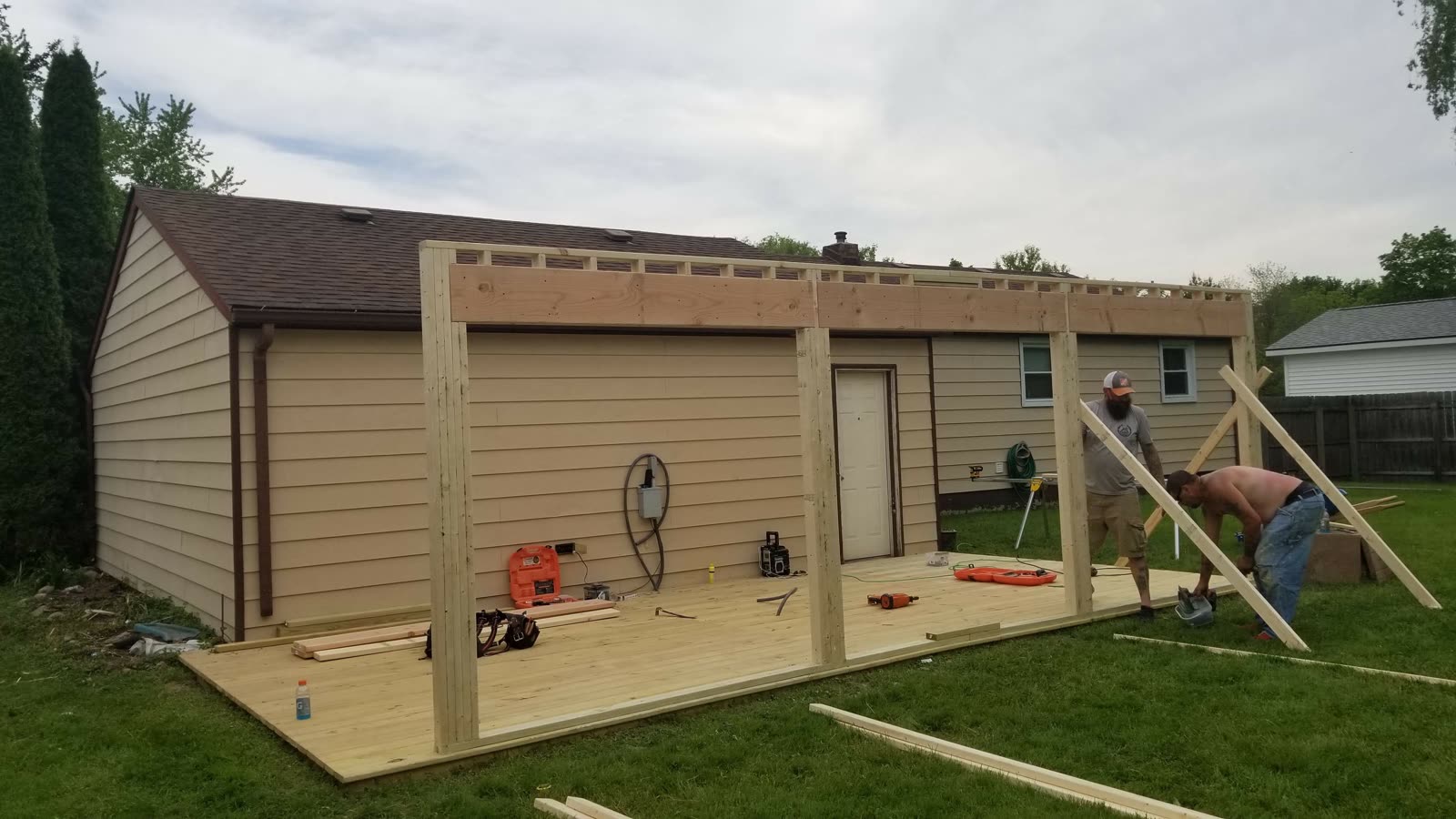
The long header across the front is what makes the wide, open wall possible.
Building it ourselves meant every decision could be made for the camera:
- A clear span. No posts in the middle of the floor. A green screen stage needs distance between the performer and the screen to keep green light off skin and hair, and distance between the camera and the performer for a full-body shot. That is floor area, uninterrupted.
- A front wall that opens. One whole side is sliding glass. Sets, flats, desks, and road cases roll straight in at ground level.
- Light from the ceiling, not the floor. The lighting hangs from an overhead track grid, so there are no stands to trip over or to creep into a wide shot, and a lighting setup can be changed in minutes instead of rebuilt.
- A built-in control position. Multiple cameras feed a live switcher with program monitors, so a shoot can be cut live, recorded per camera, or streamed, without rearranging the room.
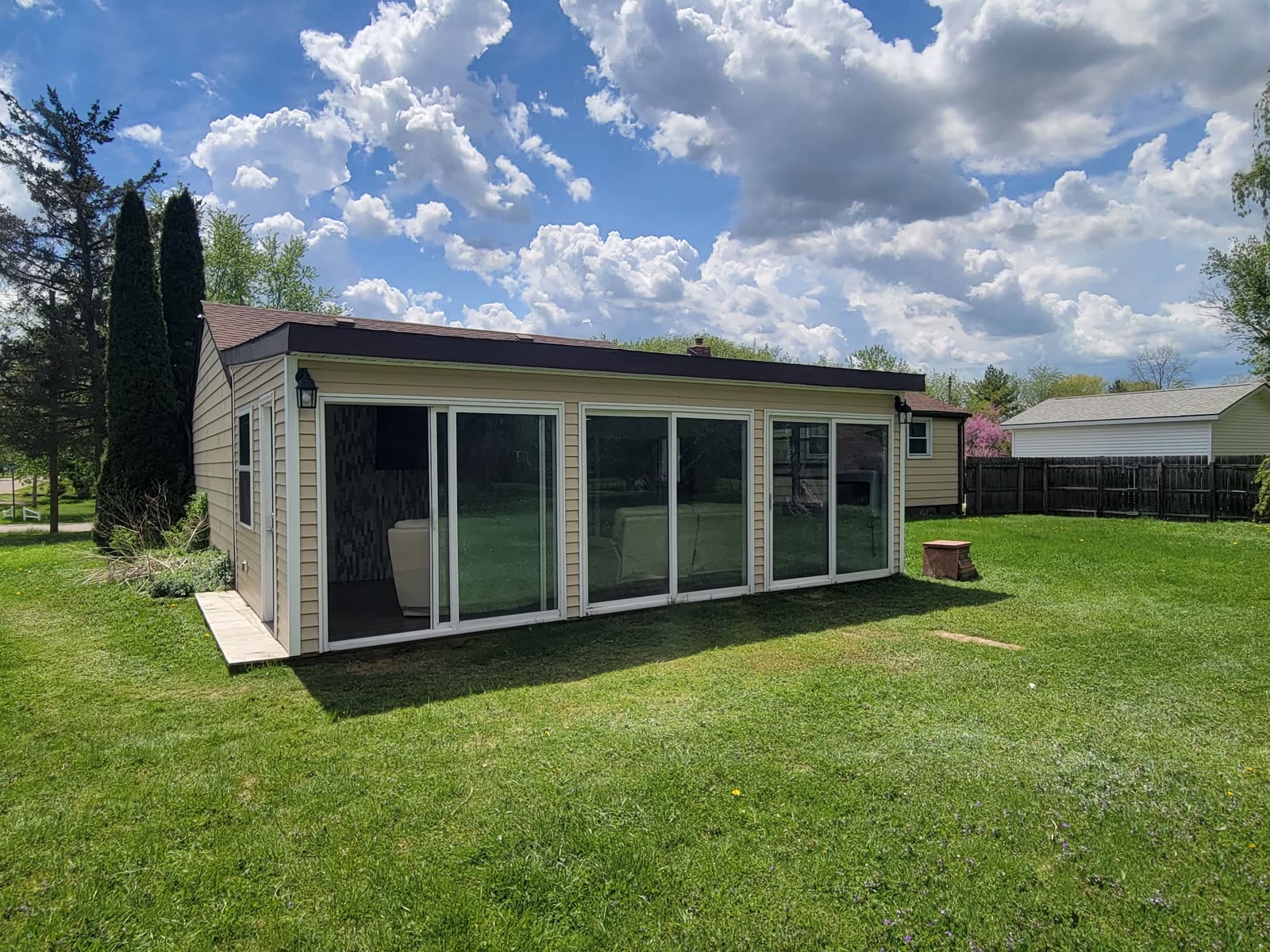
Finished. The glass wall is the loading door.
What the room does on a normal week
Hot Cheap Comedy is the most visible thing made here, but it is a small share of the calendar. The same room is a green screen stage for sketches and commercials and a multi-camera set for podcasts, interview shows, and client shoots. The overhead grid and the video wall backdrop mean it can change from one to the other between a morning session and an afternoon one.
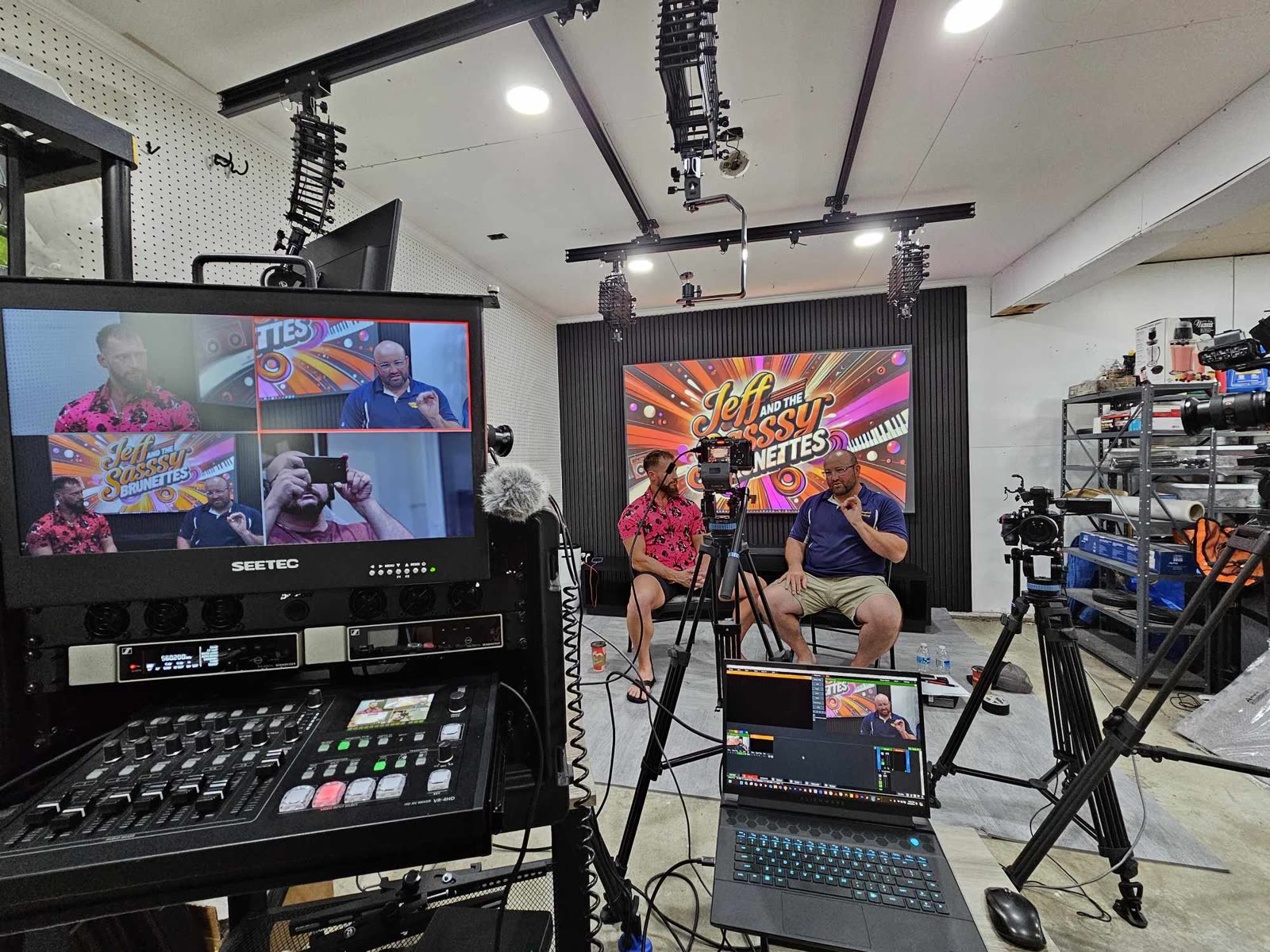
A multi-camera podcast taping in the studio: overhead lighting grid, video wall backdrop, and a live switcher cutting the show as it happens.
For a client, that adds up to three things:
- There is no outside stage to find, book, and pay for.
- There is no setup day, because the room is already lit and wired.
- Scheduling is a conversation with us, not with a third party's booking calendar, which is how a video gets made in a week instead of a month.
Editing and finish
The edit was built from the AI transcript, as every episode in this series is now, so takes were chosen by reading before anyone scrubbed footage. AI masking pulled the rough mattes on the keyed shots, which matters on an episode where performers wave cash around and lean across each other. The grade, the final key, and every timing decision were made by a person. Escalation is a rhythm, and the edit holds each new bet just long enough for the audience to think "surely not" before the next one lands.
What this means for your brand
You do not need a gym, an office, a clinic, or a newsroom to set a video in one. You need a well-built room, a script, and a team that has done it enough times to make the seams disappear. Whether it is a commercial, a podcast, or a series of your own, the studio that made High Stakes is the same one we would put you in.
Want this pipeline for your brand?
Everything in this post, from the green screen stage and the generated backgrounds to the AI-assisted edit and Studio Projects itself, is the same pipeline we use for brand films and commercials out of Grand Blanc, Michigan. If you want more video without a bigger budget, tell us what you're making and you'll get a real producer's reply, not a rate sheet. Browse the rest of the series on our work page.