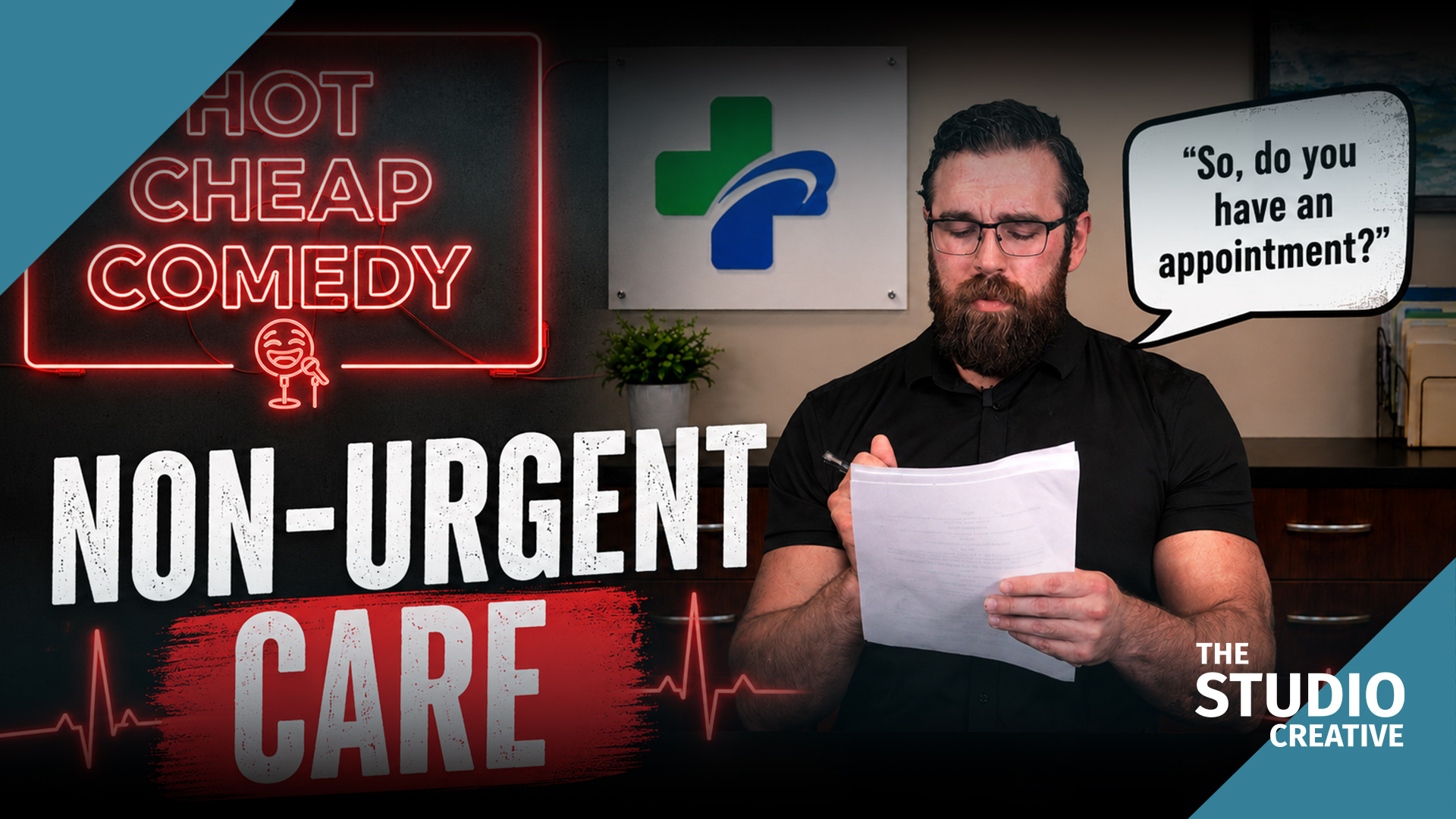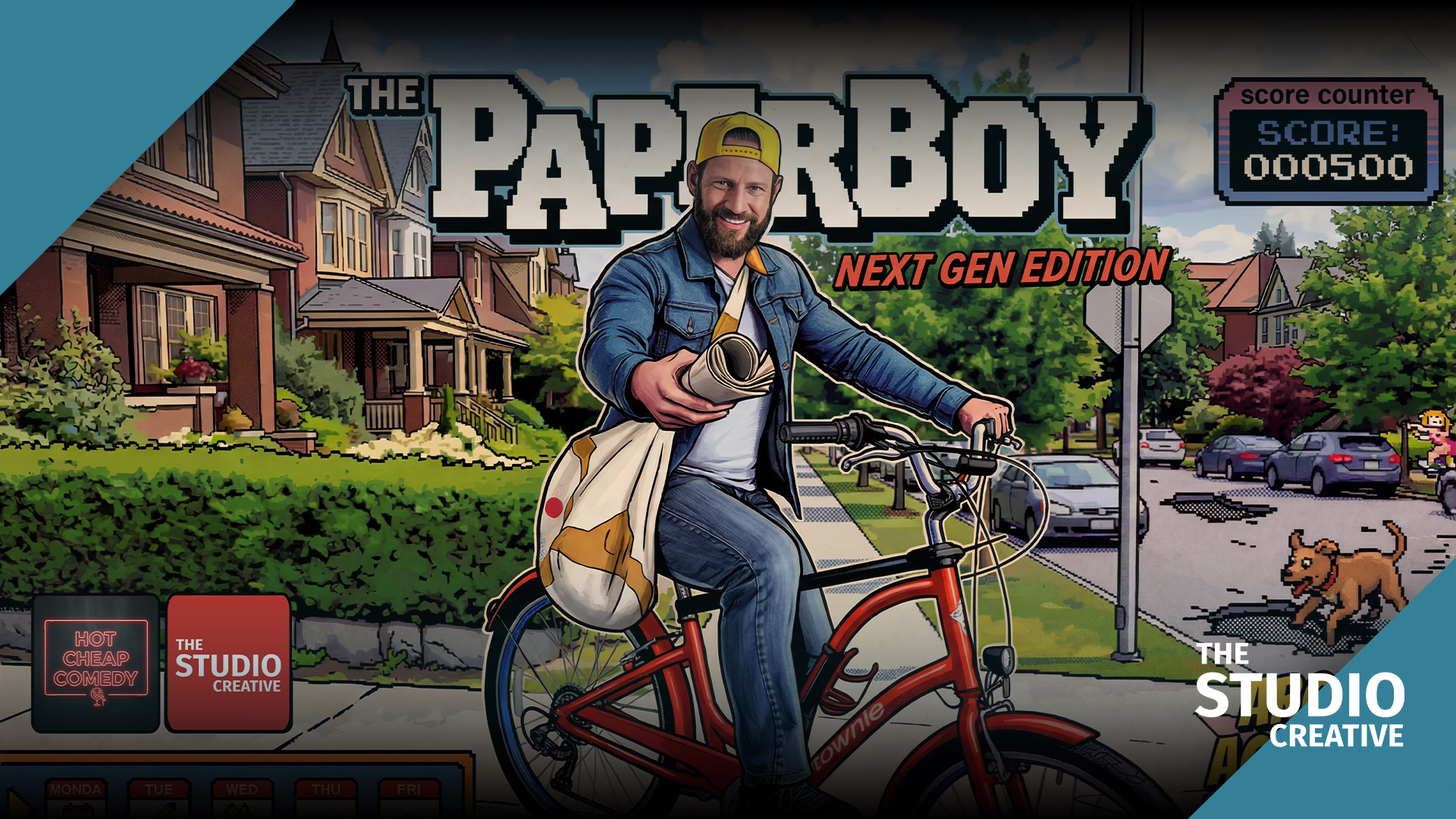

Fantasy Football is a five and a half minute sketch about a man whose Monday night goes very wrong. Tyler needs the Detroit Lions to beat the Kansas City Chiefs to win his league, and then he finds out who he is playing against: Ivan Gimicoff, an undefeated Russian assassin who does not lose, only punishes. Suddenly the only way to survive is for his own team to lose. It is the biggest episode Hot Cheap Comedy has made with us, and it took a lot of takes. This is how we shot it, and how our own software kept every one of those takes in order so the edit did not drown in them.
At a glance
- The sketch. A Lions fan on Monday night needs Detroit to lose, because the man he is about to beat is an assassin.
- All green screen. A living room, a broadcast booth, a stadium press box, a black void for the villain's video messages and an igloo, all built in post.
- A lot of takes. A solo performer reacting to things that are not in the room is slow to get right, and every attempt has to be findable later.
- Studio Projects kept it organized. Our app ties every shot to its scene and character and organizes the shots in our editor.
Watch Fantasy Football on its own page, then come back for the breakdown.
The sketch: win, or punishment
Josh Gulban's script opens on Tyler, on the phone in his living room, bragging that he has not missed a pick on his betting app all season. It is Monday Night Football, the Lions are hosting the Chiefs, and if Detroit wins, Tyler takes the $500 prize. He looks up the one player he is tied with. The screen name is Russian Assassin. The email address ends in .gov. A quick question to his smart speaker confirms the worst: Ivan Gimicoff is undefeated, and the last person who tied him did not live to see the end of the game.
From there the sketch is a slow-motion panic attack cut against the broadcast. The Lions return the opening kickoff for a touchdown. The announcers wave to a watch party in Moscow full of unhappy fans in Chiefs jerseys. Every time Detroit does something good, a new video message from Ivan arrives, colder than the last ("There is no lose. Only win or punishment."), until Ivan reads out Tyler's home address and Tyler is screaming at his own team to lose.
With seconds left and the Lions about to win, Tyler runs out of the house, into the stadium and onto the field, and intercepts the pass himself. Security piles on him, the ball comes loose, a Lions receiver scoops it up and runs it in anyway. Detroit wins. Tyler gets handcuffed.
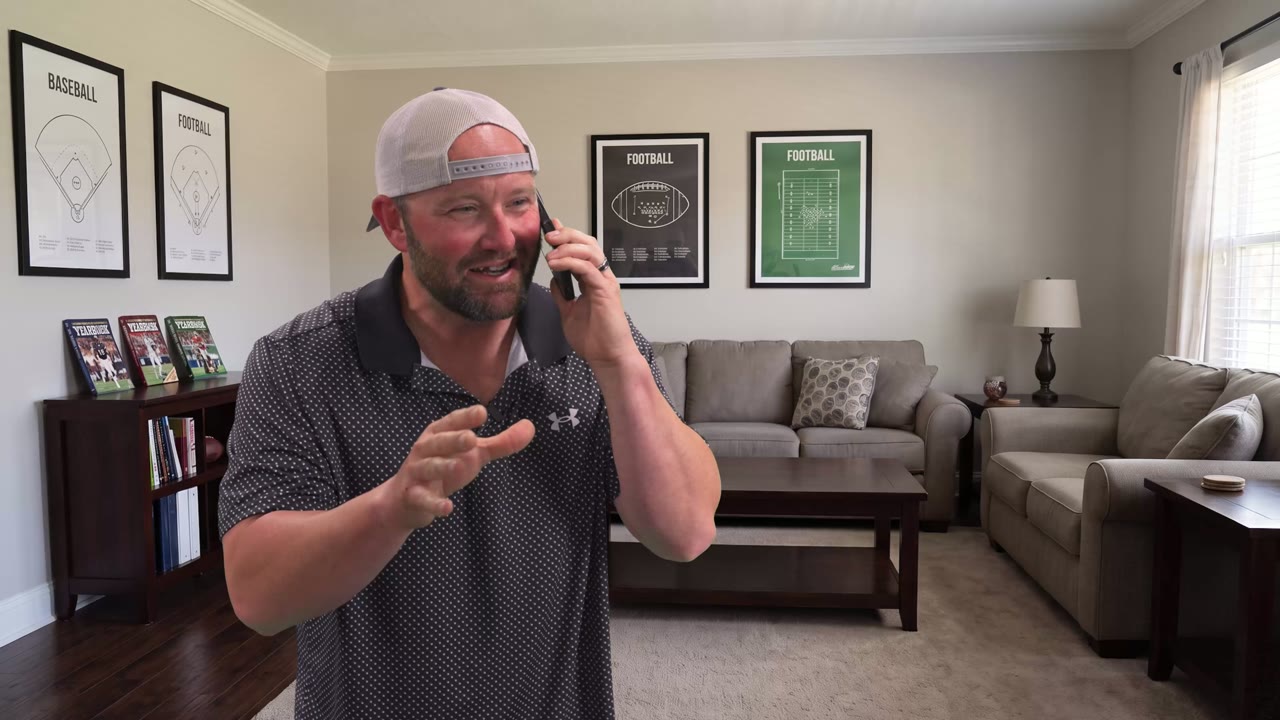
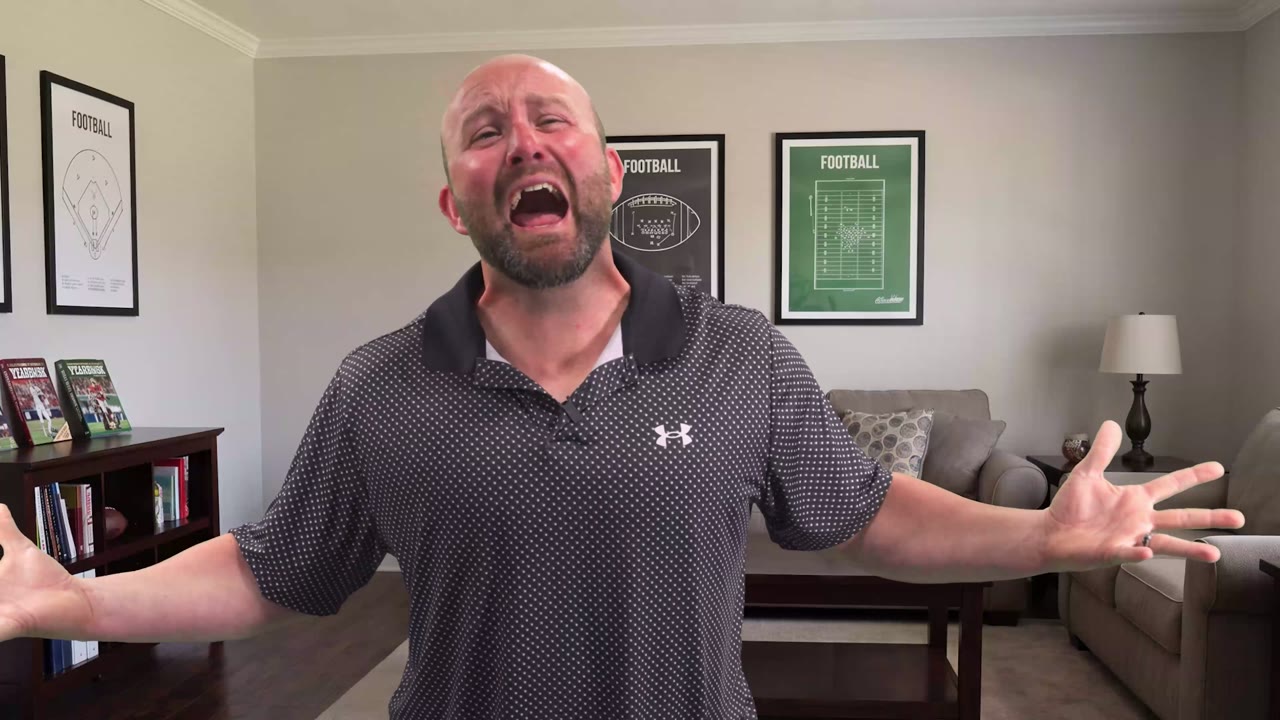
The living room is a background image. The couch, the prints and the window were never in our studio.
Five worlds, one green screen
Nothing in Fantasy Football was shot on location. The whole episode was filmed on the green screen stage in our studio in Grand Blanc, and every setting was built behind the performers afterwards:
- The living room, where Tyler spends most of the sketch unravelling.
- The broadcast booth, a TV studio with on-air graphics and replay screens behind the announcer.
- The stadium press box, with a full crowd and field through the glass.
- Ivan's video messages, shot against black so they read as a clip on a phone.
- The igloo, a year later and a long way from home.
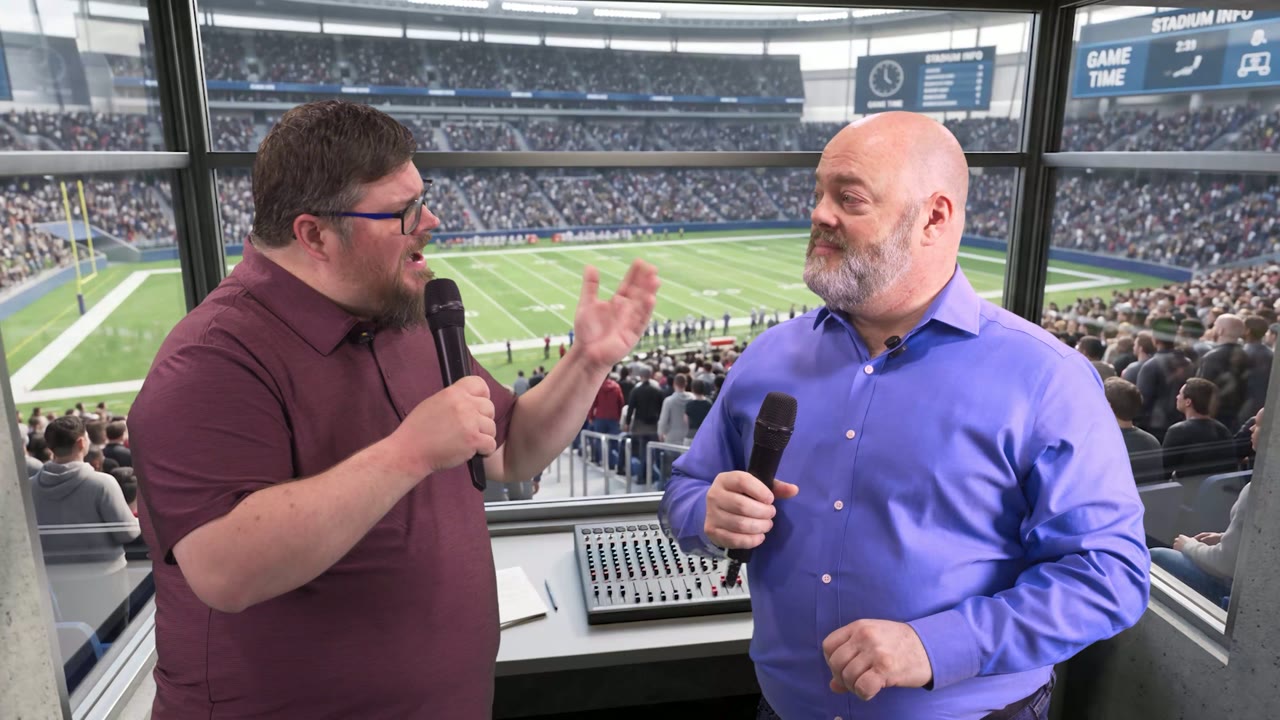
The press box. Two performers and two hand mics on a green stage, with the stadium added behind them.
Those settings came from Studio Projects, the software we built for this series. Upload a basic script and it breaks the episode down scene by scene with a visual example of each one, describes every character, builds a shot list for each performer, and generates the background images that replace the green screen. By the time anyone stood on the stage, the booth and the press box already existed, so the camera could be matched to them on the day.
Why this one took so many takes
Some sketches land in a handful of takes. This one did not, and the reasons are baked into the script. Most of the comedy is one man reacting, alone, to things that are not in the room: a game on a TV, a talking smart speaker, a video message from a killer. The performer has to hit the reaction at the exact moment the broadcast or the message lands, even though on the day he is looking at a green wall. Get the timing a beat early or late and the joke dies, so you go again.
The broadcast side has its own rhythm. The announcers' play-by-play, from the opening kickoff to the fumble and the last-second miracle, has to build to exactly the moments Tyler reacts to, and those two halves were shot separately. Add the villain's messages, shot on their own against black, and you have a sketch assembled from many small pieces that all have to fit together in the edit.
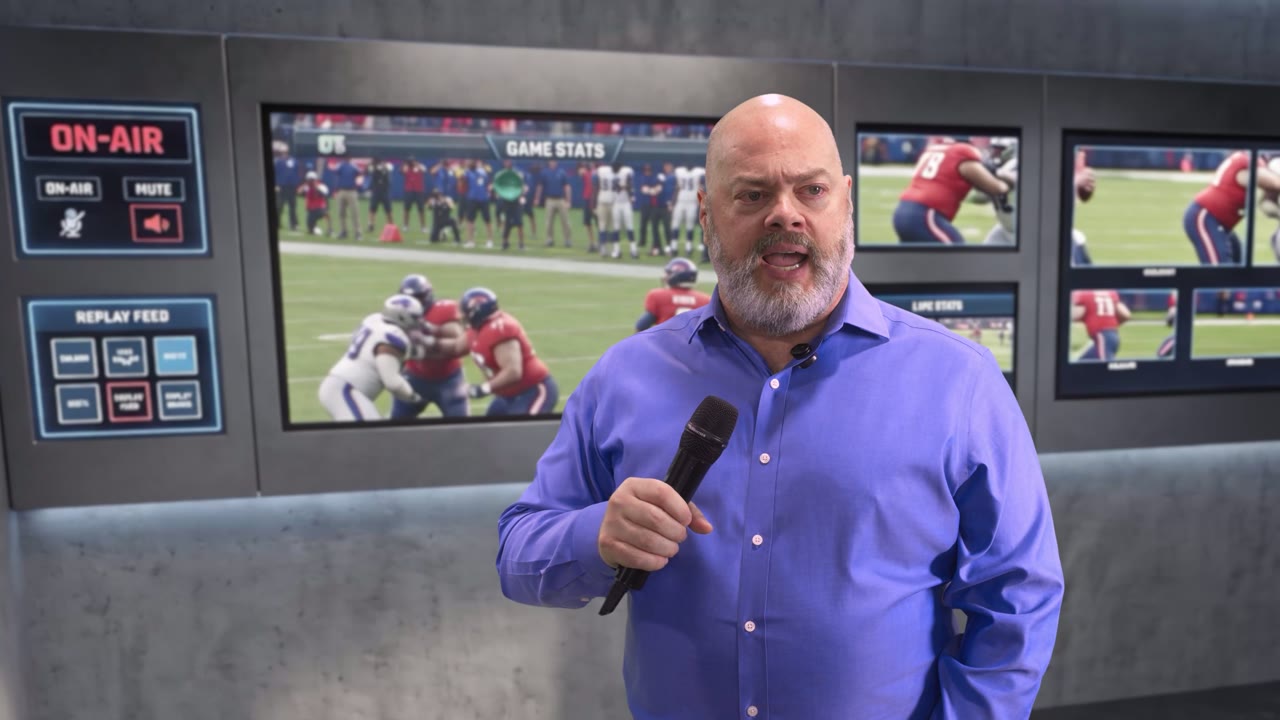
The broadcast booth. Every line here had to line up with a reaction shot in the living room, filmed at a different time.
How to organize footage for editing
This is where most productions quietly lose days. Whatever software you use, the principles are the same:
- Organize by scene and character, not by card or by clock. An editor thinks in moments: Tyler finds out, the kickoff return, the fumble, the run onto the field. Footage should be filed the same way.
- Mark the keepers on the day. A note on set about which take worked, and why, is worth more than any amount of scrubbing later.
- Keep every performer's shots findable on their own. When a scene is built from pieces shot at different times, you need all of one person's attempts side by side.
- Name things the same way every time. Consistent scene and take names are what make a search in the editor actually work.
- Start the edit organized. The editor should open a project where the shots are already sorted, not a folder of clips named by the camera.
Studio Projects: every shot where the editor expects it
On Fantasy Football, that job fell to Studio Projects. Because it already knows the episode scene by scene and character by character from the script, it ties every shot back to its scene and its performer and organizes the shots in our editor. With the takes piling up, that is what kept the edit moving: instead of hunting through a long list of clips for the right reaction to the right interception, the editor opened the scene and found them together.
Ivan and his bodyguards, shot against black for the video messages. Separate pieces like this are exactly what gets lost without an organized project.
The ending: a year later, in the snow
The last scene jumps a year ahead and a long way north, to eastern Greenland. Tyler has been living in an igloo, and he has finally decided he cannot hide forever. He opens the door. Ivan and his two bodyguards are standing in the snow, and Ivan has one question: double or nothing?
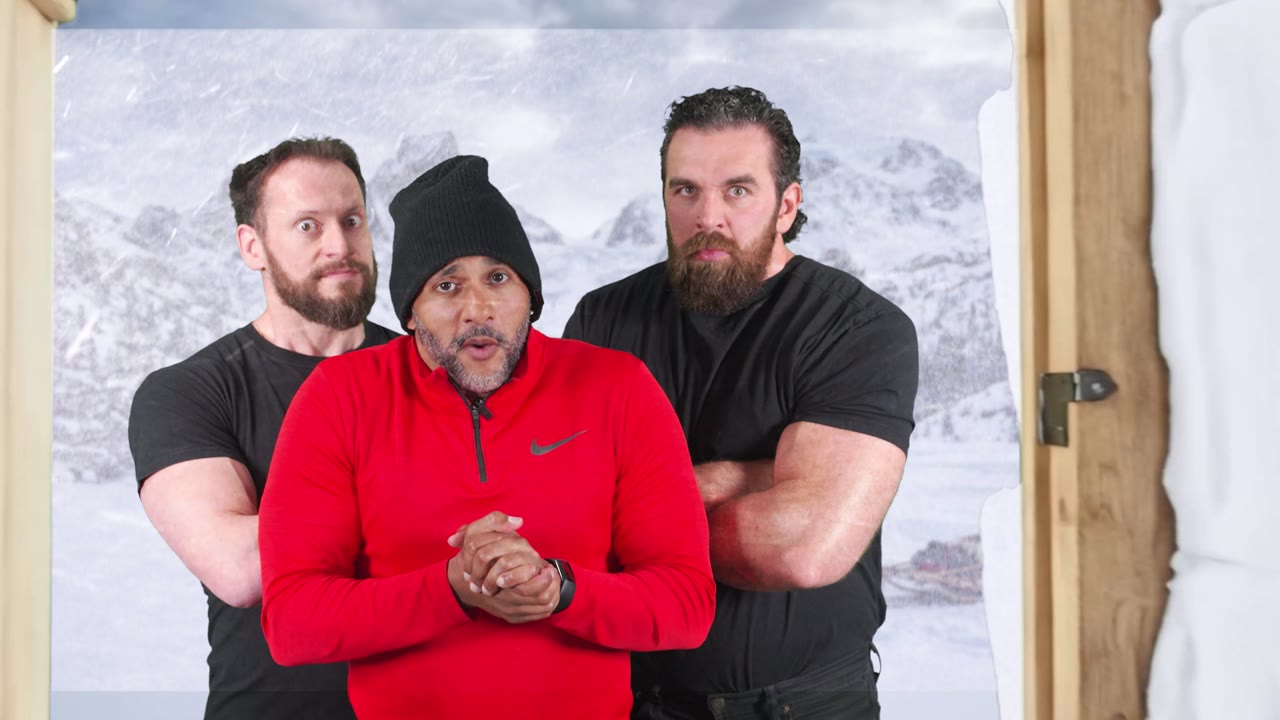
The igloo doorway, the last shot of the sketch. The snow and the mountains were added in post.
Frequently asked questions
How do you organize footage for editing?
By scene and by character rather than by camera card or recording time, with the best takes marked on set and consistent names for every scene and take. The editor should open a project where the shots are already sorted. We use our own app, Studio Projects, which organizes the shots in our editor from the script breakdown.
Can a whole comedy sketch be shot on green screen?
Yes. Fantasy Football has five settings, including a living room, a broadcast booth, a stadium press box and an igloo, and none of them was a real location. The performers were filmed on our green screen stage and every background was built behind them afterwards.
Why do some scenes need so many takes?
Reactions to things that are not in the room are hard to time. When a performer is reacting to a TV, a phone or another actor who was filmed on a different day, the timing has to be right to the beat, so it usually takes more attempts to get the version that lands.
Want a production like this?
Hot Cheap Comedy writes the scripts. We do everything else: the virtual sets, the shoot, the direction, the edit and the finish. The same green screen stage, the same generated backgrounds and the same organized edit are what we use for brand films, commercials and social video for businesses. Tell us about your project and a producer will reply with real advice, usually the same business day. Browse the rest of the series on our work page.