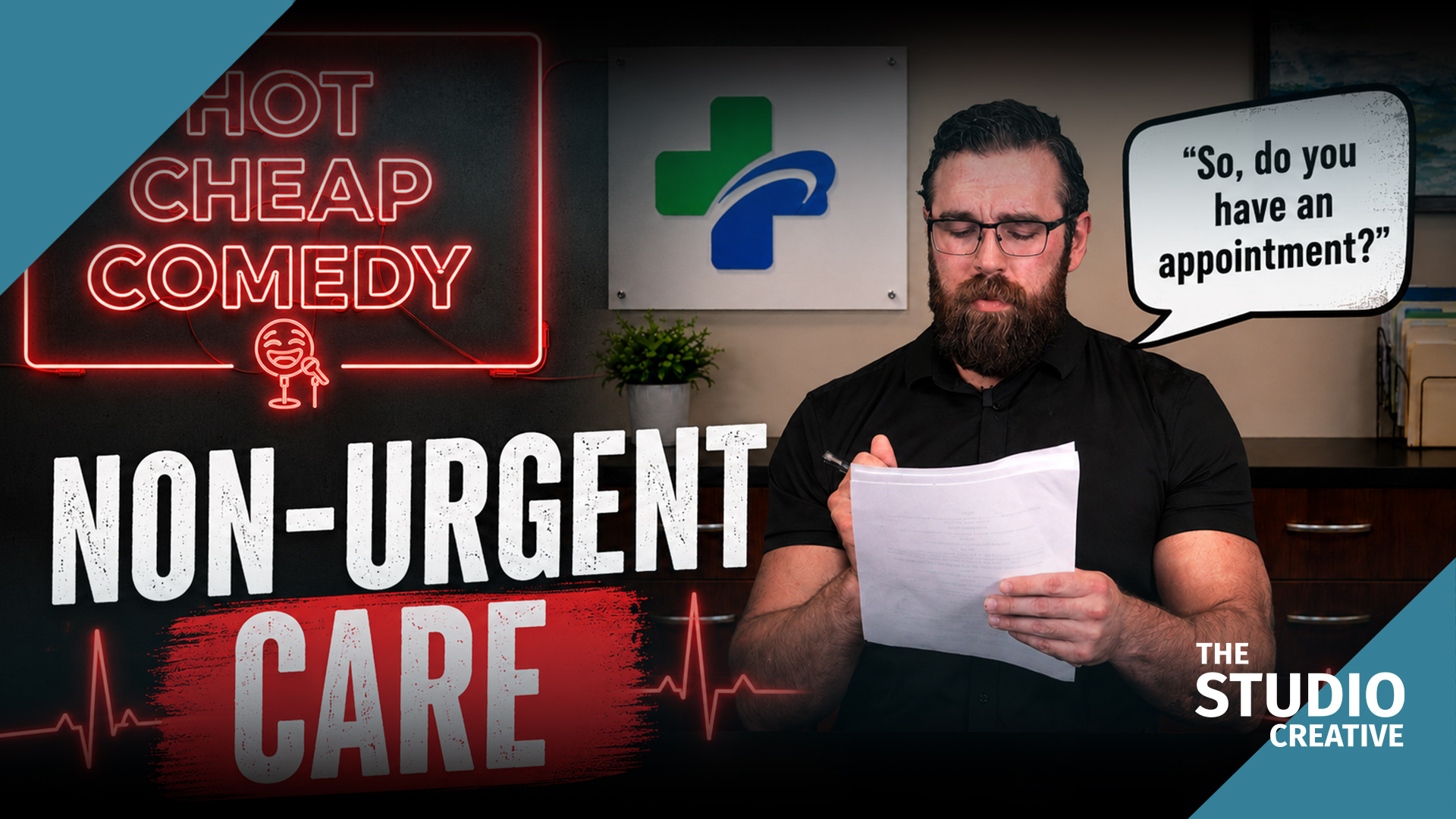
Non-Urgent Care puts a waiting room full of people who will not be seen today in one small clinic set, and then lets them talk. It is the most crowded episode of Hot Cheap Comedy we have shot, the cast is stacked with professional wrestlers, and it came together faster than sketches with half as many performers. This post is about why that is, and why a wrestling locker room turns out to be one of the best improv rooms you can put on a call sheet.
At a glance
- A waiting room full of wrestlers. Jake Doyle, Joe Coleman, Chaz Montana, Danny Shay and more of the Michigan independent scene.
- Wrestling is improv. Performers agree on a structure and a finish, then fill the middle live, which is what a sketch needs.
- Fewer takes. A cast trained to hand a moment back and forth moved the most crowded episode yet quickly.
- A script worth deviating from. Josh Gulban writes each character one specific want and leaves room in the margins.
Watch Non-Urgent Care on its own page, then come back for the breakdown.
Who is in the room
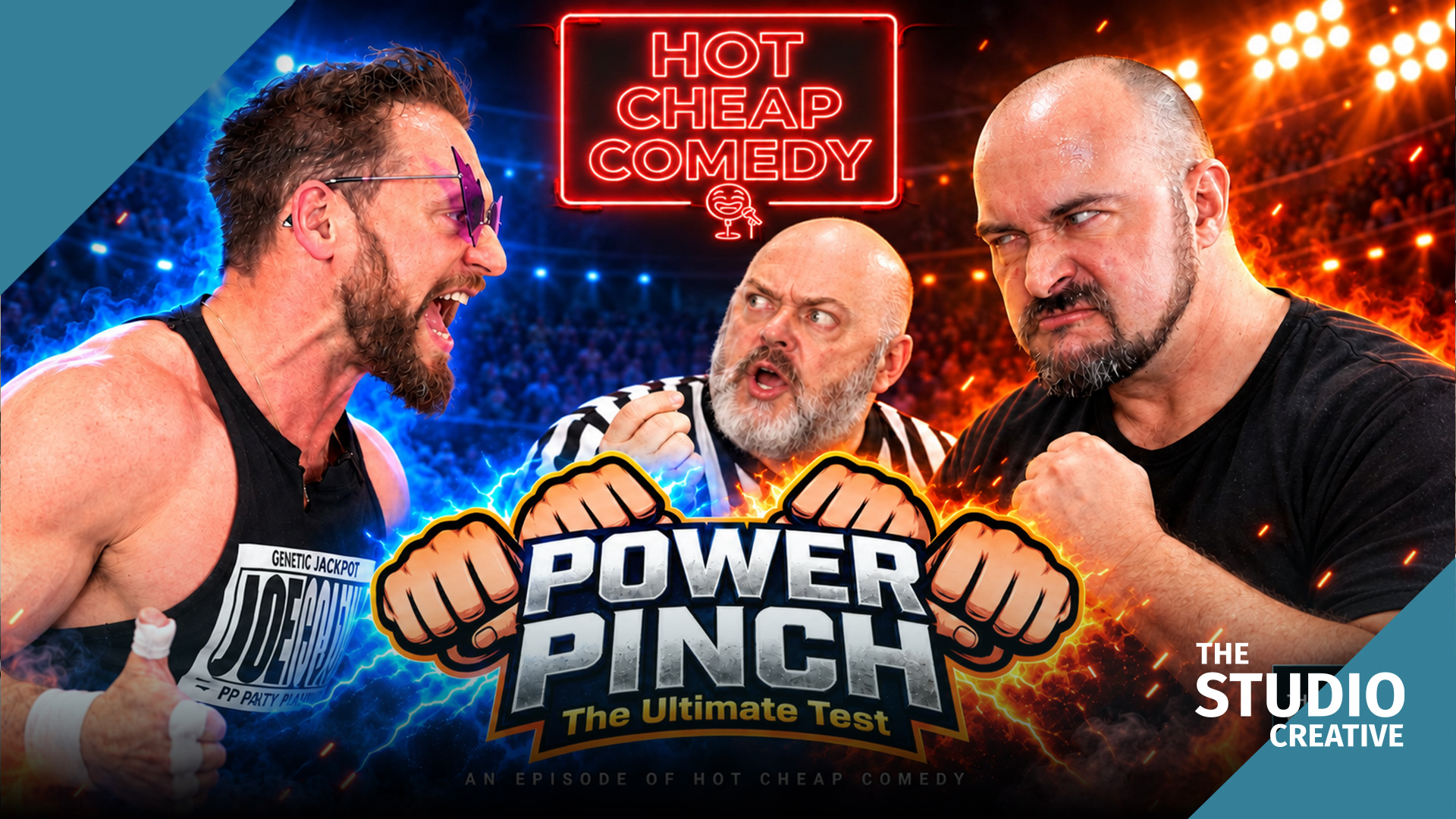
The waiting room is full of wrestlers. Jake Doyle, currently on AEW television and known for years on the independent scene as Jake Something, plays it straight while everything around him escalates. "The Genetic Jackpot" Joe Coleman brings the physicality you would expect from someone who has spent a career making a crowd react to a single look. Chaz Montana, the character Studio Creative owner Jeff Schniers spent nearly twenty years playing in the ring, is in the mix, along with Danny Shay and more of the Michigan independent scene.
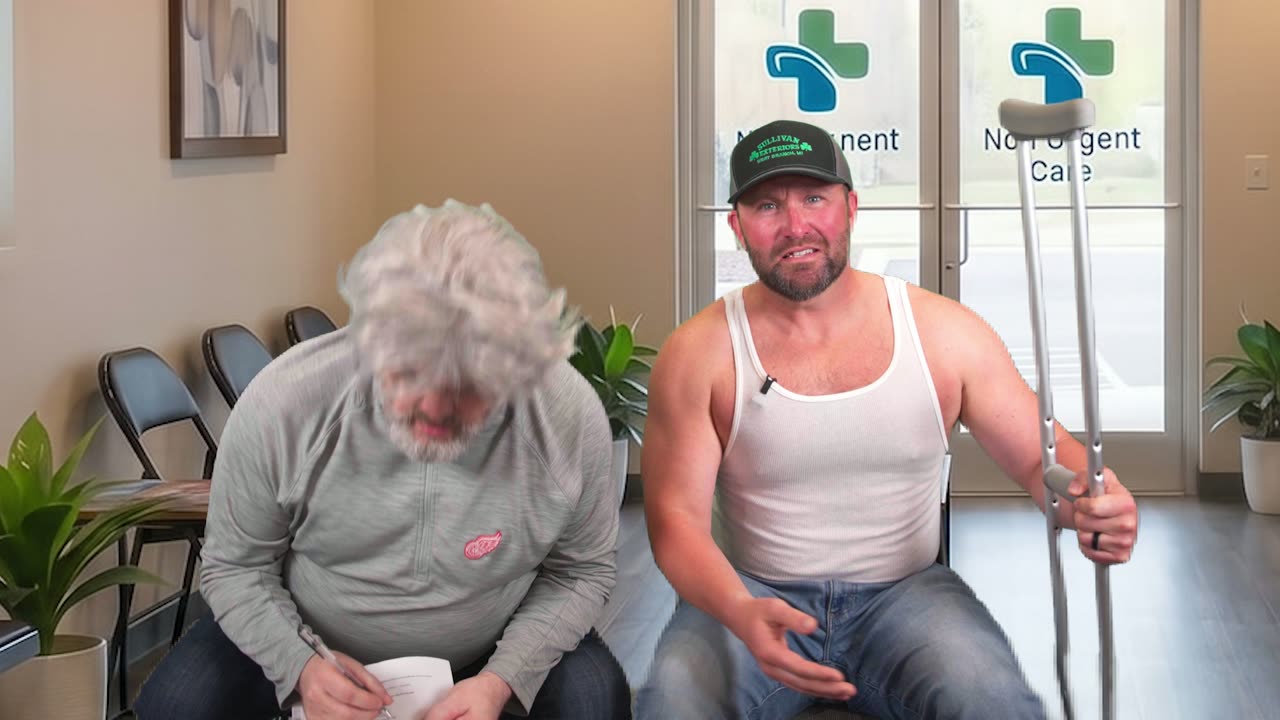
The waiting room.
That casting is not a novelty. It is the reason the episode works.
A wrestling match is improv with the stakes turned up
People outside the business assume wrestling is scripted line by line. It is not. Performers agree on a structure, a few beats, and a finish, then go out and fill the middle live, adjusting to a crowd that is telling them every second whether it is working. That is improv. It is improv performed in front of thousands of people with no cut, no second take, and a partner whose safety depends on your timing.
Put that skill set in a comedy sketch and four things show up immediately:
- They read the room. A wrestler can feel when a bit is landing and when it has gone one beat too long. On set that means performers who stretch a moment when it is working and cut it short when it is not, without being told.
- They work off a structure, not a script. Hand them the scene's purpose and the finish, and the middle fills itself. Most of the best lines in Non-Urgent Care were not on the page.
- They sell reactions. Comedy lives in the face of the person who is not talking. Wrestlers spend their careers being watched while someone else has the microphone, so the background of every frame is alive.
- They protect their partner. In the ring, making the other person look good is the job. In an ensemble scene that instinct is gold: nobody steps on a punchline that belongs to someone else.
Teamwork is the production value
An ensemble episode should be the hardest kind to shoot. More performers means more eyelines, more coverage, more ways for a take to fall apart. In practice, Non-Urgent Care moved quickly, because a cast trained to hand a moment back and forth needs fewer takes than a cast performing at each other.
It also changes the room's tone. Wrestlers travel together, dress together, and get hurt together. They show up for a comedy shoot already comfortable being ridiculous in front of each other, which is the hardest part of improv for most people and takes about a second for this cast.
The writer in the room: Josh Gulban
None of this works without a script worth deviating from. Josh Gulban writes Hot Cheap Comedy, and his pages are built for exactly this ensemble: a clear premise, characters who each want one specific thing, and room in the margins for performers to find what the page cannot.
The clinic is a good example of that design. A waiting room is a machine for comedy, because everyone in it wants to be somewhere else and nobody is allowed to leave.
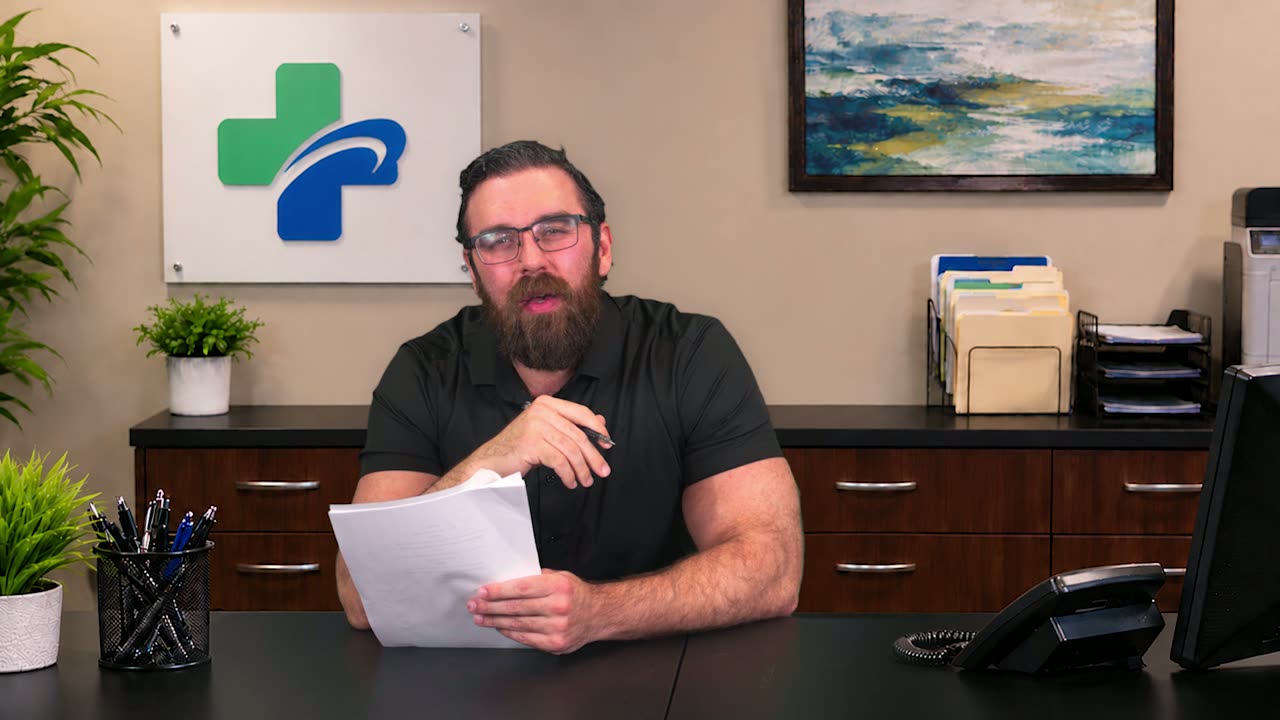
The front desk of the clinic set.
Josh sets that up, gives each character a reason to be there and a reason to be annoying about it, and then the wrestlers do what wrestlers do. He also works in the ring as Vinnie Scarboni, which is why the writing sits so naturally with this cast. He is writing for people he has worked with.
Studio Projects: who is in which scene
The bigger the cast, the more valuable it is to know at a glance who is needed when. Our own software, Studio Projects, takes a basic script and builds a shot list per character, so you can see every scene a performer appears in before anyone is booked. On an episode with this many people on set, that list is the difference between a smooth day and a waiting room of talent waiting on us. Upload the script, get the scene-by-scene breakdown with a visual example for each one, every character described, and the per-performer shot list that decides the schedule.
What this means for brand work
Most of our client shoots do not involve wrestlers, but the lesson carries. Cast people who are comfortable being watched, give them a structure instead of a word-for-word script, and let the best take come from the room rather than the page. The result is footage that feels like people talking instead of people reciting, and it is the fastest way we know to make a small production look and sound like a large one.
Want this pipeline for your brand?
Everything in this post, from the green screen stage and the generated backgrounds to the AI-assisted edit and Studio Projects itself, is the same pipeline we use for brand films and commercials out of Grand Blanc, Michigan. If you want more video without a bigger budget, tell us what you're making and you'll get a real producer's reply, not a rate sheet. Browse the rest of the series on our work page.