
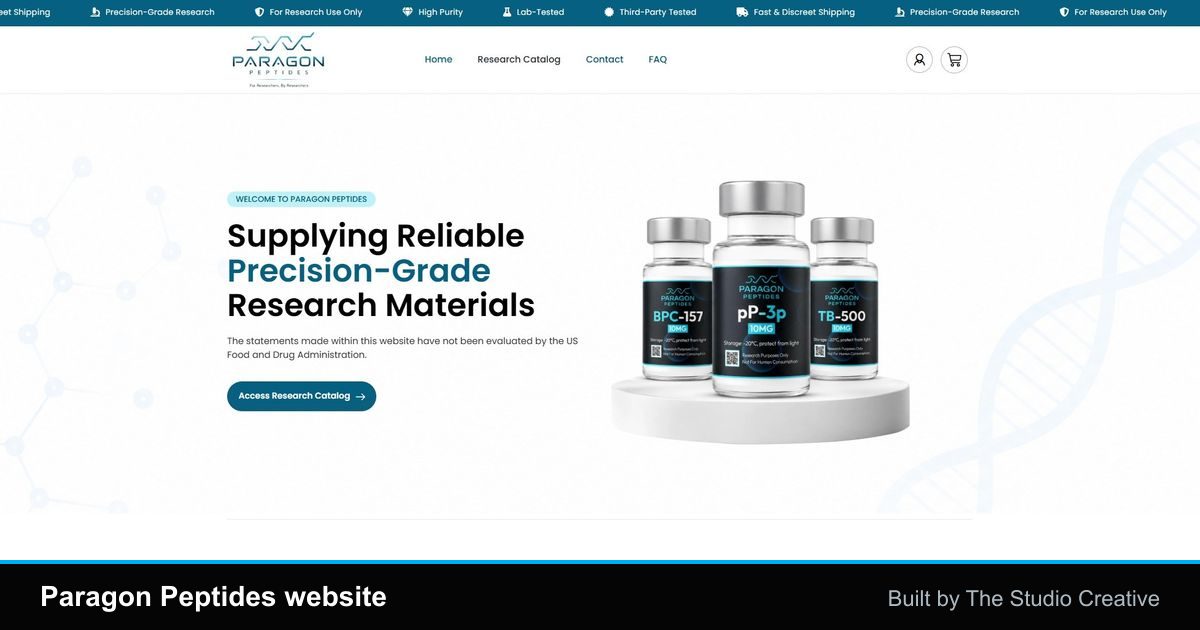
Most peptide start-ups find out the hard way that the usual playbook is closed to them. Google and Meta will not run the ads. Shopify will not host the store. Card processors are nervous. And since August 2026, the FDA has been sending warning letters that read a seller's whole website, not just its disclaimer. Paragon Research Labs launched Paragon Peptides into exactly that market in October 2025. Twelve months later its latest quarter took roughly three times the orders of its launch quarter, nearly all of it from customers it reached without paying for a single ad click.
At a glance
- Orders roughly tripled. The latest quarter took about 3x the orders of the launch quarter, and the best quarter 3.4x.
- From a handful to 40+ a month. Three orders in the launch month, more than 40 a month by summer, and nearly 400 in the first year.
- Bigger baskets. The average order grew by about 13% between the launch quarter and the latest one.
- Found without ads. About a third of all visits came from organic search. Paid ads brought in under 2%.
- Email that recovers sales. Abandoned-cart follow-up emails brought back half of the carts they followed up on.
- Built inside the rules. A researcher-only store with one research-use message on every page, so the owners never have to police it themselves.
The problem: the usual playbook is closed
A normal e-commerce launch runs on three things: a Shopify store, paid social and paid search. A research peptide brand gets none of them.
- No paid search or social. Google's healthcare and medicines policy and Meta's drug and pharmaceutical rules both shut out unapproved substances, and a research-use label does not change that.
- No Shopify. Shopify does not allow peptides or research chemicals, so a store built there can be switched off overnight.
- The whole site is the label. In its August 2026 warning letters the FDA said a Research Use Only disclaimer gave sellers no protection, and pointed to benefit claims, dosing calculators and reconstitution supplies sold alongside the vials.
So the brief was not "get traffic". It was: build a store that can stay open, then grow it on channels nobody can take away.
What we built
The store runs on WooCommerce on hosting the owners control, with checkout through the processor they chose. Every visitor meets a 21+ researcher account gate first, agrees to the research-only terms, and only then reaches the Research Catalog.
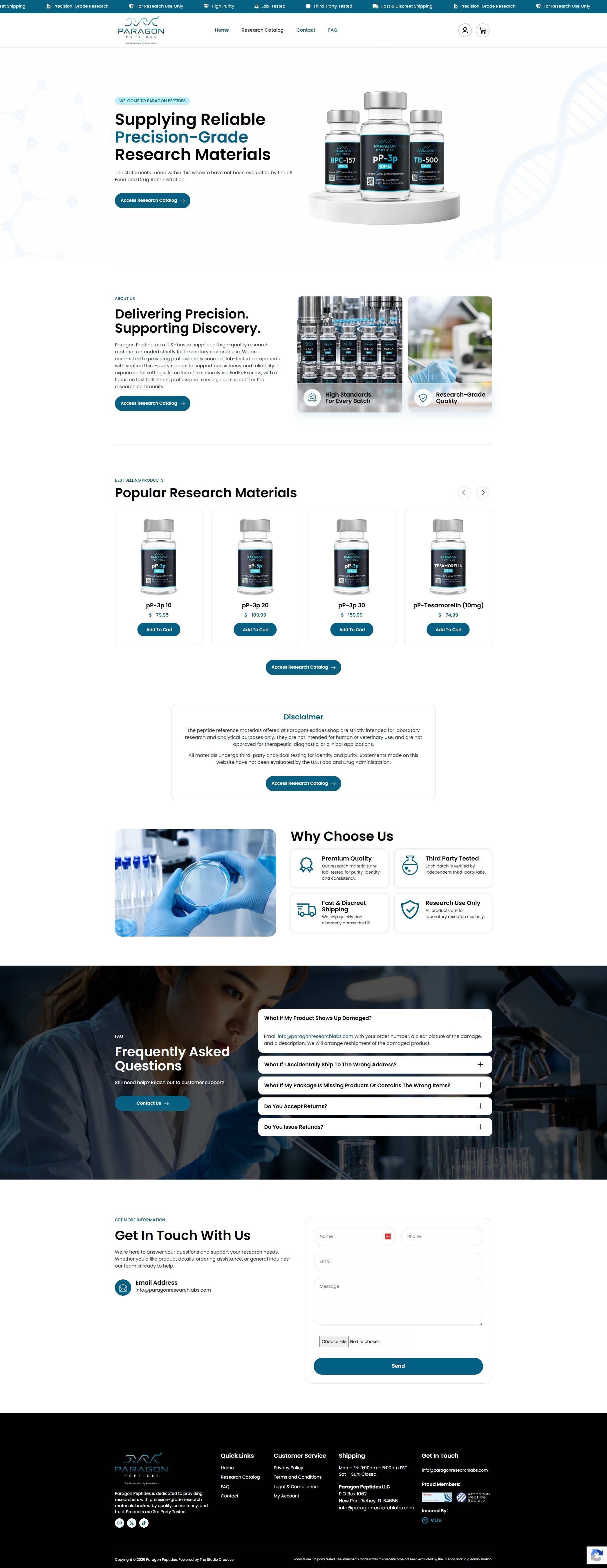
- One message on every page. Research materials for qualified researchers, said in the ticker, the hero, the catalog, the disclaimer and the footer. Nothing anywhere says otherwise.
- No human-use language and no dosing tools. Copy is about purity, testing, storage and handling. There is no calculator for anyone to read as dosing advice.
- Testing as the proof. Third-party testing is what the brand leads with, because it is the claim a research supplier can actually make.
- A checkout that converts. Apple Pay and Google Pay inside the card payment step, an FAQ that answers shipping and returns before they turn into chargebacks, and order attribution on every sale.
Every detail of the build, from the plugins to the eight FDA rules it follows, is on the Paragon Peptides website page.
How it grows without ads
With paid search and social off the table, growth has to come from channels the brand owns. Three did the work.
- Search. About a third of all visits came from organic search, from researchers looking for exactly what the catalog carries. Pages written around testing and handling bring them in without a word of the language that draws warning letters.
- An audience it owns. The researcher account gate is also a list. Every visitor who wants to buy becomes a known account, so the brand is building an audience no platform can switch off.
- Email that finishes the sale. When a signed-in researcher leaves a cart, a follow-up email goes out by itself. Half of the carts it followed up on came back as completed orders.
The results, twelve months in

The store opened in October 2025 and took three orders that month. By March 2026 it was taking more than 60 orders a month, and it has held above 35 a month every month since. The latest quarter, July to September 2026, took roughly three times the orders of the launch quarter, and sales grew a little faster than orders, because the average order grew by about 13% over the same stretch.
In total the store took nearly 400 orders and shipped close to 1,200 items in its first twelve months, with paid ads bringing in under 2% of visits.
What a new peptide brand can take from this
- Compliance comes first, because it keeps the store open. Every month you trade is a month of search rankings and customers you keep.
- Own your store and your list. WooCommerce, your processor and your researcher accounts mean no platform can take the business away overnight.
- Let email close the sales you already earned. A follow-up that runs by itself recovers orders that would otherwise be lost.
- Measure the orders. Traffic charts can mislead in this category. The order book cannot.
Questions peptide founders ask us
Can you run Google or Meta ads for a research peptide brand?
No. Both platforms prohibit them, and a research-use disclaimer does not change that. That is why every package leads with search, email and a store that converts: Paragon grew with paid ads bringing in under 2% of visits.
How long until a new peptide store takes steady orders?
Every brand is different and we will not promise a timeline. Paragon took three orders in its launch month and was past 60 a month within six months, on a store built to stay open and search pages that kept bringing researchers in.
Do you handle the FDA side or do we?
We build the store and write the marketing to the rules the FDA, FTC and ad platforms publish, and we keep checking them on every update. Final regulatory review stays with your counsel. Nothing here is legal advice.
What does it cost?
Each package is quoted for your brand, because a one-product start-up and a full catalog need different things. Tell us what you sell and you get a plain quote, with ad spend, certification and processor fees shown separately as your own costs.