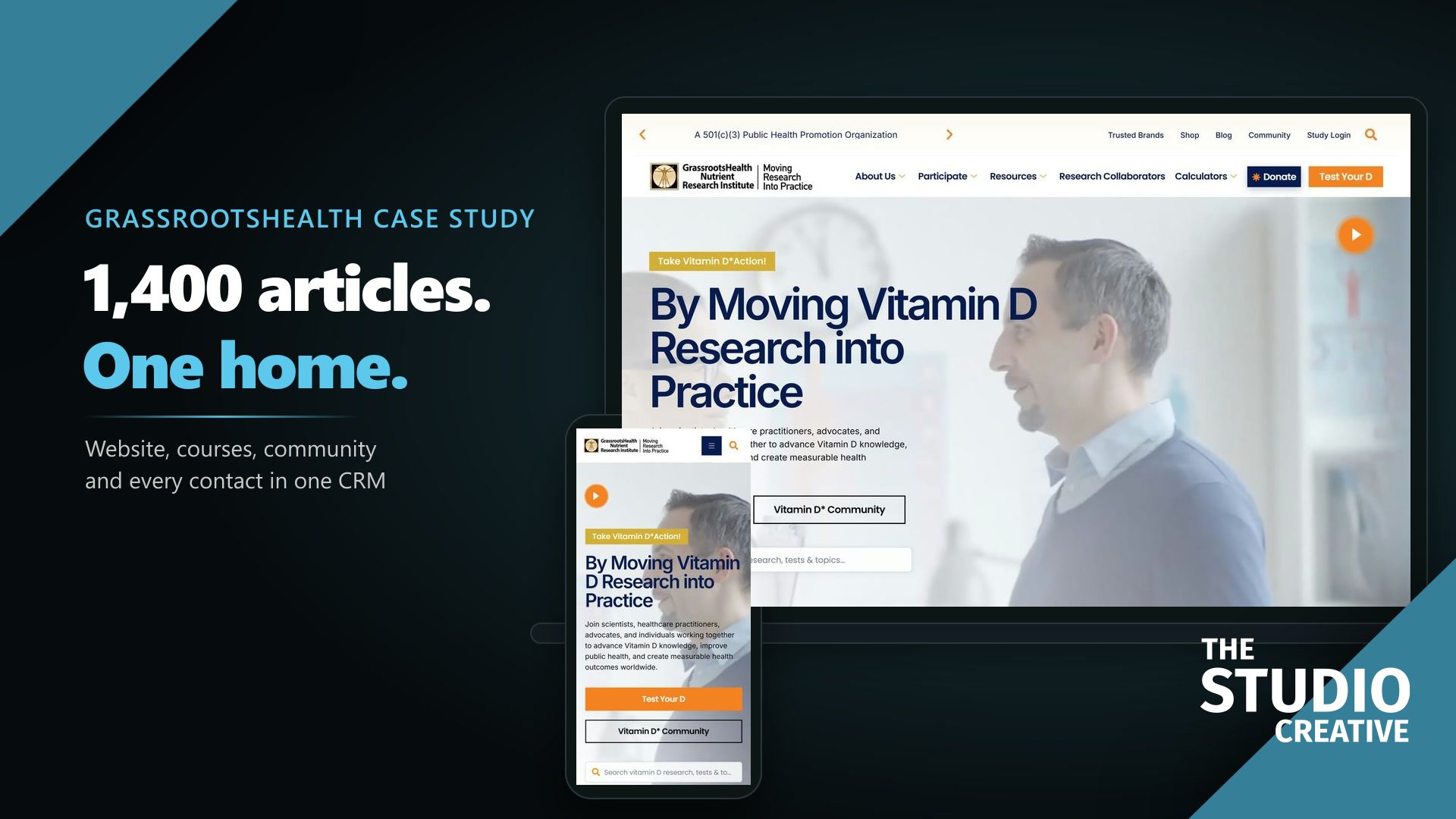
GrassrootsHealth Nutrient Research Institute has been moving vitamin D research into practice since 2007: a panel of scientists, the D*action population study, home test kits, calculators, a continuing education course for nurses and acupuncturists, and a blog that answers almost any vitamin D question a person could type. The trouble was where all of it lived. The articles sat on an older WordPress site, the courses on Kajabi, the newsletter on Constant Contact, and the people who cared about the work had no place to meet. Executive Director Jen Aliano wanted one home. On October 19, 2026, grassrootshealth.net became that home. This is what the organization got, and how it felt to get there.
At a glance
- One site for everything. A new WordPress site, live October 19, 2026, with more than 1,400 articles, 110 downloadable documents, 66 scientist and staff profiles, 22 videos, the calculators, the test kit shop and the courses all reachable from one menu.
- Found by the people who need it. Every article back to 2010 kept its place in search, organized by health condition, with a site-wide search that reads articles, documents and videos.
- A community of their own. Four member communities inside CRM Connect: participants, practitioners, scientists, and advocates and leaders. Live sessions inside the community, with replays saved for members.
- Every contact in one place. Course buyers from Kajabi arrived with their purchase history, course progress and test answers intact. Newsletter subscribers arrived with the lists they were on. One CRM, tagged and ready to send.
- Courses and donations that run themselves. The 11 CE Vitamin D*Education Course now sells and delivers from the same system, and the donation page carries a Start a Fundraiser option.
- A partnership, not a hand-off. Within a week of launch GrassrootsHealth signed our Essentials monthly program: hosting and site care, social posts, marketing emails and CRM support, every month.
Who they are, and what was in the way
GrassrootsHealth is a 501(c)(3) public health promotion organization in Encinitas, California. Its scientist panel includes researchers from Harvard, Boston University, Creighton, McGill and dozens of other institutions, and its D*action study has measured vitamin D levels in participants around the world for more than fifteen years. That work produced a lot of content: more than 1,400 blog articles, research summaries, charts, webinars, videos and five calculators.
Content that valuable deserves to be found, and it was getting harder to find. The site had grown by accretion. Courses lived on a separate platform with its own logins and its own monthly bill. The newsletter list lived somewhere else again. Practitioners who had earned a certification, advocates running local projects and scientists collaborating on studies had no shared space. And every new tool meant another subscription and another place for a contact record to go stale.
So the brief was not "make it look new". It was: put the whole organization on one foundation, lose nothing on the way, and give the people around it somewhere to belong.

What they walked away with
A site that puts 1,400 articles to work
The blog is the engine of the organization. Its oldest article dates from 2010 and new ones go up most weeks. Every one of them moved, with its images, its category and its address, so nothing a search engine or a reader had bookmarked went dead. On the new site the articles are sorted by health condition, from bone health to pregnancy, with a search box at the top of the blog and another in the hero of the home page.
- More than 1,400 articles, 110 documents, 22 videos and 22 events, each in its own section with its own sitemap, so search engines see the whole library.
- Search that reads everything. A site-wide search we built for the project looks through articles, documents and videos, and can open a video at the exact moment a topic comes up.
- Built for search from day one. Yoast SEO on every page, clean sitemaps, and Search Console access before launch, so indexing could be watched from the first night.
- The tools people come for. The D*calculator, a children's calculator, an omega-3 index calculator, a serum level converter and a mcg to IU converter, all on the new site with their references under them.
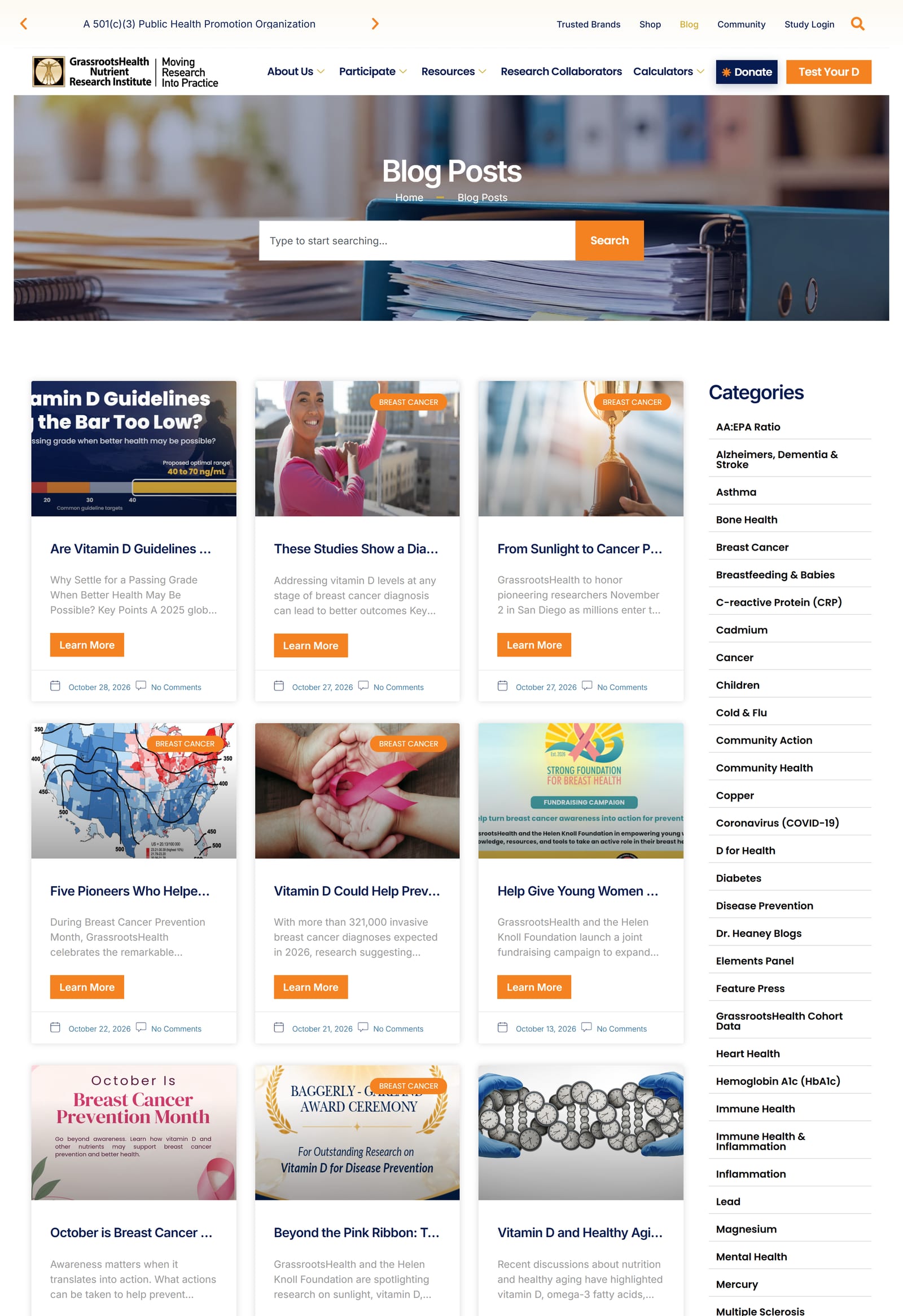
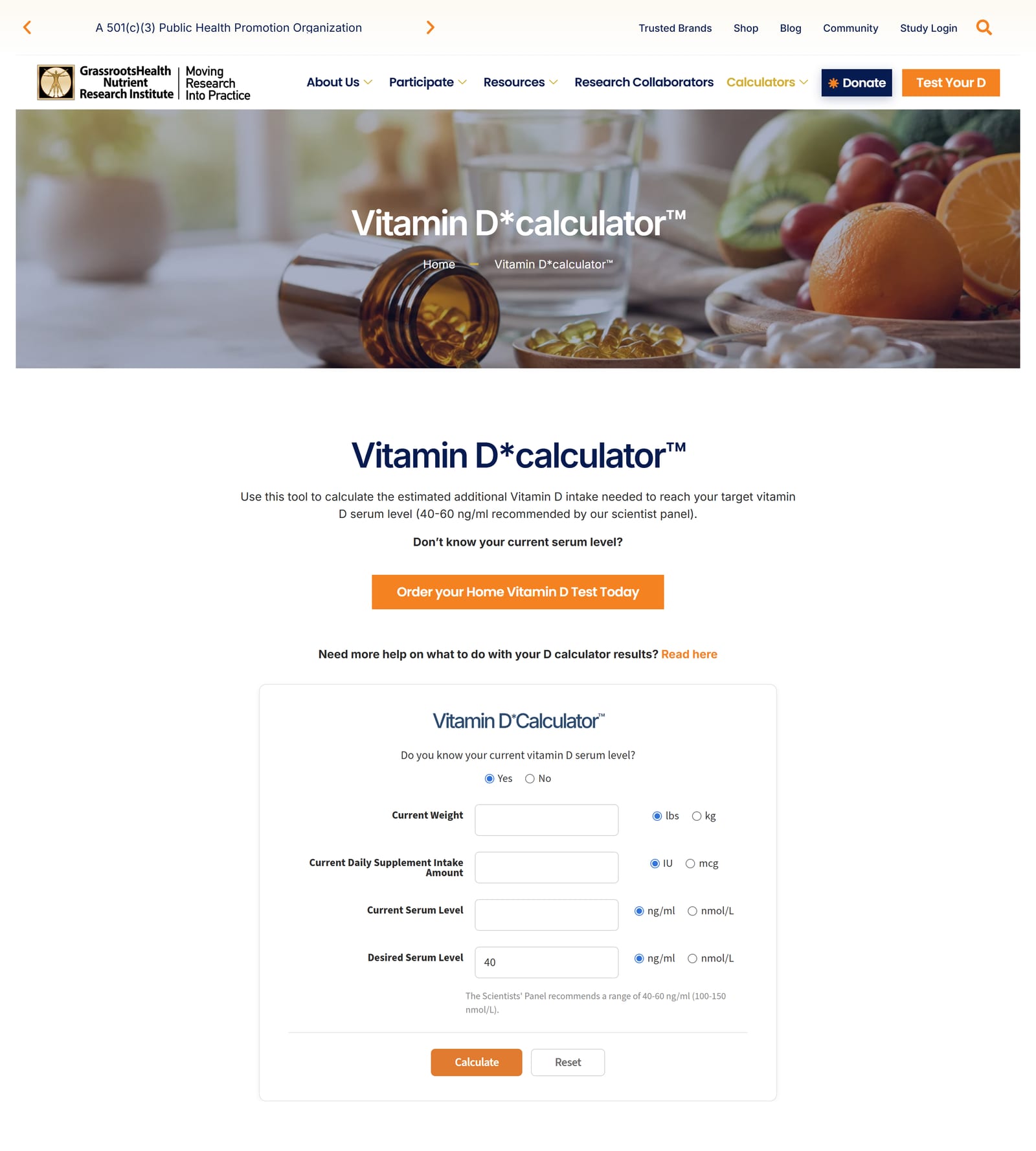
Left: the blog, organized by health condition, with search at the top. Right: the D*calculator, the most used tool on the site, now with its references on the same page.
A community built inside the CRM
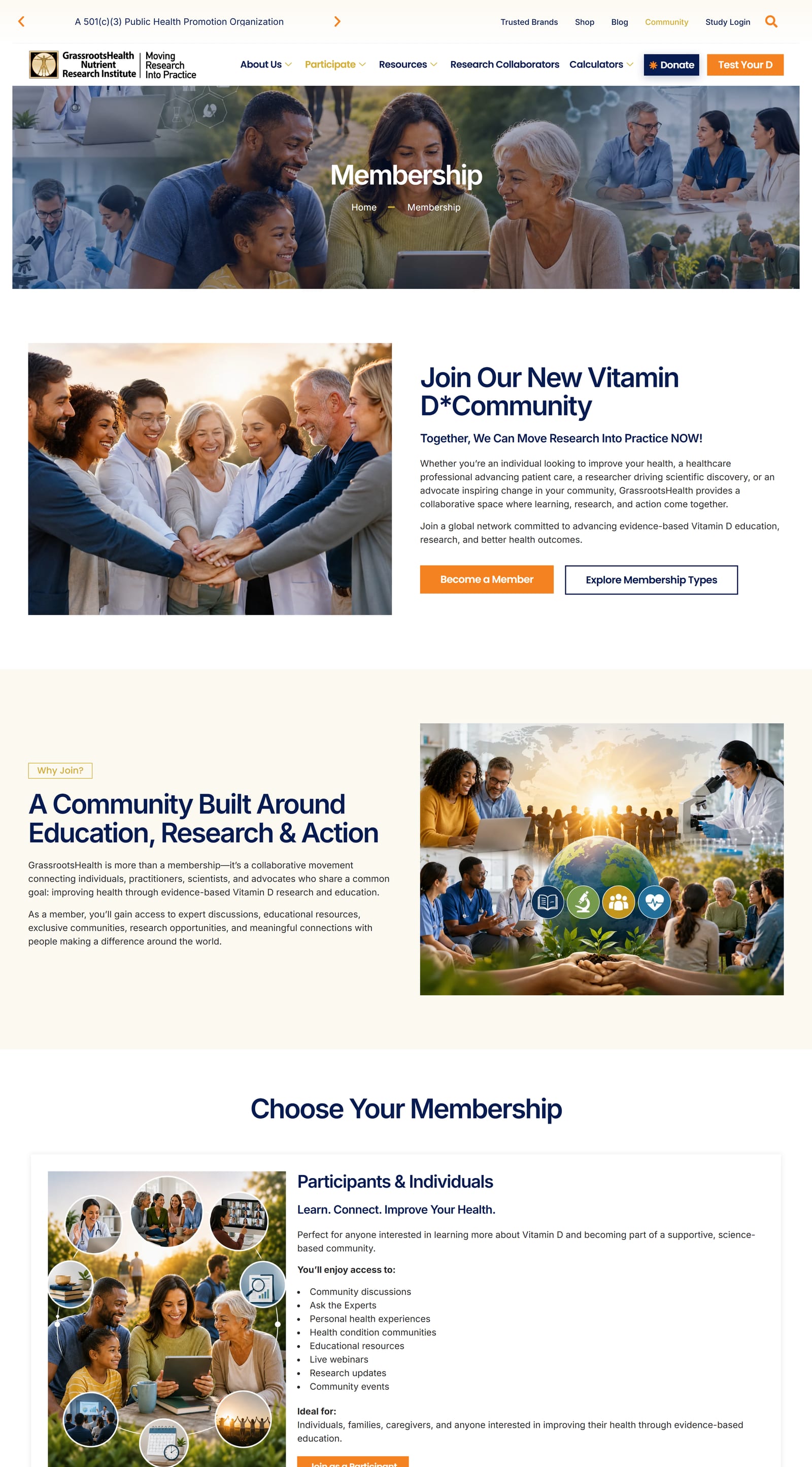
The piece GrassrootsHealth never had before is a place for its people. We built four communities inside CRM Connect, one for each audience the organization serves: participants and individuals, practitioners, scientists, and advocates and leaders. Each has its own channels, some open and some unlocked when a member is approved, so a certified practitioner sees the practitioner toolkit and a regional advocate team sees its own space.
- One membership, every door it qualifies for. A member who belongs in more than one group pays once and is let into each group they are approved for.
- Live sessions where the members already are. Jen's Zoom account is connected to the CRM calendar, and the community can also host live video directly, with the replay saved for members who missed it.
- A suggestion space in every community, so members shape the sections while the community is young.
- Approval in one place. A paid membership request lands in the CRM as a contact, where it is approved and the member is let in.
Courses that sell and deliver from one system
The Vitamin D*Education Course carries 11 continuing education credits for nurses and acupuncturists, with an optional Certified Vitamin D*Practitioner membership on top. It used to live on Kajabi. Now it is listed on the site, sold through a CRM Connect payment link and delivered in the CRM's course portal, with the course PDFs attached to the lessons they belong to.
The move was the part that mattered most to Jen, because years of student records were at stake. We pulled every course buyer out of Kajabi directly, not from a spreadsheet: 126 contacts, each with their purchase history, prices, coupons and order numbers, their subscription status and next billing date, how far through the course they had got, and their answers to the participant form, the pre and post tests and the evaluation. We also flagged the ten active practitioner certifications so their renewals could be set up as recurring payments in the CRM before Kajabi was switched off. Nothing about a student was left behind, and one platform bill is going away.

Every contact, tagged, in one CRM
Alongside the course buyers, the newsletter subscribers moved from Constant Contact into CRM Connect with the lists they were on carried over as tags, because those lists were how Jen chose who received what. Her most recent newsletter was rebuilt as a template inside the CRM, with a short guide on how to work with it, so the monthly send happens from the same place the contacts live.
- Newsletter sign-up on the site, feeding the CRM, with the old Constant Contact form kept during the changeover so no subscriber fell through the gap.
- A booking calendar connected to Jen's email and Zoom, so a meeting request books itself.
- An AI chat assistant, trained on the organization's own material, built and handed over for testing with a short guide. It joins the website when Jen is happy with its answers.
- Workflows, tags and automatic emails set up with the GrassrootsHealth team, so a new practitioner, a new donor and a new subscriber each hear the right thing.
A donation page that asks clearly
Jen rewrote the donation story herself; we built the page around it, moved the form below the story so every Donate Now button lands on it, and added a Start a Fundraiser section so supporters can raise money on the organization's behalf. The address and check instructions sit right under the form for donors who prefer the post.
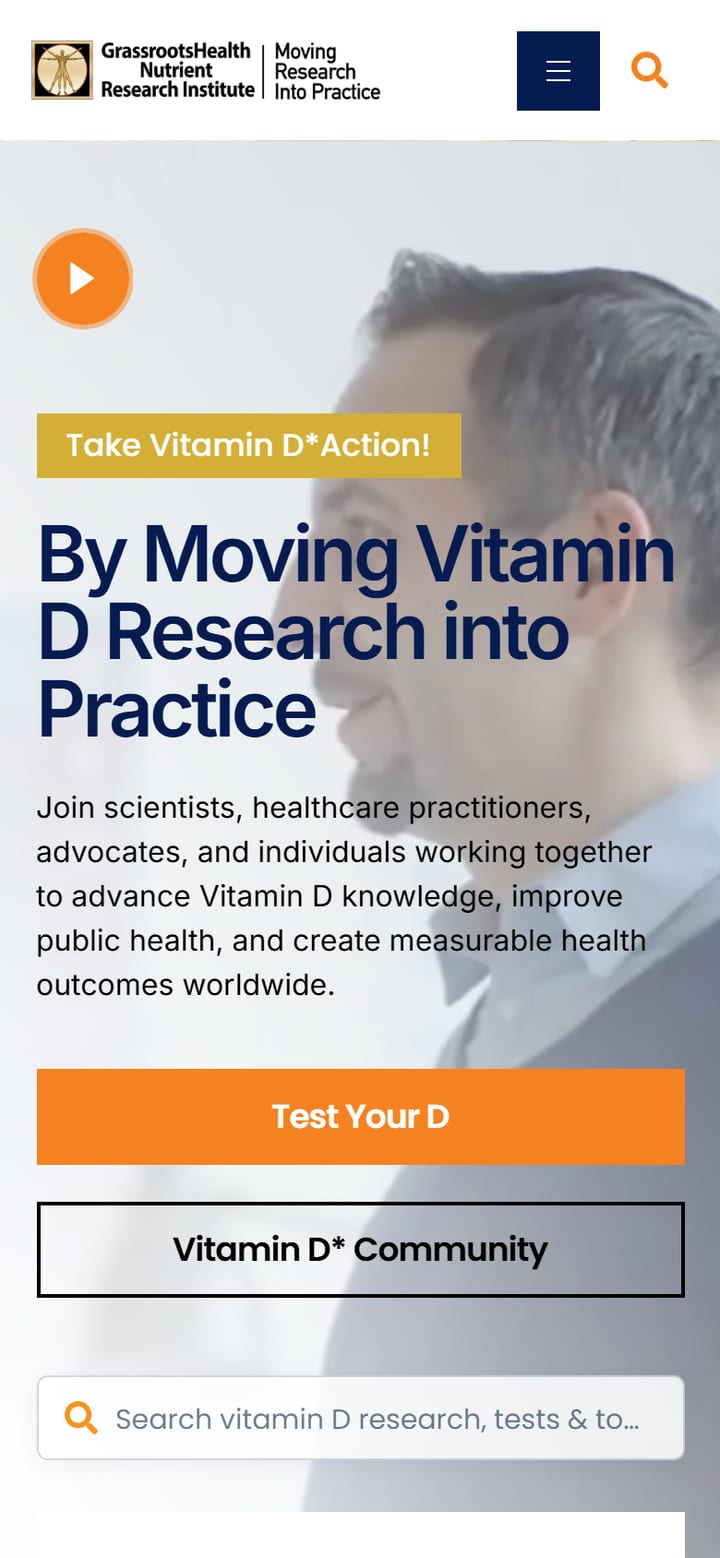
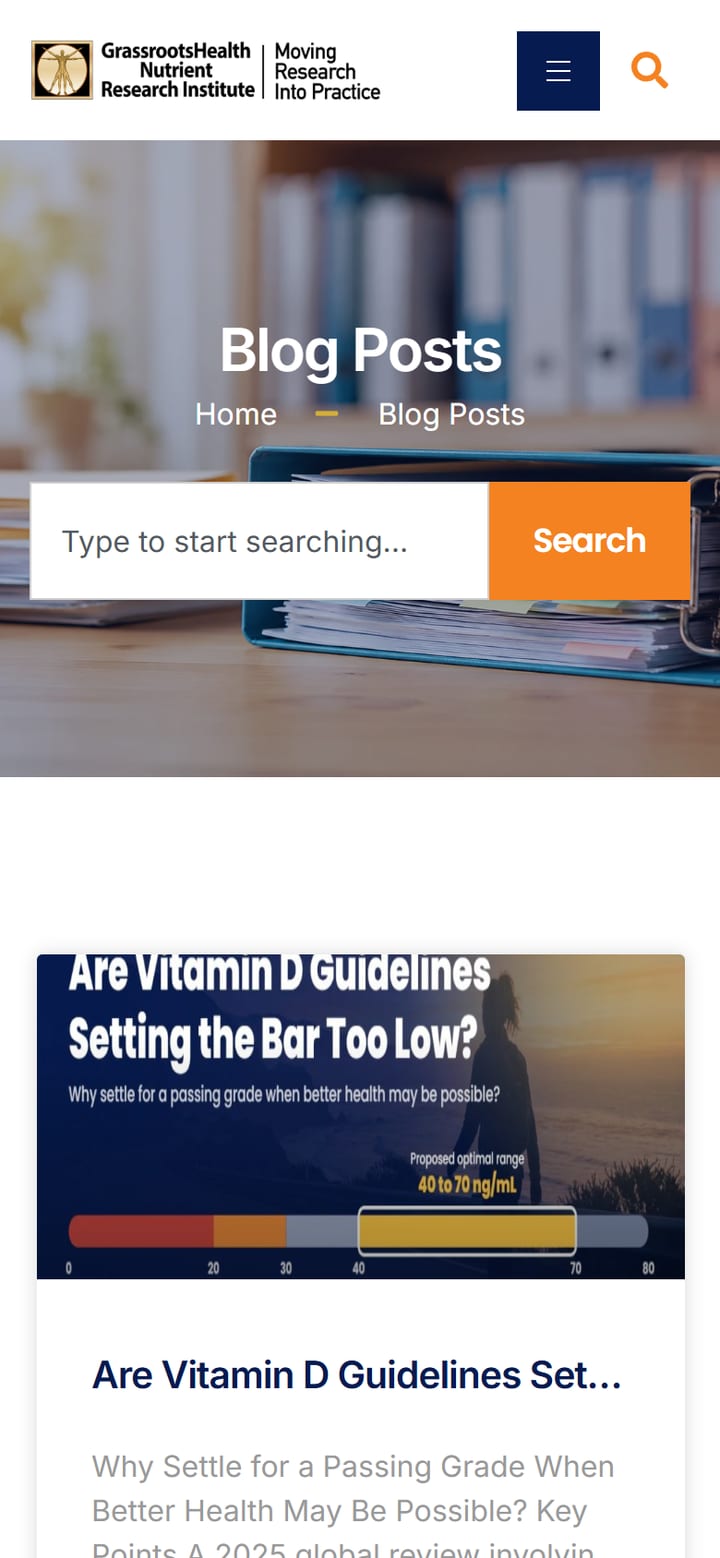
On a phone: the home page and the blog. Most of the audience reads on one, so every page was checked at phone width before launch.
How the launch went
A rebuild this size usually drags. This one moved because the work was split into things only the client could do and things only we could do, and because every question got an answer the same day.
- Mid-September: the community outline. Jen sent a one-page outline of who the communities were for. Within days all four were built in CRM Connect, with her as an admin on each, and the original two-community plan had grown to four.
- October 9: the launch list. Jen had a long task list and asked what truly had to happen before launch. We cut it to four items: move the newest content, add the resource files, point the newsletter form at the CRM, and connect her calendar. Everything else could follow, and did.
- October 15: "ready enough". With the four done, Jen asked to launch that week. The change was two DNS records. Nameservers stayed where they were, so the organization's email never blinked, and we timed the switch for a quiet evening with a press release held a day as a precaution.
- October 19, 6pm Pacific: live. Their IT director repointed the domain to our server, and the new site took over the address the old one had held for years. Every old article address still worked.
- The week after: the loose ends. The donation page was reworked from Jen's new copy. Course PDFs that had not come across were attached within the hour of her report. The Kajabi records were pulled in full over two days. The newsletter template and the AI assistant were handed over with written guides.
- October 23: the partnership. Jen chose the Essentials monthly program, and told us she planned to upgrade as the community grew.
What happens next: the monthly program
A new website is a starting line. The part that moves a nonprofit's numbers is what happens on it every week after launch, and that is the work GrassrootsHealth asked us to keep doing. The Essentials program gives them, every month:
- Hosting and site care. The site lives on hosting we manage, with their IT director holding his own access. Updates, backups and fixes are ours to worry about, not theirs.
- Social media that points somewhere. Posts written and scheduled across their channels, with a first comment carrying the call to action, because platforms now bury links in captions and a comment is where the next step belongs.
- Marketing emails beside the newsletter. Jen sends the newsletter from the template we built; we send the campaign emails around it, to the lists and tags that now live in one CRM.
- CRM care and training. Tags, workflows, the course portal, the communities and the calendar, kept tuned, with a guide for anything new.
The next tier adds keyword automations to the social posts: a reader comments a word, and the CRM sends them the link to a test kit or the community by itself. Those are built once a quarter, tested, and reused, so they become a planned part of the strategy rather than a weekly scramble. Jen's plan is to grow into it as the community fills. That is the shape we like best: a foundation first, then a partnership that earns each step.
Questions we get about a rebuild like this
Can a blog with more than a thousand articles move without losing search rankings?
Yes, if every article keeps its address, its images and its category, and the new site ships with clean sitemaps and the same search tools from day one. GrassrootsHealth moved more than 1,400 articles dating back to 2010 and kept every address working.
Can courses move out of Kajabi with student records intact?
They can. For GrassrootsHealth we pulled every buyer's purchase history, subscription status, course progress and form and test answers directly from Kajabi into CRM Connect, and flagged the active subscriptions so renewals carried on in the new system before the old one was cancelled.
Does a member community have to be a separate product?
No. GrassrootsHealth's four communities run inside CRM Connect, so every member is already a contact, approvals happen in one place, live sessions and replays live with the community, and a single membership opens every group a person qualifies for.
Did the site go down at launch?
No. The launch was two DNS records on an evening of the client's choosing, with the nameservers and email untouched. The old site served until the new one answered.
What does the monthly program cost?
It depends on how many channels and emails a month you want covered. GrassrootsHealth started on the Essentials tier with a plan to grow. Tell us what you have and we will write up the options the way we did for them.