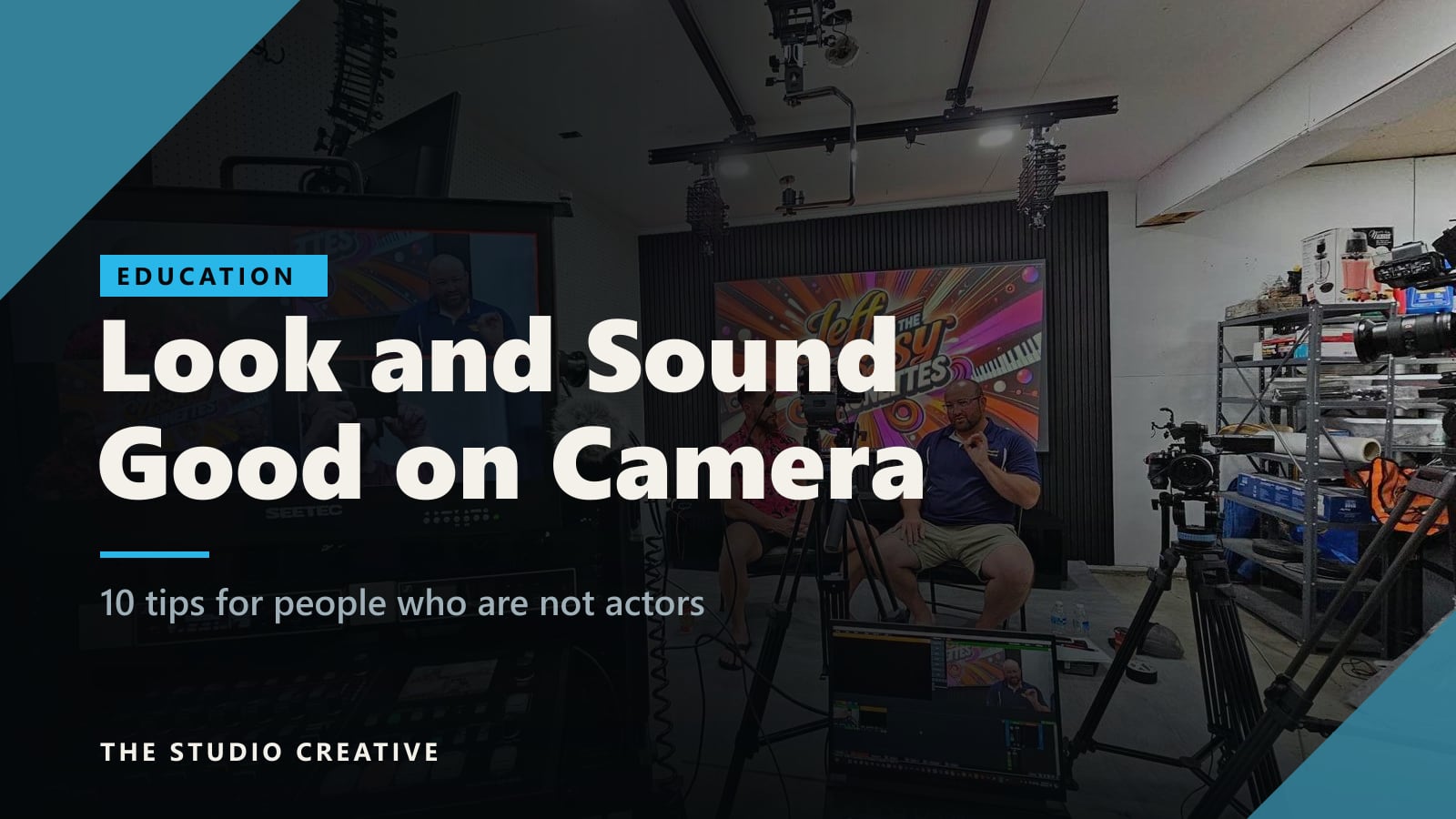
Almost nobody we film is an actor. They are owners, attorneys, nurses, engineers, and speakers, and most of them arrive convinced they are bad on camera. They are not. They are unprepared for a strange situation: bright lights, a lens, a room of people watching in silence. The founder of this studio spent nearly twenty years performing in front of crowds as a professional wrestler, and the lesson from that world applies here: being good in front of an audience is a set of habits, not a gift. These are the ten we coach most often.
At a glance
- Wear solid, mid-toned colors. Skip tight patterns, bright white, and pure black, and bring a second outfit.
- Know your points, not your lines. Three points and one story for each sound more like you than memorized sentences.
- Answer in complete thoughts. Restate the question so every answer stands alone in the edit.
- Pick one place to look. The interviewer in an interview, the lens in a direct address, never both.
1. Wear solid, mid-toned colors
Navy, gray, deep green, burgundy, and soft blues are safe on almost everyone and against almost any background. Avoid tight patterns such as thin stripes, small checks, and herringbone, which shimmer on camera. Avoid bright white, which can glow under lights, and pure black, which loses its detail. If you will be filmed on a green screen, there are extra wardrobe rules.
2. Bring a second option, and dress the way your customers expect
Bring two outfits and let the crew choose against the actual background. And dress as the version of you that your customer meets. A contractor in a suit looks less trustworthy, not more.
3. Deal with shine and noise
Lights make everyone's forehead shiny, and shine reads as nervous. A little translucent powder fixes it, and yes, this applies to men. Remove anything that rattles or catches light: bracelets, a lanyard, keys in a pocket, a phone on the table. Microphones hear jewelry.
4. Know your points, not your lines
Memorized sentences sound memorized, and the moment you lose your place you panic. Instead, know three points you want to make and one story for each. If you know what you think, the words arrive on their own, and they arrive sounding like you.
5. Answer in complete thoughts
In most interviews the interviewer's questions are cut out. So the answer has to stand alone.
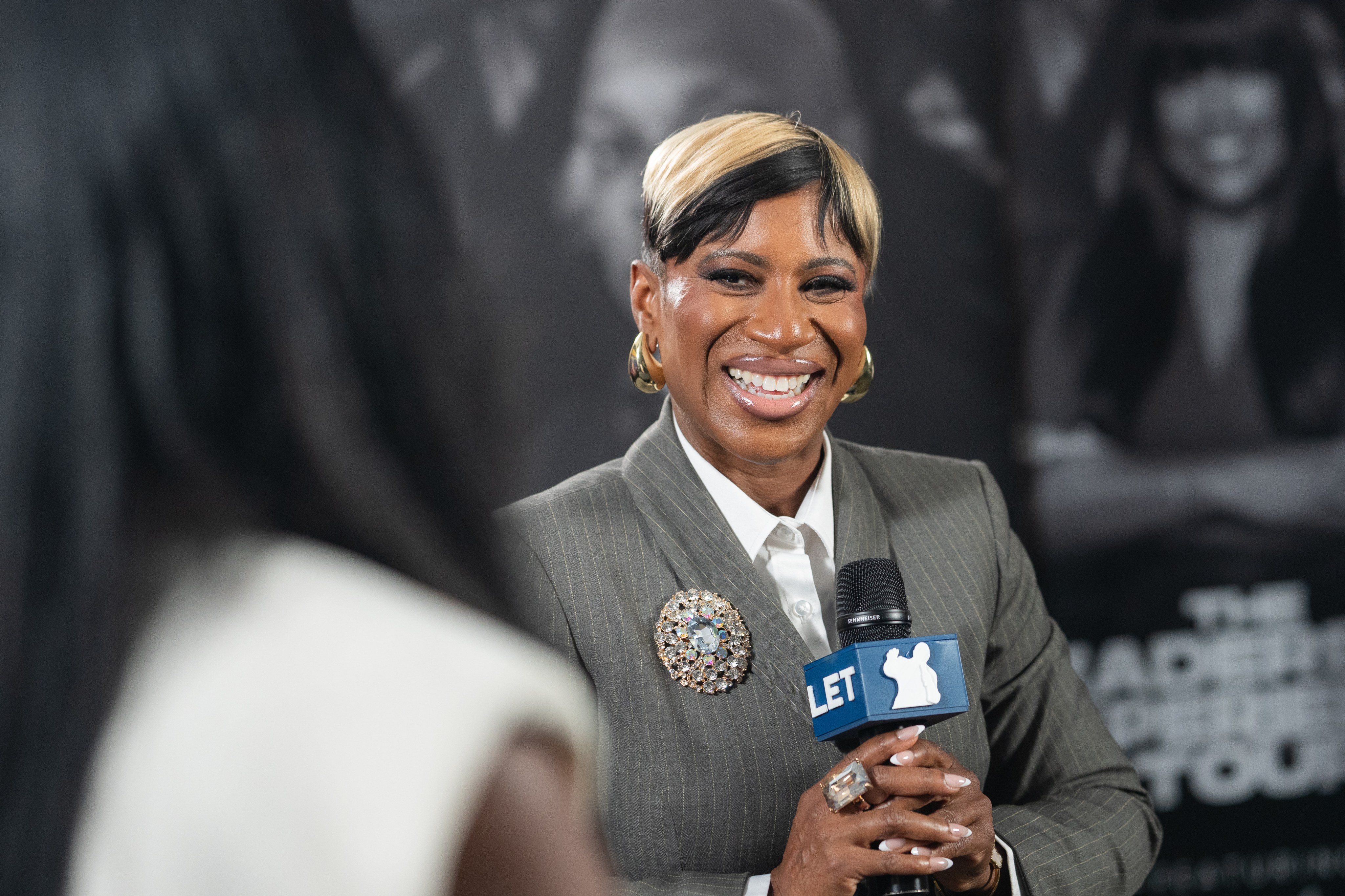
An on-camera interview with a branded mic flag.
6. Pick one place to look and stay there
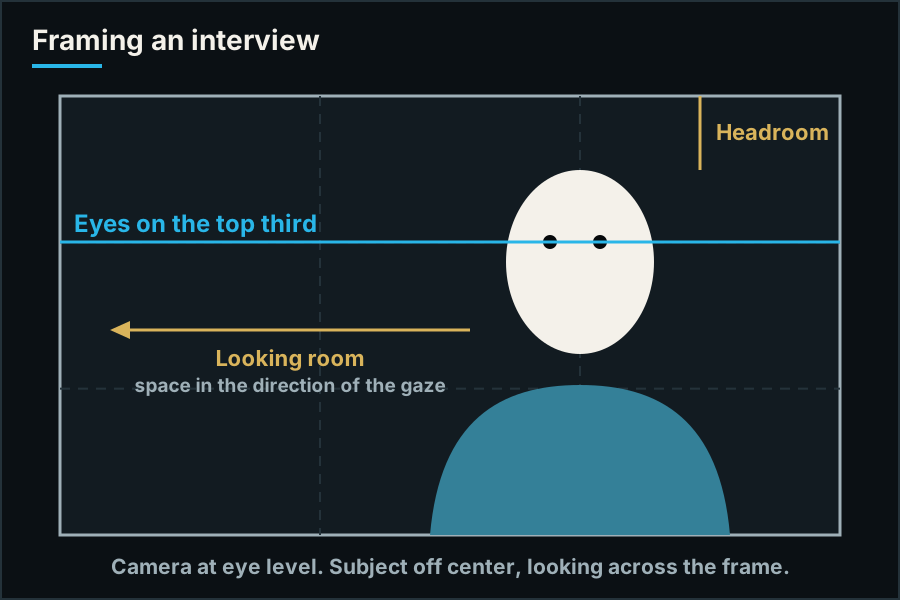
Standard interview framing. You look at the interviewer, across the frame, not at the lens.
There are two honest choices. In an interview, look at the person asking the questions and never at the camera. In a direct address, such as a welcome video, look into the lens as if it were one person. What fails is switching between them. Eyes that flick to the lens, the monitor, and the crew read as evasive, even when the speaker is only nervous. Ask the director where to look, then trust it.
7. Sit forward, and let your hands move
Sit on the front half of the chair with both feet on the floor. It lifts your posture, opens your chest so your voice carries, and stops you sinking backward as the interview goes on. Avoid chairs that swivel or rock, because you will, and you will not notice until you watch it back. Gesture the way you normally do. Hands held rigidly in the lap look stranger than hands that move.
8. Slow down, and finish your sentences
Nerves make people talk faster and trail off at the ends of sentences. Speak a little slower than feels natural, and land the last word of each sentence. Leave a beat of silence before you answer and after you finish. Those pauses feel long to you and look confident to everyone else, and they give the editor a clean place to cut.
9. Use a teleprompter only if you will practice with it
A teleprompter is a skill, not a shortcut. Read cold, it produces a fixed stare and a flat voice. If you need exact wording, for legal or compliance reasons, for instance, then rehearse with the prompter, write the script in short spoken sentences, and ask the operator to follow your pace rather than chasing theirs.
10. Expect to do it more than once
The first answer is a warm-up for nearly everyone. Good crews know this and plan for it, often by starting with easy questions they never intend to use. If you stumble, stop, breathe, and start the sentence again. Nothing is live. The edit only ever uses your best take, which means you cannot fail. You can only give the editor more to choose from.
What the crew should be doing for you
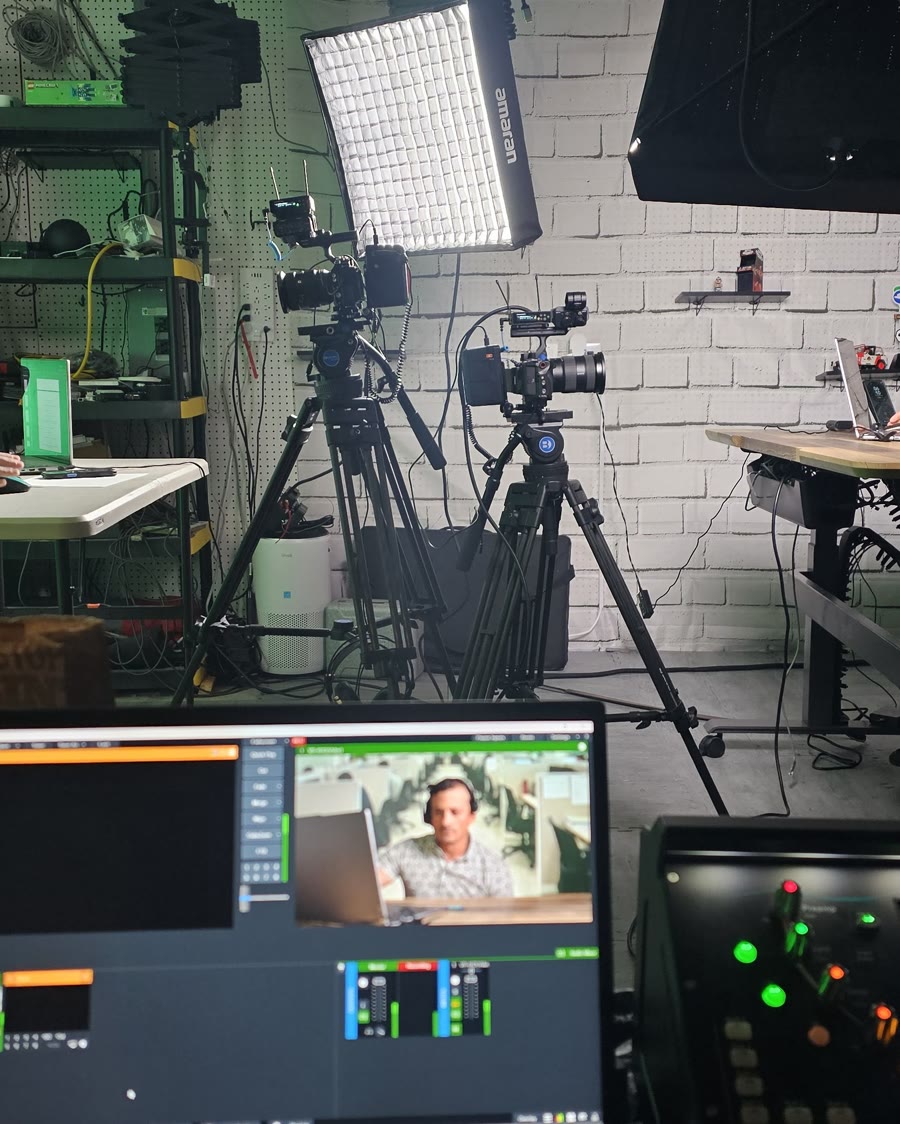
Two cameras and a soft light, set for a studio scene.
Half of looking good on camera is not your job. A professional crew lights you flatteringly, places the camera at eye level rather than below it, puts a quality microphone close to you so you do not have to project, keeps the room quiet and small, and has someone whose whole job is to talk with you like a person. If you walk into a shoot and nobody explains where to look or what will happen, ask. If the answers are vague, that tells you something about how the day was planned. Our pre-production checklist covers what should have been settled before you sat down.
Want a second opinion on your next video?
If you or your team are about to go on camera and would like to be coached through it by people who do this every week, we can help. We are a video production company in Grand Blanc, Michigan, with our own studio and a crew that works across the state and beyond. Tell us what you are planning and a producer will reply with real advice, whether or not you hire us. More guides like this one live under Education on our blog.