Here is the uncomfortable math of running a conference. The venue contract, with its room block, its food and beverage minimum and its cancellation schedule, gets signed nine to eighteen months before the event. And at large industry events, close to half of all registrations arrive in the final four weeks. So for most of a year you are carrying a promise that can run to six figures on the strength of a spreadsheet, and your registration dashboard will look like it is failing right up until the month it isn't.
Most conferences that lose money do not lose it on the day. They lose it in the fine print a year earlier, or in the quiet afterwards, when roughly two out of three attendees never come back. We produce the Attorneys Resource Conference in Grand Rapids and partner on the Leadership Experience Tour, so we sit on the organizer's side of the table as well as behind the cameras. This is what we would tell a friend planning their first or second conference: the steps in order, the problems that catch people, and where the money is really made.
At a glance
- Start 12 to 18 months out. Venues, keynotes and sponsor budgets are all spoken for if you start late.
- The contract is the budget. Attrition, food and beverage minimums and service charges decide your risk before a single ticket sells.
- Expect the late curve. Registrations back-load hard. Plan for it instead of panicking at it.
- Profit comes from the average ticket, not the price. Comps and discounts quietly eat the margin.
- Capture everything. The footage from this year is what sells next year to the two thirds of people who have never been.
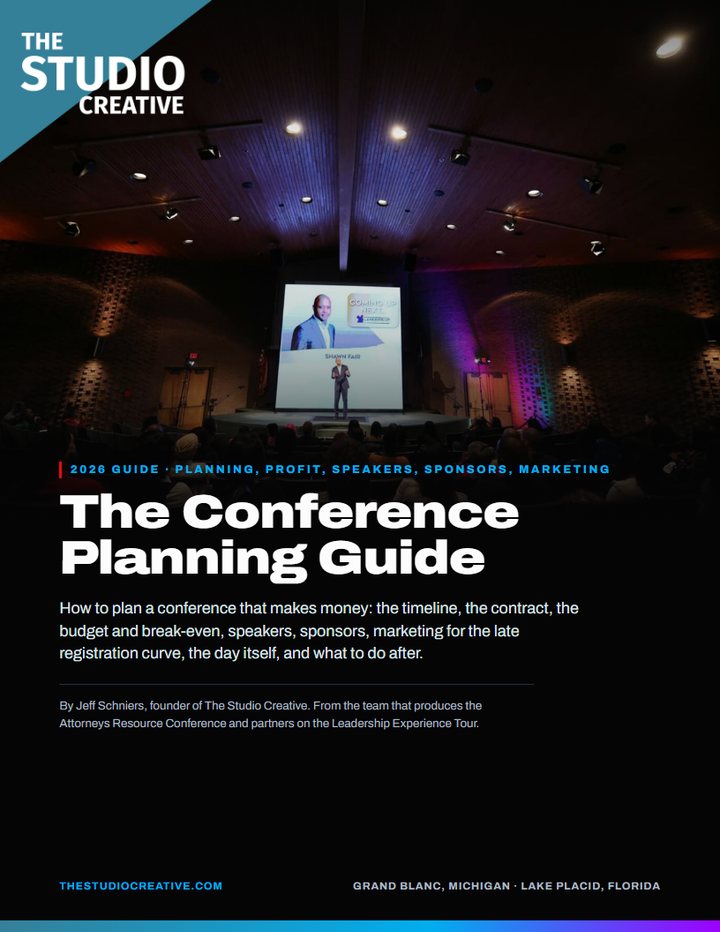 Free PDF · 26 pagesThe full Conference Planning Guide: the month by month timeline, budget and break-even worksheets, contract clauses, sponsor packages, a marketing calendar and a printable checklist.Get the free guide
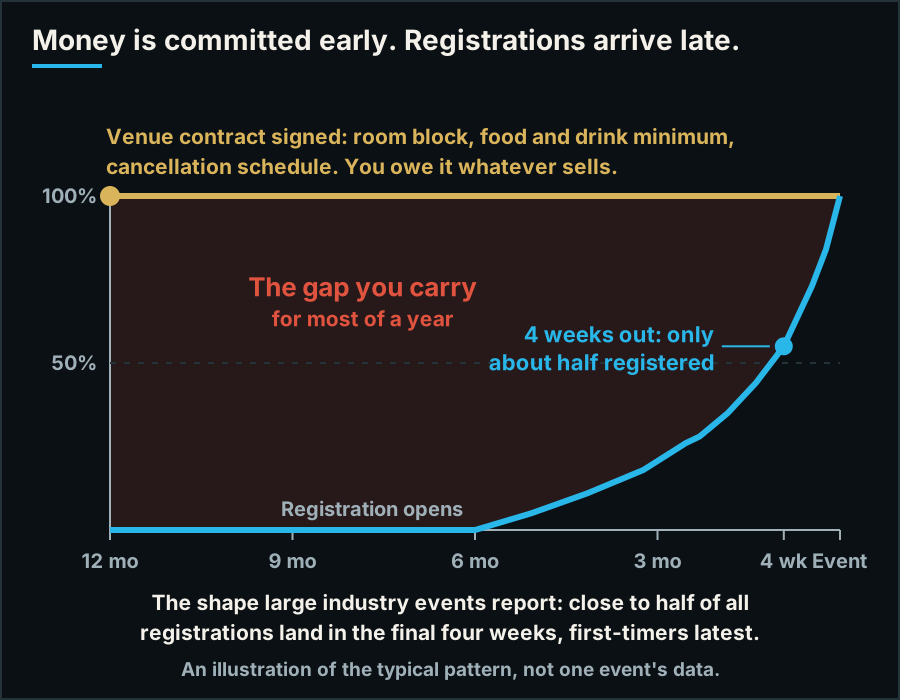
The shape that sinks first-year conferences. The commitment is made at the top left. The money arrives at the bottom right.
1. Decide who it is for and how it pays
Every other decision flows from two sentences: who is this for, and what will they walk away with that they could not get from a webinar. Attendee research is blunt about what makes people return. It is not the light show. It is progress on the goal they came with: meeting the right vendors and peers, and learning something they can use on Monday. People who get that are far more likely to come back, and fewer than half say they do.
Then write down how the event pays for itself. For a small or mid-sized first-year conference, a sensible planning model is registration covering most of it, with sponsorship and exhibitors at roughly a fifth to two fifths, and a small slice from extras such as workshops, recordings or continuing education certificates. Build your break-even on the average ticket you actually collect, after early rates, member rates, group deals and comps. Complimentary registrations for speakers, sponsor staff and guests can run to a fifth of the room, and each one still eats lunch.
2. Start 12 to 18 months out
For 300 to 1,000 people, a year to a year and a half is normal, and about twelve months is workable for a smaller regional event. Hotels are busy, good dates go first, the best keynotes book six to twelve months ahead, and corporate sponsors set their budgets in the fall. Start late and you take what is left of all four.
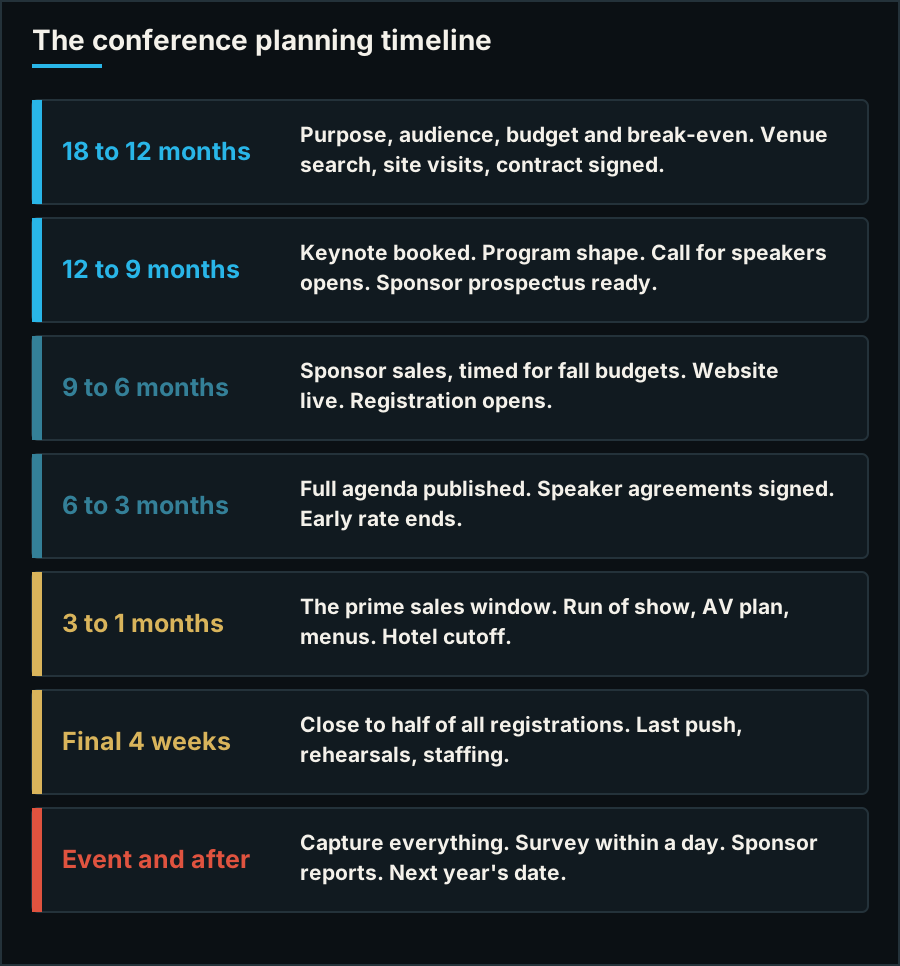
The backward plan. The guide breaks every row into the individual jobs, month by month.
3. Read the venue contract like it is the budget
Because it is. The contract decides your downside long before marketing decides your upside. Four clauses matter most:
- Room block attrition. The usual deal lets you fill 80 percent of the rooms you reserved without penalty. Below that you pay. Ask for the whole stay to be measured together rather than night by night, for damages based on the hotel's lost profit rather than lost revenue, and for credit on rooms the hotel resells.
- Food and beverage minimum. Meeting rooms are often free because you promised to spend a set amount on catering. Miss it and you can pay the shortfall and the room rental. Set the minimum on a conservative headcount.
- The menu price is not the price. A banquet service charge in the low to mid twenty percent range, with sales tax often charged on top of it, adds a fifth to two fifths to every catering line. Budget at menu price times 1.3 to 1.4.
- Audio visual exclusivity. Many venues require their in-house AV company, or charge fees for bringing your own. If you want your own production crew, negotiate it before you sign, not after.
Cancellation schedules climb as the date approaches, commonly to a majority of the expected revenue in the final three months, and force majeure clauses have been tightened in recent contracts. Read both closely, pair them with event cancellation insurance, and have someone who reads hotel contracts for a living look before you sign. This is general guidance, not legal advice.
4. Build a budget with a real contingency
Venue and catering usually take the largest share, often 35 to 45 percent. Audio, video and production is next, then speakers, marketing, staff, registration technology, signage and insurance. Costs per attendee are forecast to rise again this year, and most planners say catering comes in higher than they expected. Hold a visible contingency line of 15 to 20 percent for a first-year event and 10 to 15 percent once you have history, and do not hide it inside other lines where it gets spent by accident.
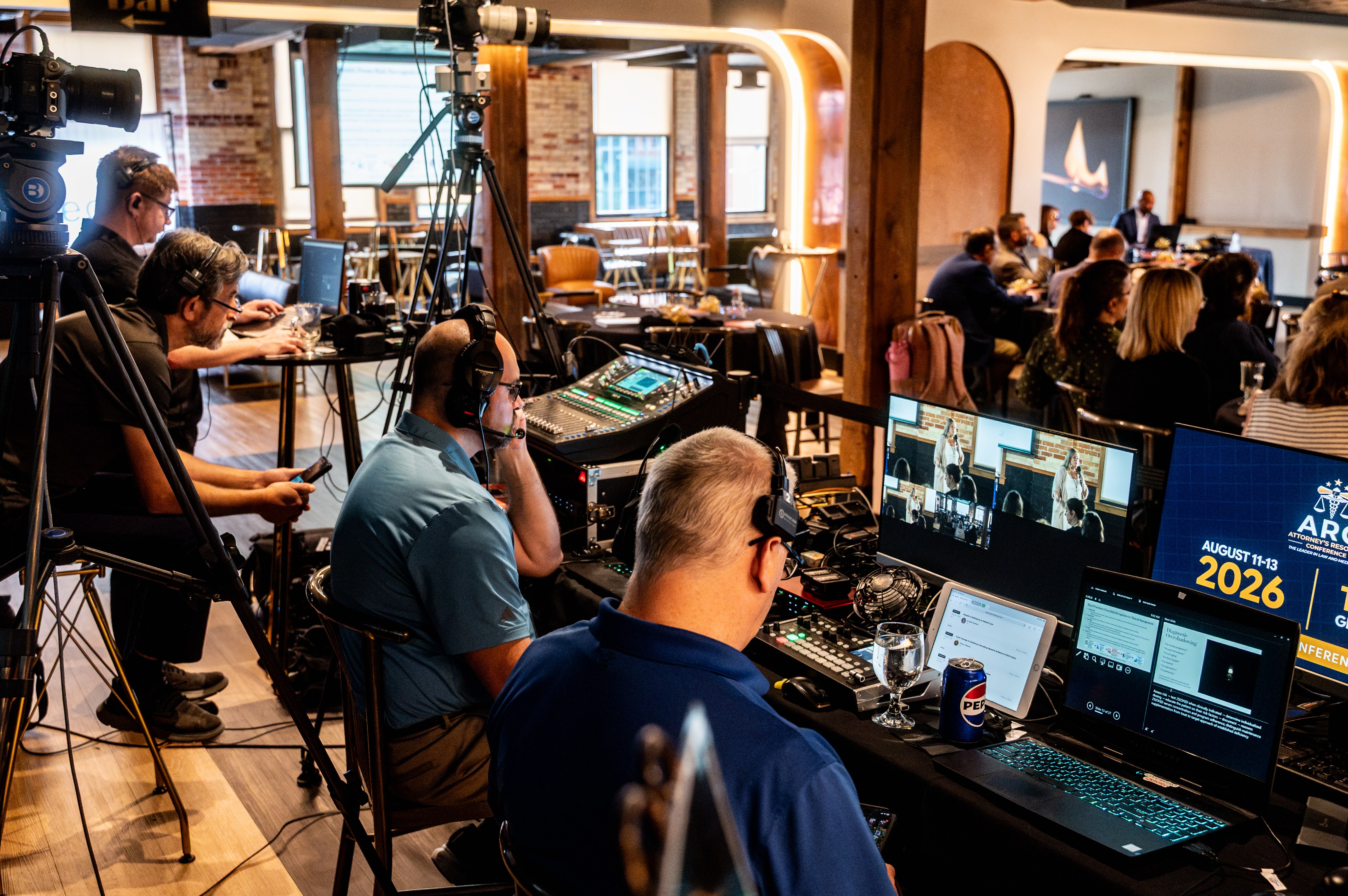
The production area at the Attorneys Resource Conference. Production is the second biggest line in most conference budgets, and the one that decides what you have to show for the event afterwards.
5. Book speakers who fit the room
Attendees value real subject experts more than celebrity, and organizers routinely overspend on the famous name. Book one strong keynote six to twelve months out, then build the rest of the program from a call for speakers, the best-rated sessions from past events, podcast hosts and practitioners your audience already follows. Watch full-length footage of a speaker, not just the highlight reel.
- Put it in writing, even for unpaid speakers. Session length, slide deadline, travel, cancellation, and the right to record, stream and reuse the session. Without that last line you cannot sell recordings or cut clips.
- Keep a backup. Flights get cancelled. Have vetted alternates, and ask each keynote for a short recorded segment you can play in a pinch.
- Make every speaker a marketer. Give each one graphics, a short personal video clip and a tracked link. Their audience is your cheapest registration source.
6. Sell sponsors outcomes, not logos
Sponsors have stopped paying for exposure on its own. They want qualified leads, meetings with the right job titles, a role in the content, and data that proves it worked. Build a short menu rather than a ladder of ten tiers, keep the top package at about three to four times the price of the entry one, and offer single items a first-year sponsor can say yes to: the reception, the coffee, the recordings, the highlight film. Start outreach before fall budgets are set, and model only a third or so of your sponsor pipeline actually closing in year one.
7. Market for the late curve
At large industry events close to half of registrations land in the final four weeks, over a quarter in the last two, and first-time attendees are about twice as likely to register late as returning ones. A dashboard sitting well under half of goal at ninety days can be perfectly normal. So:
- Keep a fifth to a third of the marketing budget for the final six weeks.
- Treat 60 to 31 days out as your prime sales window, and time speaker announcements to real price deadlines.
- Lead with email to past attendees and your own list, then speakers, sponsors, partner associations and group rates.
- Win the first-timers with video: last year's highlight film, 30 to 60 second speaker clips and attendee testimonials, cut vertical for social.
- Make registration short on a phone, show the full price with every fee included, and follow up anyone who starts and does not finish.
We wrote more about turning an event into a steady stream of marketing in turning live events into content powerhouses.
8. Program less, connect more
Event platforms are seeing people attend fewer sessions each year, and a real share of checked-in attendees go to none at all, while booked one-to-one meetings keep rising. Fewer, better sessions, longer breaks, hosted tables and a proper place to talk beat a packed grid. If your audience needs continuing education credit, apply for it early and build attendance tracking in from the start.
9. Run the day from a run of show
A minute-by-minute run of show shared with the venue, the AV team, registration and the stream crew. A tech rehearsal the day before. Registration open an hour or more before the first session, with the queue planned for the rush just before the keynote. A wired internet line for any stream, kept separate from guest wifi and tested at the time of day you will use it. A green room, a backup laptop with every slide deck, and one person on your side who can make decisions. Use our free conference camera planner to see how many cameras your room needs and where they go.
10. Capture everything, because next year starts at the closing session
Conferences typically keep only about a third of their attendees from one year to the next. That means most of next year's audience has never been, and the only way they can see what they missed is on video. Record every session, cut a highlight film within days, clip the best moments while people are still talking about them, and announce next year's date from the stage. Survey attendees within a day, while the response rate is still worth having.
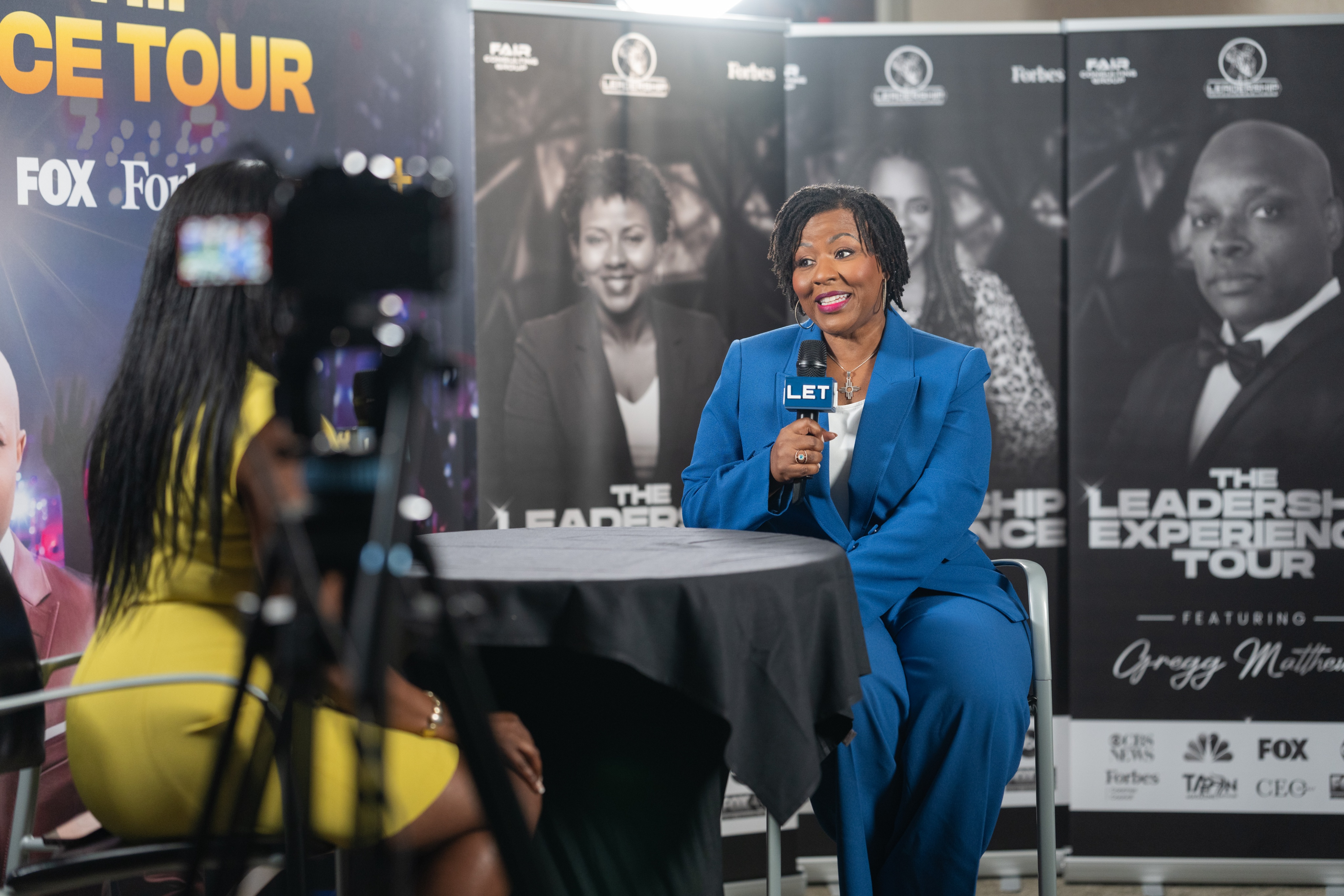
An interview set at the Leadership Experience Tour. Every conversation filmed here becomes a clip that sells the next date.
The problems that sink conferences
- Starting late. Worse venues, worse rates, booked keynotes, spent sponsor budgets.
- A room block signed on hope. You owe the attrition whether or not people come.
- Budgeting menu prices. The service charge and tax arrive later, on the invoice.
- Too many comps and discounts. The rack rate looks healthy while the average ticket does not.
- A sponsor forecast built like year five. First-year sponsors need proof and small entry points.
- Panic at the registration curve. Money spent early on the wrong channels, nothing left for the final month.
- Speaker cancellations with no plan. No agreement, no backup, no recorded segment.
- AV surprises. Exclusivity and fees nobody negotiated, and a stream on shared wifi.
- An overstuffed program. Sessions nobody attends and no time for the networking people came for.
- Nothing captured. No footage to sell next year, satisfy sponsors or sell as recordings.
- No follow-up. No survey, no sponsor report, no date announced, so year two starts from zero.
The guide takes each of these, with why it happens and exactly how to prevent it, alongside worksheets for the budget and the break-even.
How we do it: ARC and the Leadership Experience Tour
We do not only film conferences. We produce the Attorneys Resource Conference in Grand Rapids end to end: the brand, the promotion, the registration funnel, the multi-camera production, a reel for every speaker and the content that keeps it visible all year. Registrations, speaker submissions and sponsor enquiries run through CRM Connect, so every one is answered straight away and tracked through to the sale.
Two pieces went out during the conference itself, built around interviews we shot with speakers between sessions, so attendees saw the event they were sitting in. The organizers then used the same films to sell the following year: the room, the speakers and the energy, on camera, months before anyone had to decide. Watch the ARC event reel, the conference coverage and the launch spot for ARC 2027.
We also partner on Shawn Fair's Leadership Experience Tour. We built its website, made its commercial, and run its live multi-camera broadcasts and interview sets, down to branded mic flags that put the tour's name in every frame.
Frequently asked questions
How far in advance should you plan a conference?
For 300 to 1,000 attendees, 12 to 18 months. A smaller regional conference can work with about 12. The venue contract usually comes first, the keynote six to twelve months out, and sponsor sales should start before corporate budgets are set in the fall.
How much does it cost to put on a conference?
It depends most on the venue and catering, which are often 35 to 45 percent of the budget. A one or two day professional conference in a hotel commonly runs from a few hundred dollars per attendee per day upward, before travel. Add 22 to 26 percent service charge and tax to catering, and hold 15 to 20 percent contingency in year one.
How do conferences make money?
Mostly from registration, with sponsorship and exhibitors adding roughly a fifth to two fifths, plus extras such as workshops, recordings, on-demand passes and continuing education certificates. Profit depends on the average ticket you actually collect after discounts and comps, and on keeping catering and attrition inside the contract.
How do you find speakers for a conference?
Book one keynote early, then fill the program from a call for speakers opened six to nine months out, the best-rated sessions from past events, practitioners and podcast hosts your audience follows, and speaker bureaus for paid talent. Watch full-length footage before you book, and put recording rights in every agreement.
Planning a conference?
Take the free guide to your planning meeting, try the camera planner or the cost estimator, or tell us about your event. We are an event production company in Grand Blanc, Michigan, and a producer will reply with real advice, usually the same business day, whether or not you hire us.