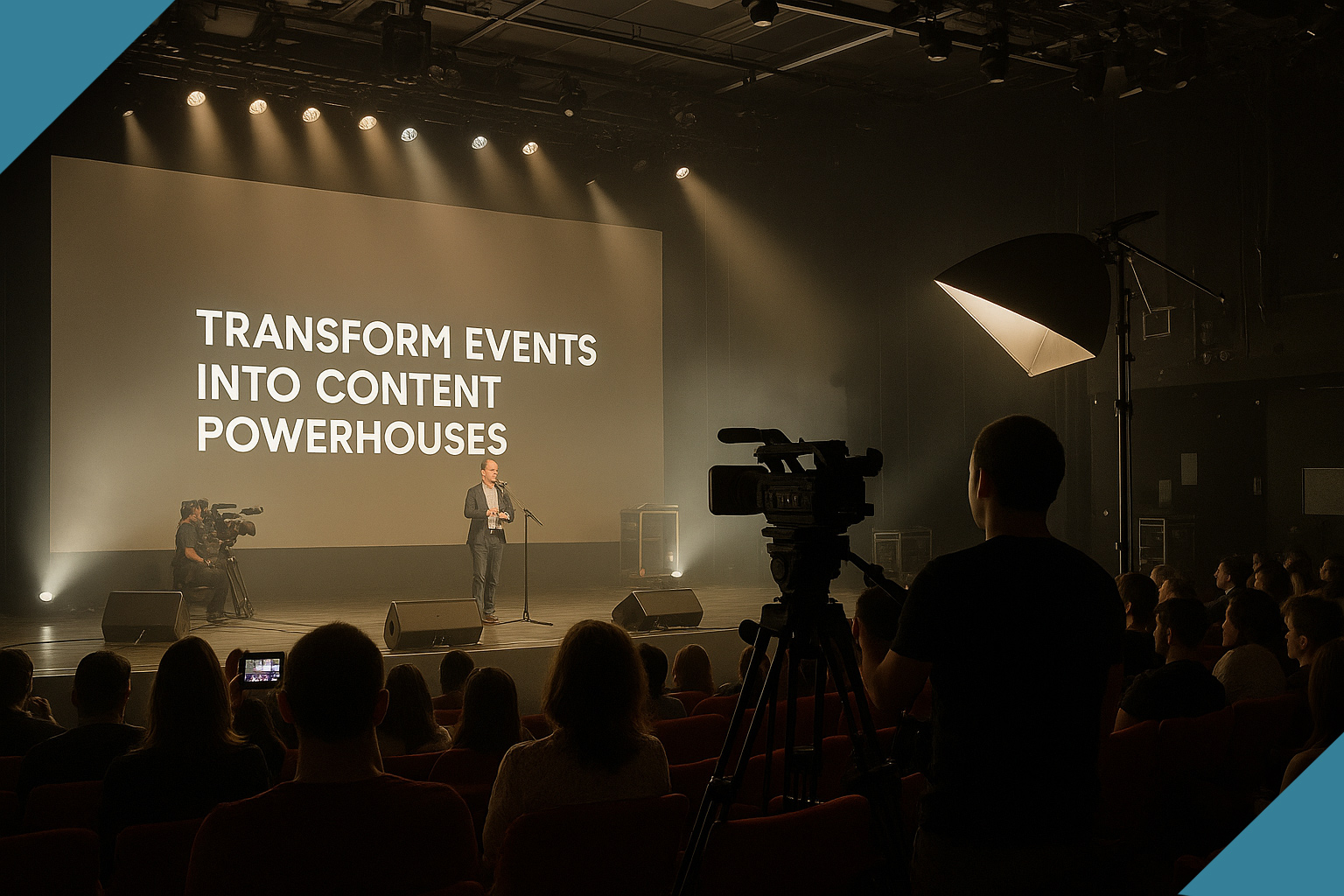
Imagine investing six figures and six months into a conference — only to have the impact vanish after a weekend of selfies and a single recap email. That's what happens when your event is treated as a moment, not a content engine.
At a glance
- Slice sessions into a series. Break a 45-minute keynote into 5 to 7 short episodes and schedule them over several quarters.
- Speaker audio becomes a podcast. Capture clean audio from every stage and edit sessions into podcast-length episodes.
- Feed social for months. Quote cards, short vertical clips and behind-the-scenes moments, mapped to a 6 to 12 month calendar.
- Plan backward from the content. Decide what you want to have afterwards, then brief the crew against that list.
With the right content strategy, a single live event can quietly power your marketing for an entire year — fueling articles, videos, podcasts, and social campaigns long after the lights go down.
"Brands that repurpose content strategically can generate up to 3X more leads for every asset they create." — Content Marketing Institute
1. Build a Flagship Video Series from Keynotes and Panels
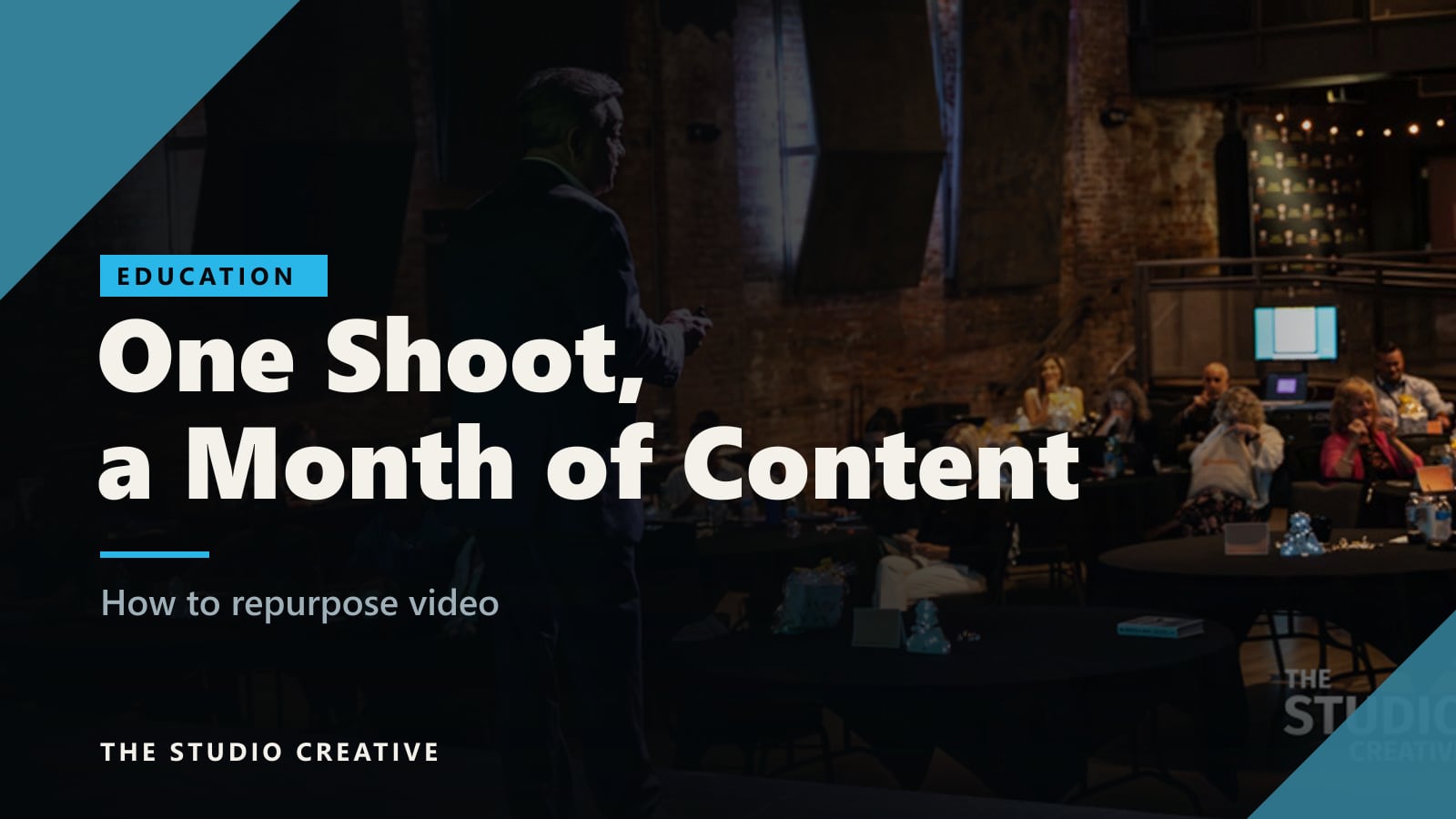
Your main stage sessions are content gold. Instead of posting one long replay that few people finish, slice sessions into focused episodes: break a 45-minute keynote into 5–7 short episodes, add branded intros and calls to action, and schedule them across YouTube, LinkedIn, and email over several quarters. For agencies, "From Stage to Series" becomes a signature deliverable; for in-house teams, a consistent drumbeat of thought leadership.
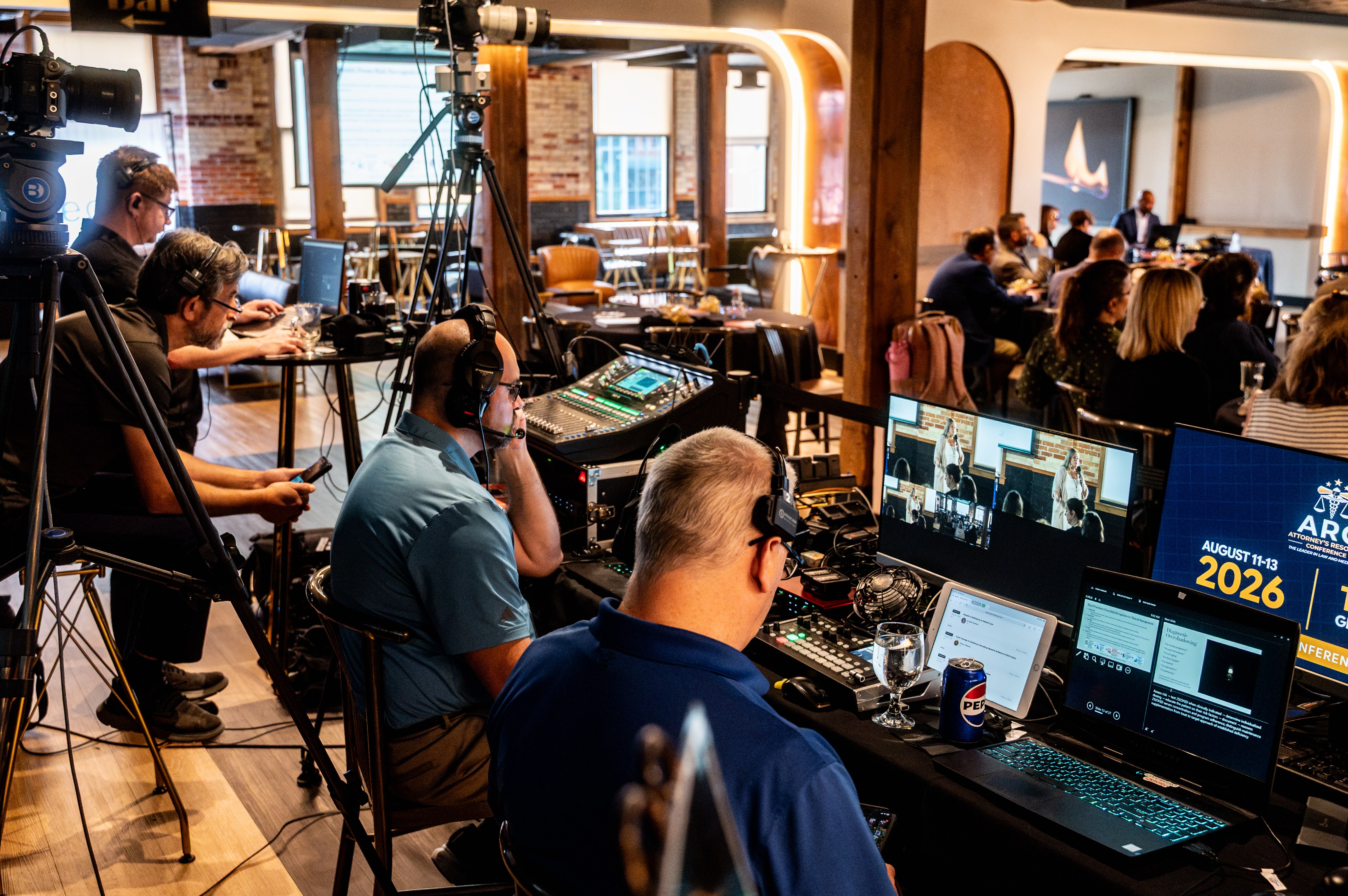
The production area at a conference.
2. Turn Sessions into a Library of Evergreen Thought Leadership
- Signature blog posts: Convert the core message of a keynote into a long-form article, then spin off 3–5 deeper posts.
- Downloadable assets: Turn slide decks into guides and checklists that gate behind a form to generate leads all year.
- Internal enablement: Rework expert insights into playbooks and training modules for sales and customer success.
3. Launch a Podcast or Audio Series from Speaker Content
If you're already putting a mic on your speakers, you're halfway to a branded podcast. Capture clean audio feeds from every stage, edit sessions into podcast-length episodes, and record bonus "green room" interviews for exclusive insights that never made it on stage. 62% of Americans have listened to a podcast — meet them there.
4. Feed Social Channels with Micro-Content and Community Moments
- Quote cards pairing speakers' best lines with event stills for LinkedIn, Instagram, and X.
- Short vertical clips — 15–45 second highlights for Reels, Shorts, and Stories.
- Behind-the-scenes moments that humanize your brand and show the energy of your community.
Map these assets to a 6–12 month calendar: pre-event teasers, monthly throwback highlights, and thematic series that keep your event top of mind between editions.
5. Create Always-On Campaigns and Funnels Around Event Themes
Tie everything into always-on campaigns: themed nurture sequences combining video episodes, posts, and downloadables; retargeting campaigns serving highlight clips to attendees year-round; and webinar and outreach topics shaped by the questions surfaced at the event. This is where event content stops being a cost center and starts behaving like a long-term asset.
Plan Backward from the Content, Not Just the Agenda
Before you lock your agenda, ask: What stories do we want to tell all year? Which formats matter most to our audience? How will we capture, tag, and store assets so they're easy to repurpose?
What to capture on the day so the content exists later
Every idea above depends on footage that has to be shot while the room is full. You cannot go back for it. A crew briefed to produce content, rather than just to record the event, comes away with:
- Every session recorded separately, with a clean audio feed taken from the sound board rather than a microphone pointed at a speaker.
- The room filling up, shot before doors and during the rush, which is what makes next year's promotion look busy.
- Real reactions: the laugh, the note-taking, the queue at the end of a talk. These are the shots that sell an event to somebody who was not there.
- Short interviews between sessions, two or three questions each, from attendees and speakers while they are still warm.
- Sponsor visibility, deliberately, because somebody paid for it and nobody will find it in the footage by accident.
- The stage and set empty, lit and clean, for title cards and graphics later.
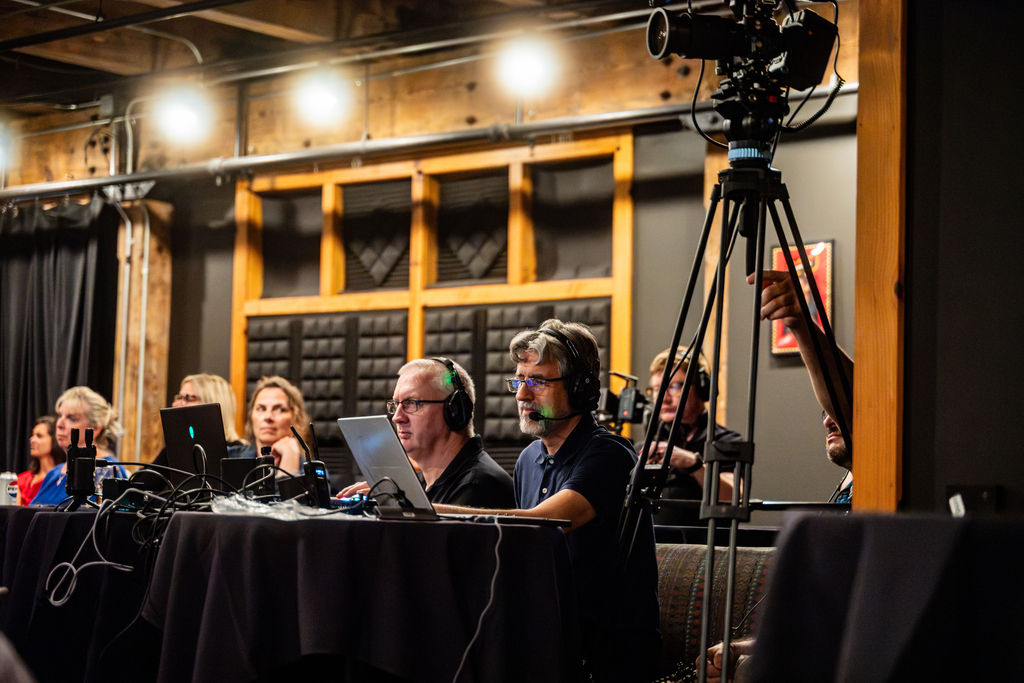
The crew at the back of a conference room.
A realistic timeline after the last session
The mistake is treating the edit as one delivery. It is a schedule, and the pieces have different jobs at different times:
- That week: a highlight film and a handful of vertical clips, while people are still posting about it.
- Two to three weeks: the session library, lightly cut, so the talks become a resource rather than a recording.
- The following months: the drip. One piece at a time rather than everything at once, which is what keeps a feed alive between events.
- Three to six months out: the promotion for the next one, built from the best of everything above, while registration opens.
What it costs to skip the plan
An event that was filmed but not planned for content produces a folder nobody opens. The footage exists, the highlight never gets made because nobody scoped it, and by the time somebody asks for clips the moment has passed and the speakers have moved on.
The fix is not more cameras. It is deciding what you want to have afterwards before anyone turns one on, then briefing the crew against that list. Price what that looks like for your event, or see how we plan it.
Your Next Event Is a Content Machine Waiting to Be Switched On
The next time you plan an event, don't just ask "What will happen on stage?" Ask, "What will we be publishing six, nine, and twelve months from now because of this day?" That's the mindset shift that turns live events into content machines — and your brand into the one that never goes quiet.
Want help with the above? We do this every day at The Studio Creative. Connect with us and we'll see how we can help grow your business.