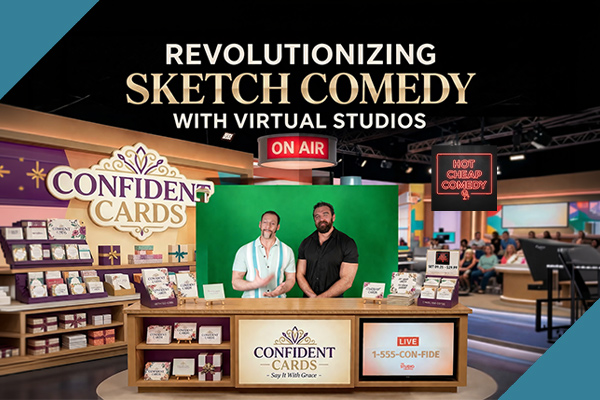
You don't need a stage. You don't need a full set build. And you definitely don't need weeks of production time to create something worth watching.
At a glance
- Wrestlers turned sketch comedians. Hot Cheap Comedy's ensemble is largely current and former pro wrestlers, producing with The Studio Creative.
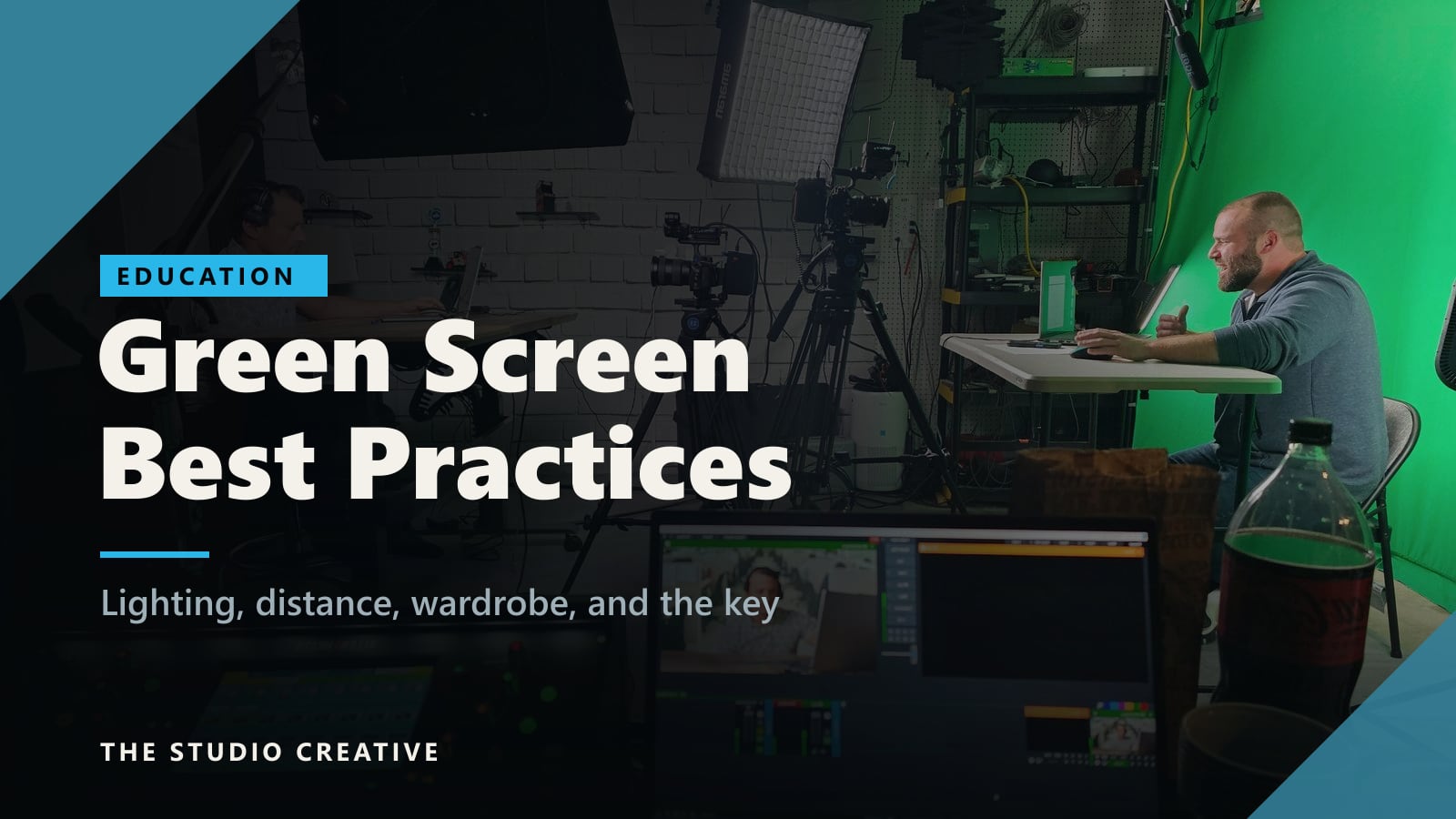
- Green screen only where it adds value. A simple studio becomes a news desk, a game show, or something completely unexpected.
- Several sketches in one session. The key is set first, and the set does not have to change between sketches.
- Real locations when the scene calls for it. Anything the performer touches, complex movement, real exteriors, or when the location is the joke.
That's the shift happening right now, and it's exactly how a group of professional wrestlers turned sketch comedians are producing content faster than traditional studios ever could. That's exactly what Hot Cheap Comedy is doing in collaboration with The Studio Creative.
From the Ring to the Camera
Hot Cheap Comedy is built around a core group that already knows how to perform under pressure. The ensemble is made up largely of current and former professional wrestlers, including Jake Something (Jake Doyle), Vinnie Scarboni (Hot Cheap Comedy owner Josh Gulban), Chaz Montana (The Studio Creative owner Jeff Schniers), TNA and AEW's Rohit Raju, along with "The Genetic Jackpot" Joe Coleman, Dickie Bronson, "Ballin' Out" Danny Shay, and others featured across episodes.
What makes the group unique is the combination of live performance experience and formal sketch training. Josh Gulban studied sketch comedy writing at Second City Chicago, bringing a structured writing background into a team built on instinct and performance. Years spent telling stories in the ring have shaped how this team approaches comedy — they understand timing, character, and how to hold attention without relying on perfect conditions. That "call it in the ring" mindset translates directly into sketch comedy.
The Problem with Traditional Production
When production leans too heavily on elaborate sets, everything slows down. Planning environments, securing locations, coordinating schedules, and building out scenes all add time and complexity. By the time everything is ready, the original idea can lose its edge. When production becomes the bottleneck, creativity takes a back seat.
A Simpler Approach That Moves Faster
Keep the setup minimal. Focus on the idea. Get it on camera while it's still fresh. A clean background, a strong concept, and a team that knows how to perform is enough to carry the entire piece. Green screen production creates environments when it actually adds value — turning a simple studio into a news desk, a game show, or something completely unexpected.
You can shoot multiple sketches in a single session, change "locations" instantly, and adjust ideas on the fly without resetting the entire production. Green screen isn't used to complicate things; it's used to remove the barriers that usually slow content down.
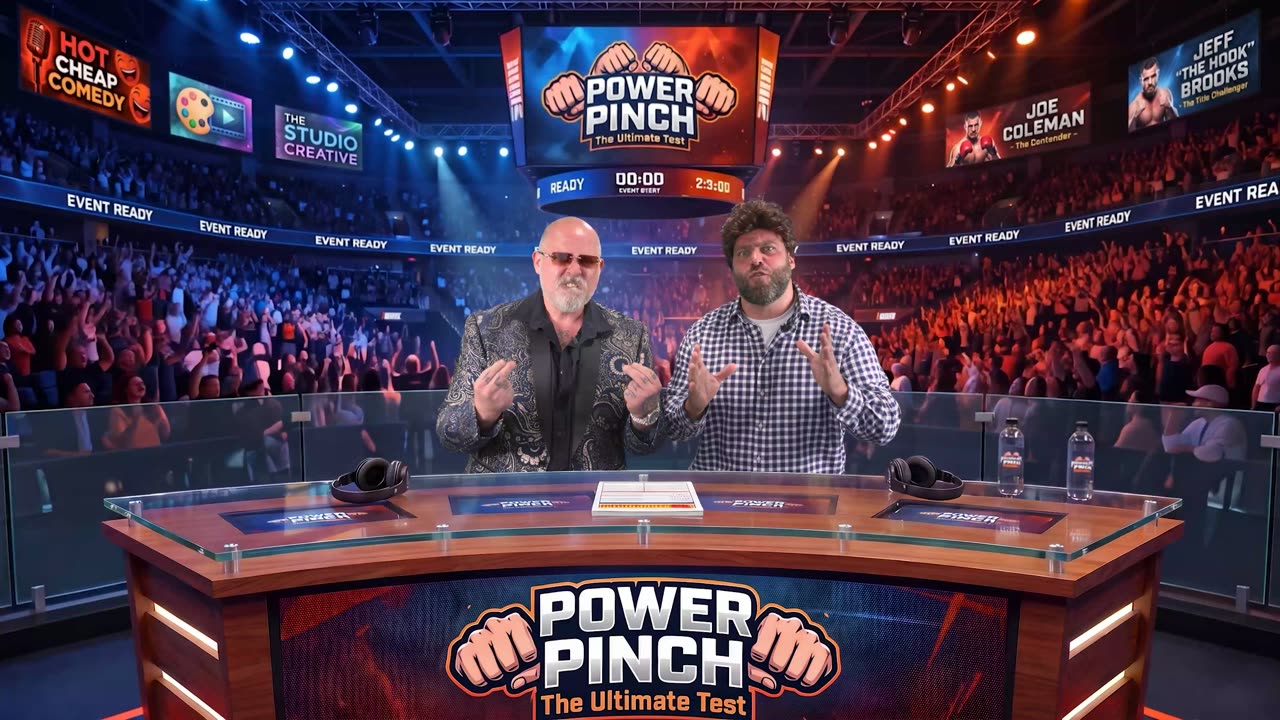
A full arena, built for a comedy short.
The Audience Isn't Watching for the Set
At the end of the day, the audience isn't showing up for the background. They're there for the moment, the joke, the character. If the idea hits, everything else becomes secondary. This approach makes it possible to produce more content in less time, stay consistent without burning out, and test ideas quickly.
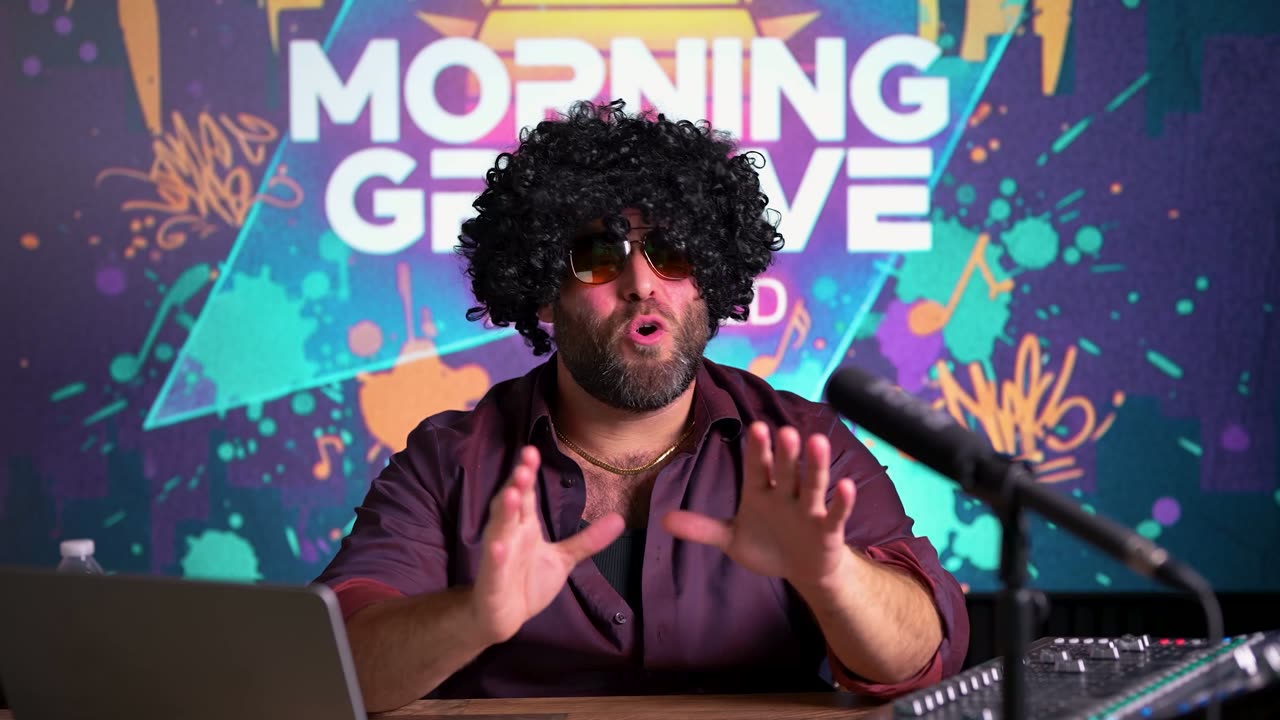
A radio booth set.
How Technology Is Reshaping the Sketch Comedy Workflow
- Writing and table reads: Sketches are developed from everyday Michigan life, global news, or absurd "what if" scenarios, then read aloud and punched up collaboratively.
- Blocking and rehearsal: Performers focus purely on timing, character relationships, and physical comedy.
- Technical design: Directors decide which scenes use practical sets, green screen, or real-time virtual environments — always to enhance the joke, never distract from it.
- Filming: Actors perform with a mix of physical props and digital backdrops, reacting to virtual elements in real time.
- Editing and distribution: Pacing, sound design, and effects are polished, then sketches ship to YouTube, TikTok, and beyond.
What a virtual set actually needs
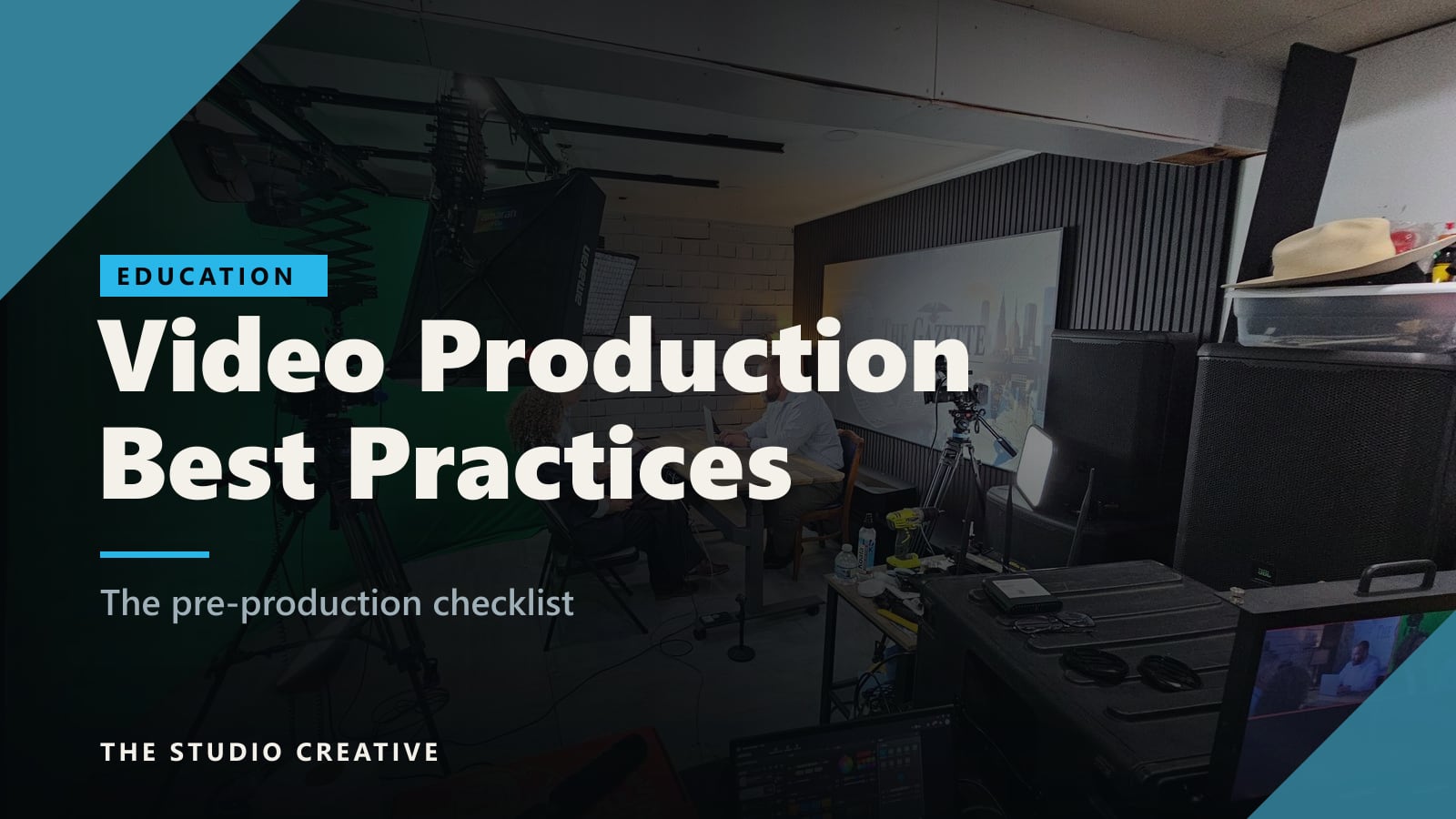
A virtual set is not a green wall and hope. The reason it works here is that a handful of unglamorous things are handled before anyone says a line:
- Even light on the screen. A hot spot in one corner keys differently from the rest of the wall, and that edge shows up on every take.
- Distance between the performer and the screen. Standing close throws green onto skin and hair, and that spill is far harder to remove than it is to avoid.
- Wardrobe away from the key colour. Not just green: anything that reflects it, and anything that shares the colour of the key on a costume nobody thought about.
- A rough key on a monitor during the take. Checking the key on set costs a minute. Discovering the problem in the edit costs the day.
The full version of that list, with the reasoning behind each, is in our green screen best practices guide.
When a real location is the right answer
Using a virtual set for everything is as lazy as refusing to use one. The series shoots on location whenever the scene calls for it, and the test is simple:
- Anything the performer touches. A door, a counter, a chair that takes weight. Interaction with a surface is the fastest way to break a composite.
- Complex movement. Loose hair, fast motion and anything that crosses the frame edge are all cheaper to shoot for real than to fix.
- Real exteriors. Daylight, wind and depth are very hard to fake and completely free outdoors.
- When the location is the joke. If the point of the scene is that they are genuinely somewhere absurd, being genuinely there is the gag.
How a shoot day runs
The speed comes from the order of operations, not from cutting corners. The key gets set first, before any performance. Scenes are blocked to the frame the background will occupy, so the composite is designed rather than discovered. Then several sketches are shot in one session, because the lighting is already right and the set does not have to change between them.
Want to Produce Content Like This?
If you're looking to produce more content without increasing production time, create videos that actually hold attention, and build a system that keeps your brand visible, this is exactly where The Studio Creative comes in. Take a look at our episode Confident Cards below!